Introduction
When you‘re transporting thousands of pounds of meat across state lines—or across continents—every component in your refrigerated trailer matters. The humble meat hook, often overlooked in fleet procurement, can make the difference between pristine product arriving on time and rejected loads, damaged carcasses, and costly insurance claims.
Choosing between a single meat hook and a double meat hook isn’t just about preference. It‘s about matching the right tool to your specific operation—your cargo type, your rail system, your team’s workflow, and your quality standards.
In this guide, we‘ll break down the 5 critical differences between single and double meat hooks for transportation. By the end, you’ll know exactly which hook belongs in your cold chain fleet.
Part 1: What Are Single and Double Meat Hooks?
Before diving into the differences, let‘s establish what we‘re comparing.
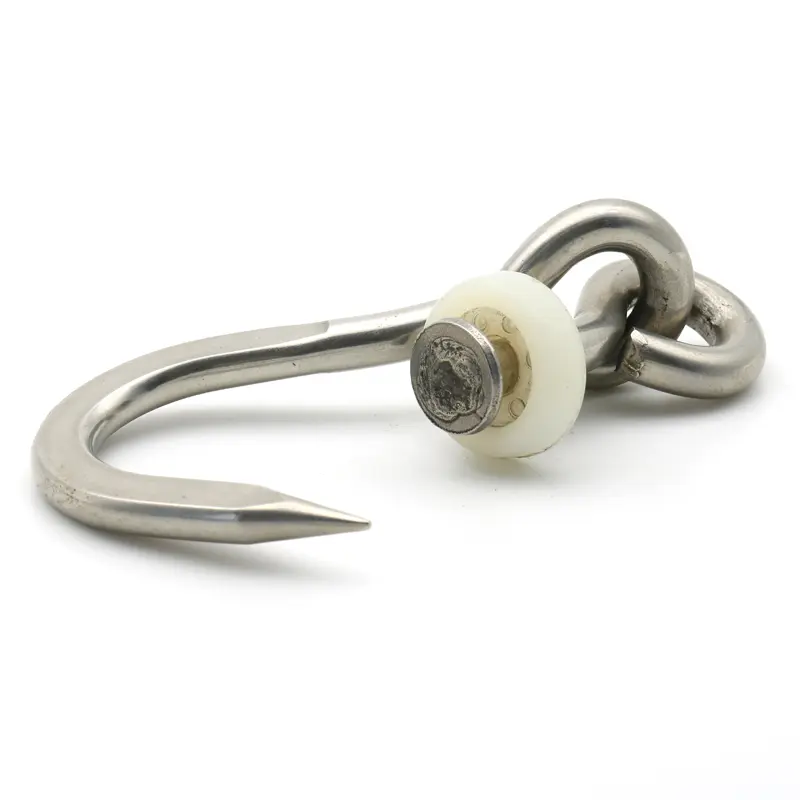
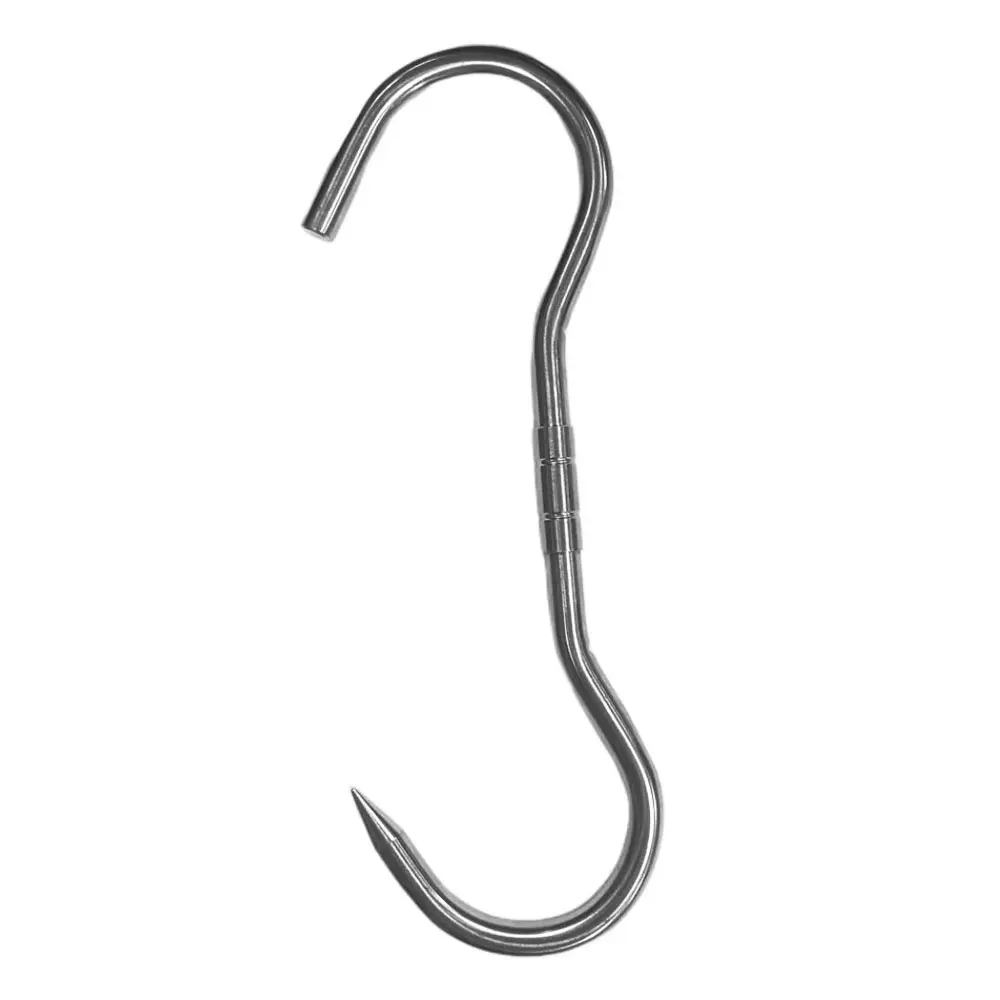
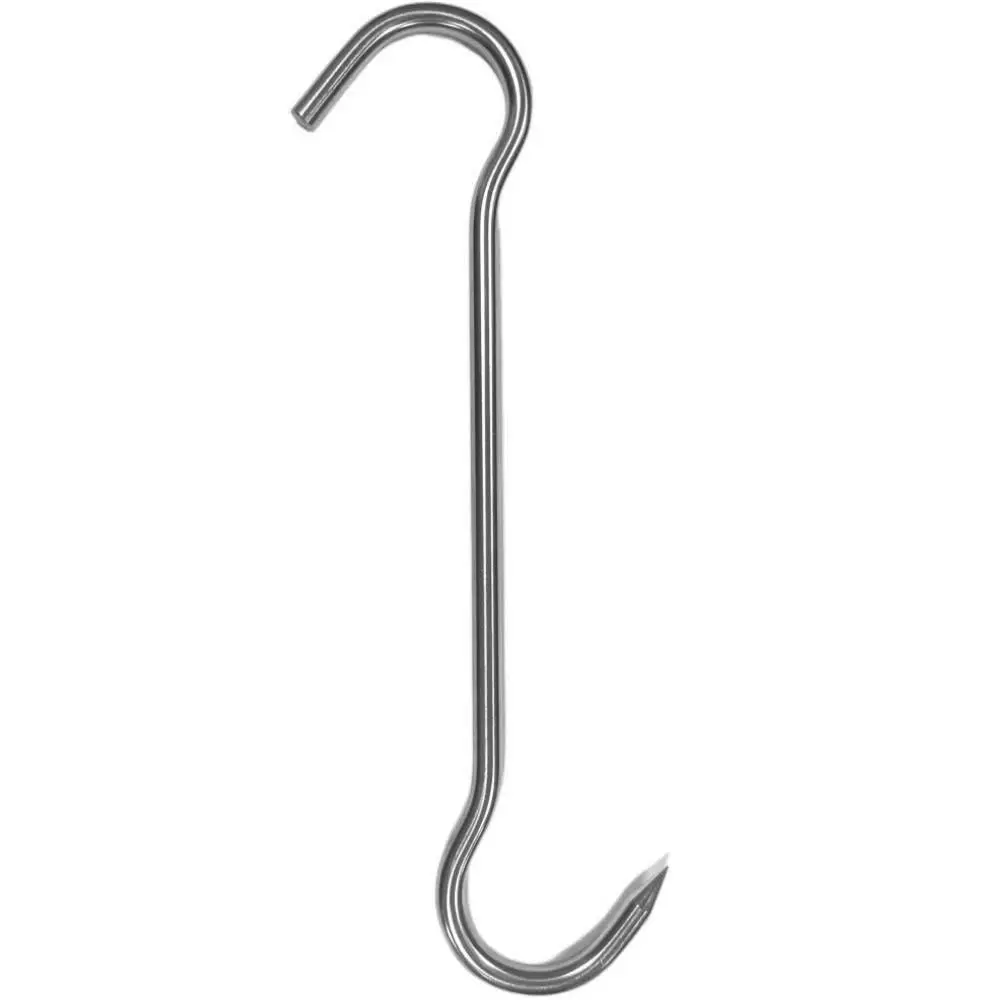
Single meat hooks feature one prong or point that penetrates and supports the meat. They are the traditional standard in many slaughterhouses and transport operations, valued for their simplicity and space efficiency.
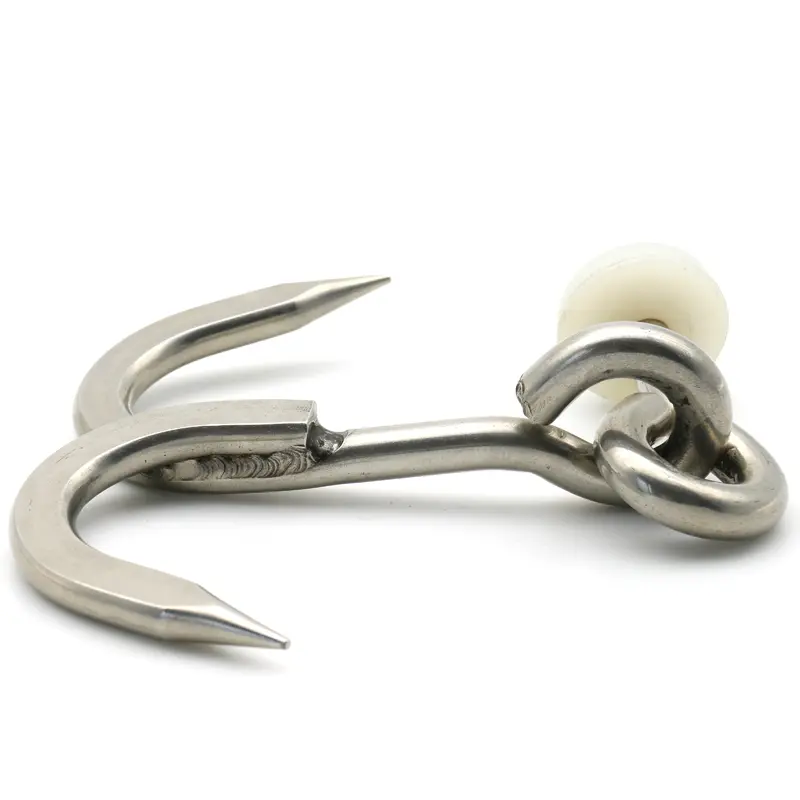
Double meat hooks feature two prongs, distributing the weight of the carcass across two points of contact. This design provides enhanced stability and grip, particularly valuable in dynamic environments like refrigerated trucks where vibration and road movement are constant factors.
Both types are typically manufactured from food-grade stainless steel, most commonly 304 or 316 grades, to ensure hygiene, corrosion resistance, and durability in cold, wet environments. But from there, their performance diverges significantly.
Part 2: 5 Critical Differences Between Single and Double Meat Hooks for Transportation
Difference 1: Load Capacity and Distribution
Single Hook: Weight concentrated on a single point. A standard single meat hook typically handles 110–220 lbs per hook, depending on material gauge and design. This concentrated load makes single hooks ideal for large, whole carcasses such as beef sides or pork halves, where the weight is substantial but the carcass structure is robust enough to handle a single penetration point.
Double Hook: Weight spread across two points. Each point typically handles 55–110 lbs, meaning total capacity can be similar or higher, but the critical difference is distribution. The dual-point contact reduces stress on any single point of the meat, minimizing tearing and deformation. Heavy-duty double hooks can handle up to 1,200 kg (approximately 2,645 lbs) in commercial-grade configurations, with 316 stainless steel models offering superior corrosion resistance for extreme environments.
What this means for you: If you‘re transporting whole, heavy carcasses with robust connective tissue, a single hook‘s concentrated load works well. If you’re moving smaller cuts, value-added products, or meat that needs to maintain visual appearance, a double hook‘s distributed weight reduces product damage and preserves marketable quality.
Difference 2: Stability During Transit (Swing and Sway Control)
Single Hook: Suspended from a single point, a carcass on a single hook swings freely. During transport—especially when trucks brake, accelerate, or navigate curves—that swinging motion multiplies. The pendulum effect means the carcass can sway significantly, potentially colliding with adjacent hanging meat, scraping against the trailer wall, or shifting the vehicle‘s center of gravity. In worst-case scenarios, swinging loads can cause hooks to dislodge or rails to experience uneven stress.
Double Hook: The dual-point contact dramatically reduces swinging motion. With weight distributed across two points—typically spaced several inches apart—the carcass is essentially “locked” in orientation. The double hook‘s design has been shown to reduce swing during transport by up to 70% compared to single hooks, according to industry data. Some refrigerated truck systems further enhance this with double rack designs that improve even weight distribution and reduce the risk of goods tipping due to center-of-gravity shift.
What this means for you: For long-haul refrigerated transport, where cargo travels hundreds or thousands of miles over varying road conditions, the stability advantage of double hooks directly translates to fewer damaged products, less in-transit shifting, and safer driving conditions. For short-distance or local delivery where routes are smoother and speeds lower, the stability gap narrows.
Difference 3: Slippage Prevention and Grip Security
Single Hook: Relies on a single penetration point for grip. In wet or icy conditions—common in refrigerated environments—single hooks have a higher risk of slippage. Moisture can reduce friction between the hook and the meat‘s connective tissue, and vibration can gradually work the hook loose. The risk escalates with heavier loads and longer trips.
Double Hook: The dual-prong design provides superior grip by engaging the meat at two separate points. This creates a“tripod-like”stability that resists rotational movement and pull-out forces. Industry data indicates that double hooks can reduce slippage by up to 40% compared to single hooks, particularly in wet, humid, or icy environments. Some specialized double hook designs further enhance this with rounded tips and S-curve profiles that increase friction.
What this means for you: If your refrigerated trailers operate in high-humidity conditions, experience freeze-thaw cycles, or travel rough roads, the anti-slip advantage of double hooks is a major safety and product-protection factor. For operations in dry, controlled environments where slippage is rare, this difference may be less critical.
Difference 4: Operational Speed and Efficiency
Single Hook: Faster to hook? Actually, no—single hooks require more precision. The worker must align the single point exactly with the desired penetration spot, often needing to reposition if the initial placement is off. This takes time, especially when handling large, heavy carcasses or when workers are wearing cold-weather gloves that reduce dexterity.
Double Hook: The dual-prong design actually speeds up hooking. Rather than needing pinpoint precision, the two prongs create a wider “target,” allowing workers to engage the meat more quickly and confidently. Industry sources report that double hooks enable 20% faster meat hooking compared to single-prong tools. The efficiency gain multiplies in high-volume operations where hundreds or thousands of hooks are handled per shift.
What this means for you: For large-scale slaughterhouses, processing plants, and fleet loading docks, 20% faster hooking translates into measurable labor savings and faster turnaround times. For smaller operations or facilities with lower throughput, the speed advantage may be less impactful, though still beneficial during peak periods.
Difference 5: Rail System Compatibility and Space Utilization
Single Hook: Single hooks are generally compatible with most standard meat rail systems, including tubular rails, flat bars, and twin tracks. Their narrower profile allows for higher rail density—single hooks can be spaced more closely together on a rail, fitting up to 40% more hooks per linear foot of rail compared to double hooks. This makes single hooks the preferred choice for facilities with limited cooler or trailer space where maximizing hanging capacity is the priority.
Double Hook: Double hooks require slightly wider spacing due to their broader footprint. However, they are fully compatible with modern rail systems, including twin track systems that utilize plastic-wheeled rollers for smooth movement. Some double hook designs are specifically engineered for slide rail systems, enabling 20% faster meat organization compared to static hooks. For refrigerated trucks, double hooks work effectively with both fixed “wolf tooth” rails and tubular rail systems.
What this means for you: If your primary constraint is space—maximum carcasses per square foot—single hooks deliver superior density. If your priority is product protection and stability, and you can sacrifice some density, double hooks are the better choice. Many operations use a hybrid approach: single hooks for standard carcasses and double hooks for premium cuts or mixed loads.
Part 3: Quick Comparison Reference Table
| Feature | Single Hook | Double Hook |
|---|---|---|
| Load distribution | Concentrated on one point | Spread across two points |
| Typical capacity per point | 110–220 lbs | 55–110 lbs per point; total up to 2,645 lbs |
| Stability (swing reduction) | Baseline | 70% less swing during transport |
| Slippage prevention | Baseline | 40% less slippage in wet conditions |
| Hooking speed | Baseline | 20% faster |
| Rail density | 40% more hooks per linear foot | Requires wider spacing |
| Best for | Whole carcasses, space-limited facilities | Premium cuts, long-haul transport, mixed loads |
Part 4: How to Choose Between Single and Double Hooks for Your Fleet
Based on the five differences above, here‘s a decision framework:
Choose Single Hooks When:
-
You primarily transport whole, intact carcasses (beef sides, pork halves, whole lamb)
-
Cooler or trailer space is limited and maximizing hanging density is critical
-
Your routes are short-distance or over smooth roads with minimal vibration
-
Your operation uses legacy tubular rail systems where single hooks are the standard
-
Budget is a primary constraint (single hooks are generally lower-cost)
Choose Double Hooks When:
-
You transport smaller cuts, value-added products, or meat where appearance matters
-
Your routes are long-haul with varying road conditions (highways, rural roads, urban streets)
-
Your refrigerated trailers experience high humidity or freeze-thaw cycles that increase slippage risk
-
You process high volumes and 20% faster hooking translates to meaningful labor savings
-
You‘re installing new rail systems (twin track or slide rail) designed for double hooks
Part 5: Material Matters — Beyond Single vs. Double
Regardless of whether you choose single or double hooks, material selection is equally critical for transportation applications.
304 Stainless Steel is the industry standard for meat hooks. It offers excellent corrosion resistance for most refrigerated environments, withstands routine chemical sanitizers, and provides good strength-to-weight ratio. It is approximately 25% less expensive than 316 stainless, making it the cost-effective choice for most applications.
316 Stainless Steel provides enhanced protection against chlorides and acids, making it the better choice for coastal facilities, operations using aggressive cleaning chemicals, or environments with high-salinity water supplies. It offers approximately 35% longer service life in demanding conditions.
Food-grade stainless steel (200 or 300 series with minimum 16% chromium) is essential for hygiene compliance, as it provides a non-porous surface that resists bacterial growth.
Part 6: Rail System Considerations
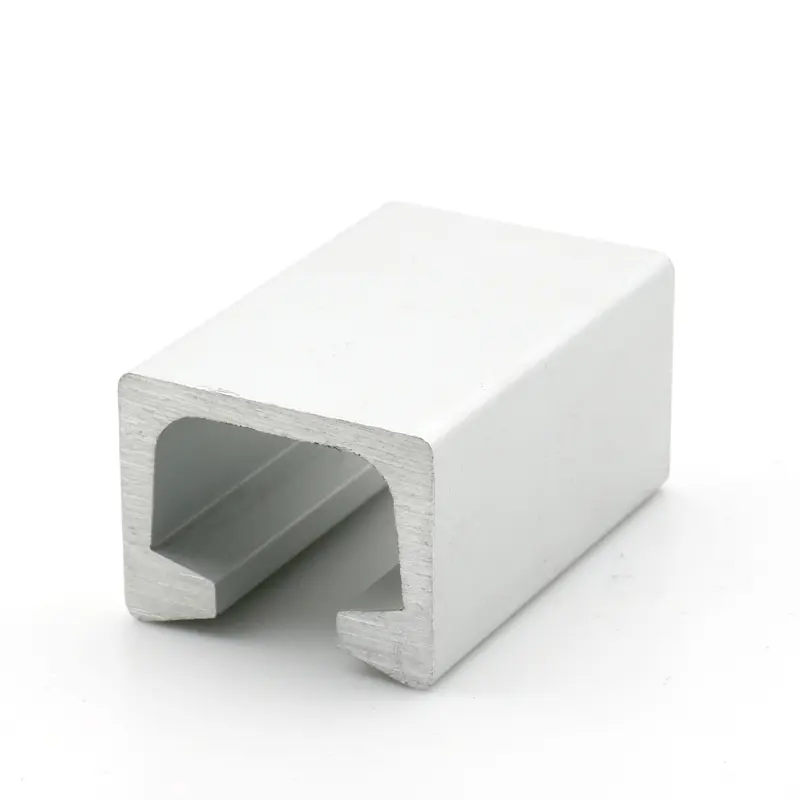
Your meat rail system must be compatible with your chosen hooks. Modern installations increasingly use aluminium twin track systems, which offer high safety, easy carcass movement via plastic rollers with bearings, no need for greasing, and corrosion-resistant materials.
Legacy tubular rail systems require regular greasing for smooth hook movement and have potential safety issues with hook detachment, but remain cost-effective for established operations.
Hooks must suit the species and method of dressing—for example, gambrels for pigs or appropriate hook sizes for beef and lamb. Always verify hook-rail compatibility before purchasing in bulk.
Part 7: Why Hangcheng Parts Should Be Your Meat Hook Partner
At Hangcheng Parts, we manufacture both single and double meat hooks under one roof, with ISO 9001:2015 certification and over 20 years of export experience to Europe, North America, and Australia.
Our meat hook capabilities include:
-
Single and double hook configurations, customizable to your specifications
-
304 and 316 stainless steel options, with food-grade certification
-
Swivel and fixed designs for different operational needs
-
Compatibility with tubular, twin track, and slide rail systems
-
Full design-to-manufacturing integration — no middlemen, no handoffs
Why our integrated manufacturing protects your business:
-
Quality – ISO 9001:2015 certified. Each batch undergoes material verification, dimensional inspection, and surface finish checks.
-
Cost – Direct factory pricing eliminates middleman markup.
-
Delivery – Consistent lead times backed by in-house production capacity.
-
Risk – One supplier, one quality standard, zero product mismatches.
Whether you need single hooks for maximum rail density or double hooks for superior stability, Hangcheng Parts delivers the right solution for your cold chain operation.
Contact us for more information; bulk orders enjoy discounts.
Related Products