Introduction
Refrigerated truck doors face a brutal operating environment that would destroy standard hardware in weeks: sub-zero temperatures down to -40°C, constant moisture and condensation, freeze-thaw cycles that cause thermal expansion and contraction, and the daily impact of loading dock operations. The hinges that support these doors must do more than just swing open and closed—they must maintain precise door alignment, prevent cold air leaks, withstand heavy loads, and resist corrosion in an environment where water is always present.
When specifying hinges for refrigerated truck bodies, fleet managers and OEM engineers face a fundamental choice: piano hinges (continuous hinges) or butt hinges (leaf hinges). Each type has distinct design philosophies that translate into real-world differences in performance, durability, and total cost of ownership.
This guide breaks down the 6 critical differences between piano hinges and butt hinges specifically for refrigerated truck applications. By the end, you’ll know exactly which hinge type belongs on your reefer doors—and why making the wrong choice can cost you in spoiled cargo and premature hardware failure.
Part 1: What Are Refrigerated Truck Door Hinges and Why Do They Have Special Requirements?
Before comparing hinge types, it’s essential to understand what makes refrigerated truck applications unique.
A refrigerated truck door is typically an insulated panel containing polyurethane foam or polystyrene insulation core between inner and outer metal skins. These doors are significantly heavier than standard dry van doors due to the insulation material. The hinges must be mounted through the outer skin with fasteners embedded in the foam core, creating unique stress distribution challenges.
Special requirements for reefer door hinges:
-
Sub-zero temperature performance: Hinges must function reliably at temperatures as low as -40°C without lubricant failure or bearing seizure
-
Corrosion resistance: Constant moisture, condensation, and road salt demand materials that won’t rust
-
Weight capacity: Insulated doors are heavy, requiring hinges that can support significant loads without sagging
-
Seal integrity: Any door misalignment due to hinge failure compromises the thermal seal and allows cold air to escape
-
Frequent operation: Reefer doors open and close multiple times per day during delivery routes
-
Vibration resistance: Hinges must withstand road vibration without loosening
Part 2: What Is a Piano Hinge (Continuous Hinge)?
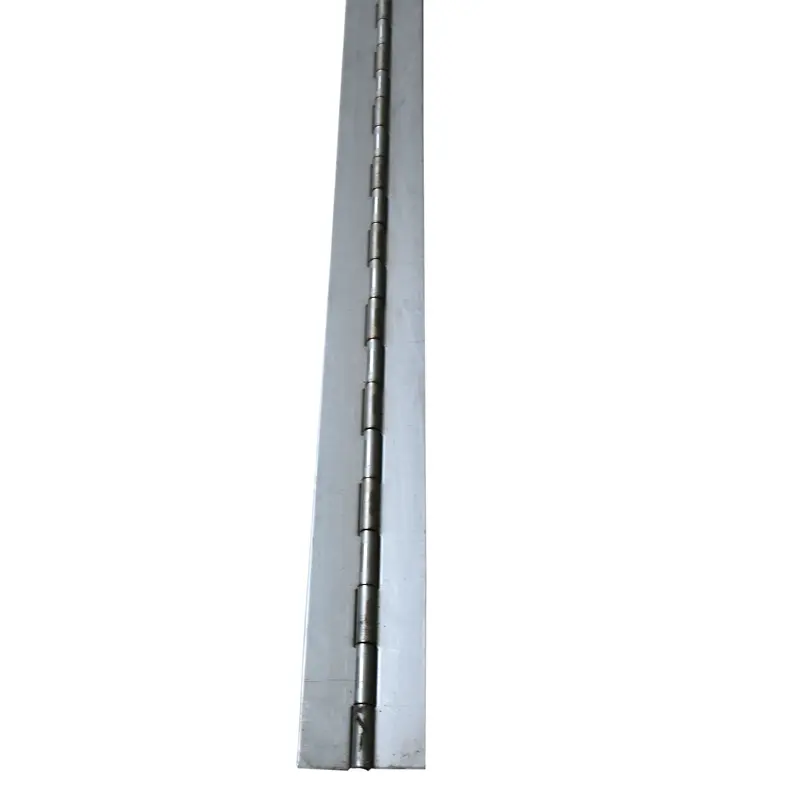
A piano hinge—also called a continuous hinge—is a single hinge that runs the entire length of a door or panel. It consists of two long leaves joined by a continuous pin running through multiple interlocking knuckles. The name comes from its traditional use on piano lids, but its applications extend far beyond musical instruments.
Key characteristics of piano hinges:
-
Full-length support: The hinge spans the entire door height, typically from top to bottom
-
Even weight distribution: Load is spread continuously across the entire hinge length, rather than concentrated at discrete points
-
Multiple knuckle designs: Available with knuckles every few inches along the length
-
Material options: Commonly available in 304 stainless steel, aluminum, zinc-plated steel, and even plastic for light-duty applications
Why refrigerated trucks need piano hinges:
Piano hinges provide complete support across the entire door frame, managing weight distribution far superior to any butt hinge capability. Because piano hinges run the full length of the door, they are stronger and more durable than butt hinges when used in heavy-duty applications. This makes them particularly well-suited for the heavy, insulated doors found on refrigerated trucks and cold storage facilities.
Part 3: What Is a Butt Hinge (Leaf Hinge)?
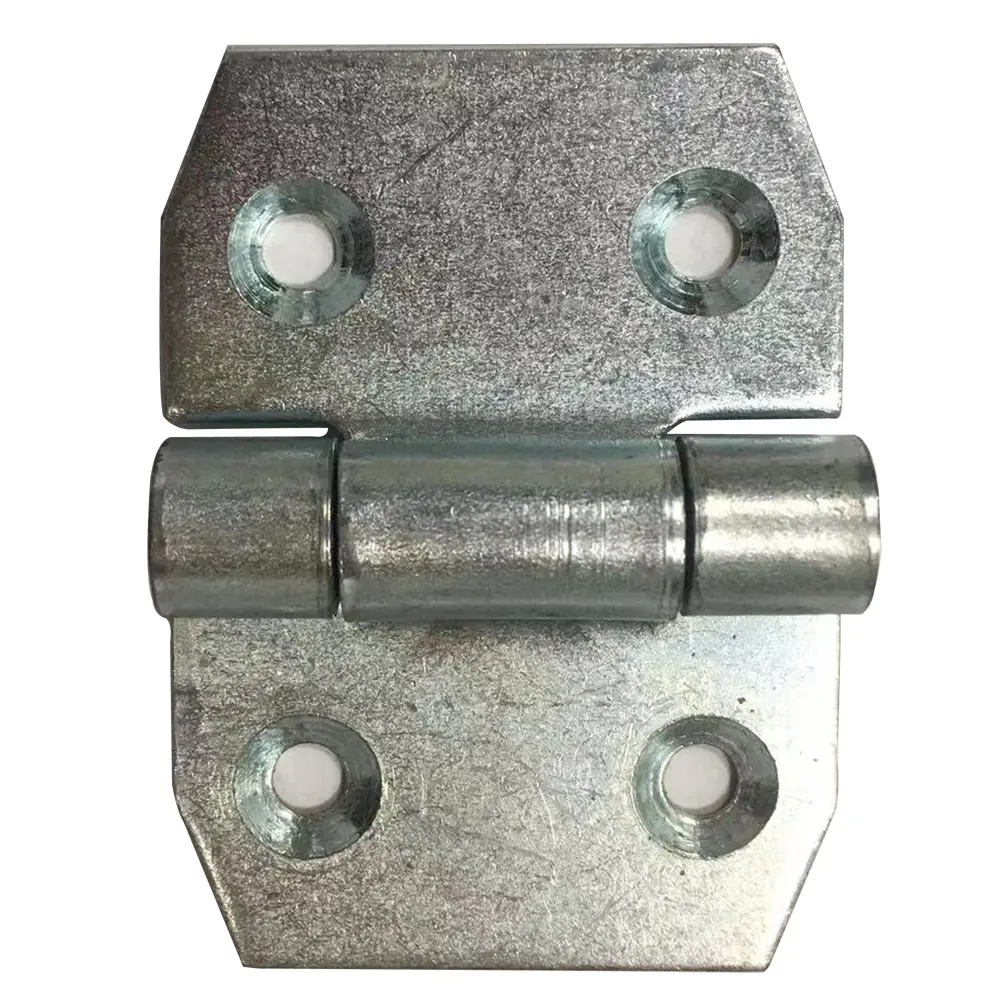
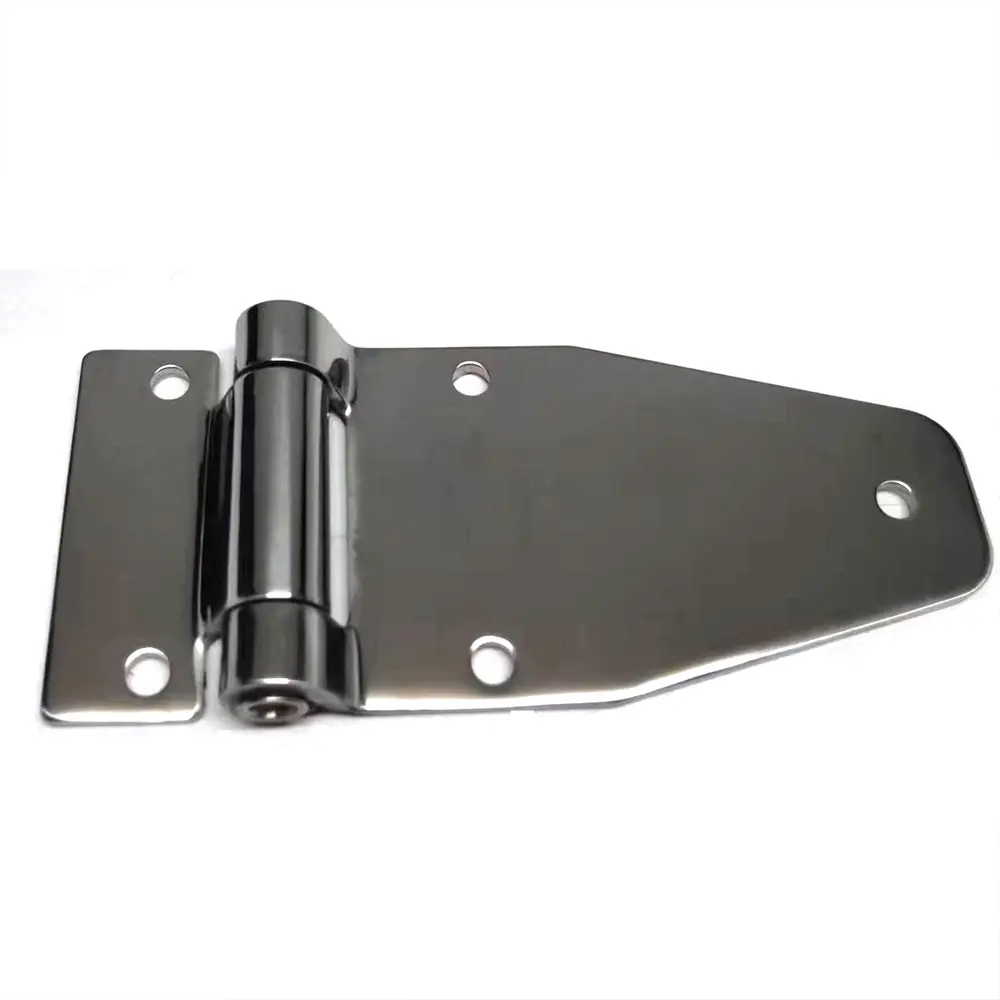
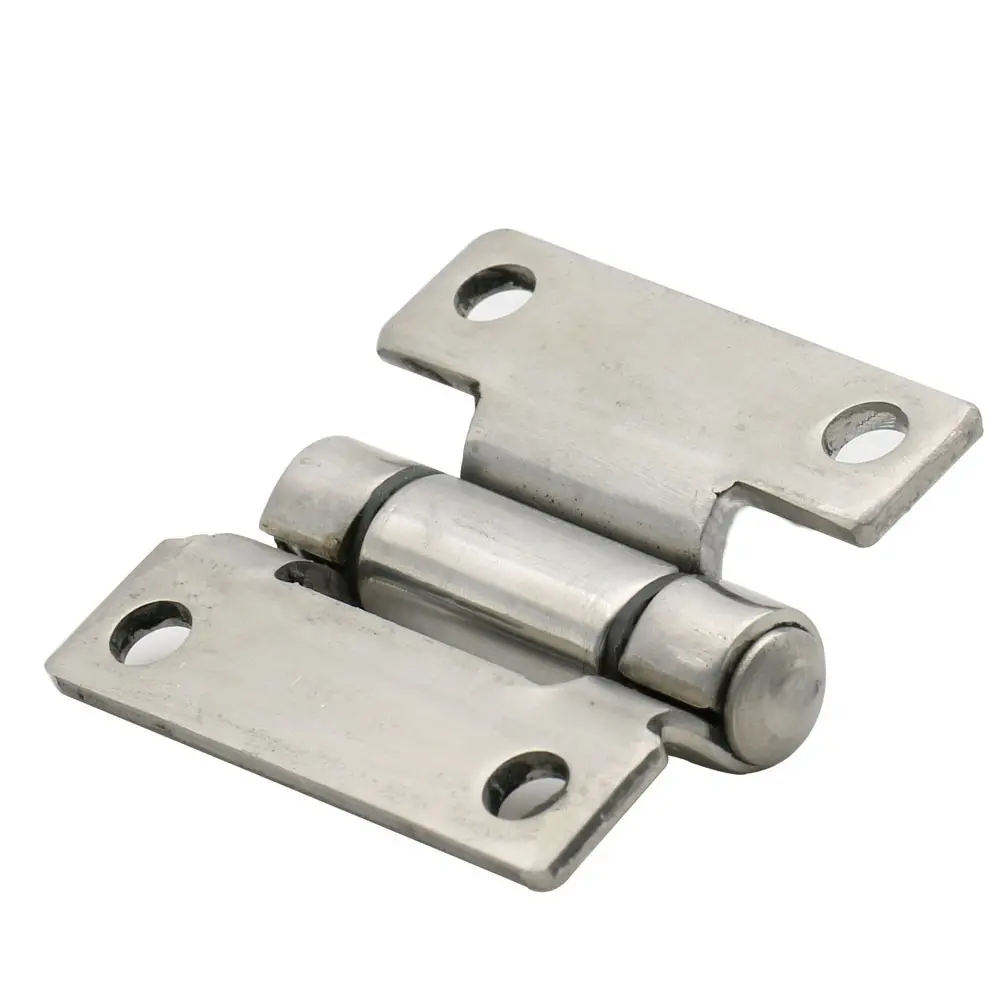
A butt hinge, also known as a leaf hinge, consists of two rectangular leaves joined by a removable pin. Unlike piano hinges, butt hinges are installed at discrete points along the door—typically two, three, or four hinges per door depending on weight and height.
Key characteristics of butt hinges:
-
Point-based support: Door weight is concentrated at the individual hinge locations
-
Variety of sizes: Available in multiple dimensions (e.g., 4mm thickness, 90kgf load capacity per pair)
-
Removable pin design: Door can be detached by removing the hinge pins, facilitating maintenance
-
Cost-effective for standard applications: Well-suited for many standard applications where door weight is moderate
Why butt hinges are commonly used in trucking:
Butt hinges are the most common hinge type used on commercial doors. They are durable, widely available in different sizes and styles, and suitable for various applications. The strength of a butt hinge largely depends on its material and size, with larger ones made of tough metals being ideal for heavy-duty applications. Their removable pin design makes door removal straightforward for maintenance—a practical advantage in fleet operations.
Part 4: 6 Critical Differences Between Piano Hinges and Butt Hinges for Refrigerated Trucks
Difference 1: Weight Distribution and Load Management
Piano Hinge: Distributes the door’s weight evenly along the entire length of the hinge. Because the hinge spans from top to bottom, there are no “weak spots” where weight is concentrated. This continuous support significantly reduces stress on the hinge itself and on the door frame. For a heavy refrigerated door that may weigh 200-500 pounds, this even distribution is critical to prevent sagging and maintain proper alignment with the door frame.
Butt Hinge: Concentrates the door’s weight at the individual hinge points—typically two to four locations. This means all the stress is focused on the small area around each hinge. Over time, this point-loading can lead to hinge wear, elongated mounting holes, and door sag. The concentrated nature of butt hinges means that if one hinge fails, the others must carry the entire load, accelerating wear and increasing failure risk.
Winner for reefer applications: Piano hinge. The continuous weight distribution is particularly valuable for heavy insulated refrigerator doors, where any sagging compromises the thermal seal.
Difference 2: Structural Strength and Durability
Piano Hinge: Because the hinge runs the entire length, it provides consistent support across the door without any weak points. Piano hinges are stronger and more durable than butt hinges when used in heavy-duty applications. The full-length design eliminates the pivot-point failure mode that plagues discrete hinges. High-quality continuous hinges have been tested to last more than 25 million open/close cycles—equivalent to 60 years of high-traffic use.
Butt Hinge: Strength depends on the number of hinges used and their individual specifications. For the same total door weight, a door with four butt hinges will be more secure than one with only two, but the strength remains concentrated at specific points. With butt and pivot hinges, failure typically occurs at the highest-stress hinge first, leading to cascading failure.
Winner for reefer applications: Piano hinge. The superior durability and elimination of point-failure risk make piano hinges the more reliable choice for refrigerated trucks that experience daily door operation in demanding conditions.
Difference 3: Corrosion Resistance and Temperature Performance
Both hinge types can be manufactured from corrosion-resistant materials—primarily 304 stainless steel or 316 stainless steel for marine/coastal environments. However, the continuous design of piano hinges presents unique advantages and challenges.
Piano Hinge: Available in 304 stainless steel construction, which provides excellent corrosion resistance in cold, wet environments. Piano hinges run the full door length, which can actually improve sealing by creating a continuous barrier along the hinge line. The continuous design also means fewer gaps where moisture can accumulate. Stainless steel piano hinges are specifically manufactured to be easy to align and mount. The materials and construction ensure reliable performance even at sub-zero temperatures.
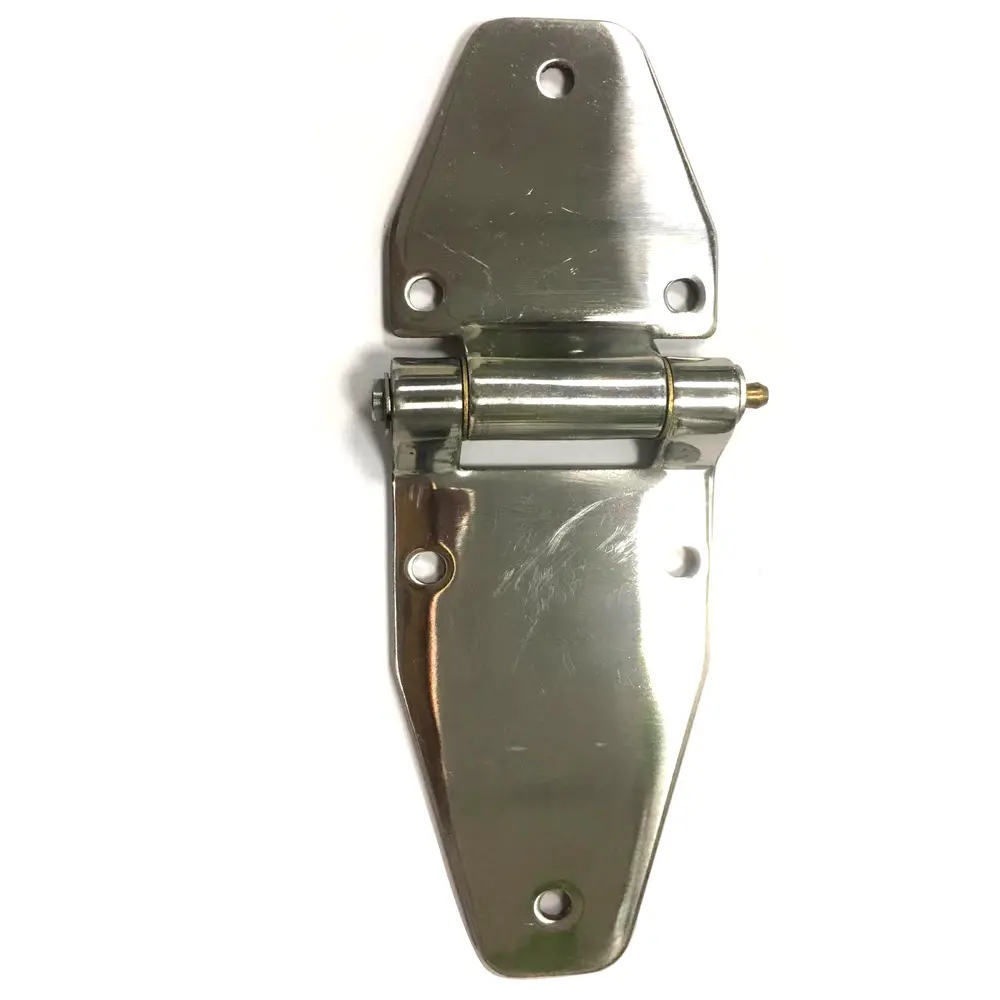
Butt Hinge: Also available in corrosion-resistant stainless steel. Butt hinges have small gaps between the leaves where moisture can penetrate, potentially leading to internal corrosion of the hinge pin. The multiple hinges on a single door also create multiple potential failure points. For refrigerated applications, butt hinges are frequently used on truck bodies with stainless steel or galvanized finishes.
Winner: Tie, but with a piano hinge advantage for sealing. Both types can be manufactured with appropriate materials. However, the continuous nature of piano hinges provides better moisture exclusion along the hinge line, which is beneficial in high-humidity reefer environments.
Difference 4: Installation and Mounting Complexity
Piano Hinge: Installation requires precise alignment of the full hinge length. The continuous nature means the hinge must be perfectly straight and positioned correctly along the entire door edge. However, piano hinges are actually easier to cut compared to butt hinges, which makes it easier to match the exact length of any door or lid. Once aligned, a piano hinge provides consistent support across the entire length, eliminating the need to adjust multiple individual hinges.
Butt Hinge: Typically easier to install because each hinge is a separate, smaller component. The discrete nature means minor misalignments can be corrected on a per-hinge basis. However, getting all butt hinges perfectly aligned is critical for proper door operation. The fastener placement for refrigerated doors must be carefully planned, as hardware is typically affixed to the outside wall with nuts or bolt heads embedded in the foam core.
Winner: Butt hinge for simpler installation, but piano hinge for long-term alignment. While butt hinges are easier to install initially, piano hinges maintain better alignment over time because there are no independent hinges to shift.
Difference 5: Seal Integrity and Thermal Performance
This is arguably the most critical difference for refrigerated truck applications.
Piano Hinge: The full-length hinge creates a continuous line of support, which helps maintain consistent door alignment. When the door stays aligned, the perimeter gasket seal remains intact. Any hinge sag or misalignment can compromise the gasket, allowing cold air to escape and warm air to enter, which causes refrigeration units to work harder and increases fuel consumption. The uniform support of a piano hinge minimizes this risk.
Butt Hinge: Because weight is concentrated at discrete points, door sag is more likely over time, particularly with heavy insulated doors. If the top butt hinge wears faster than the bottom hinge, the door becomes misaligned, breaking the gasket seal. This creates gaps that allow thermal leakage. In a refrigerated application, even a small gap can significantly impact temperature control and product quality.
Winner: Piano hinge. The consistent alignment provided by continuous support is essential for maintaining the thermal integrity of refrigerated truck doors.
Difference 6: Total Cost of Ownership and Lifecycle Value
Piano Hinge: Higher initial cost compared to a set of butt hinges. However, the superior durability, reduced maintenance requirements, and lower risk of failure make piano hinges more cost-effective over the life of the vehicle. A quality piano hinge has been known to last a lifetime when installed properly. For fleets that keep trucks in service for 10-15 years, the reduced downtime and fewer replacements justify the higher upfront investment.
Butt Hinge: Lower initial cost—typically a set of three to four butt hinges is less expensive than a full-length piano hinge. However, the point-load design means faster wear, especially on heavier doors. Replacement costs for individual butt hinges can be lower, but the labor to diagnose, replace, and realign multiple hinges adds up over time. The risk of door sag and seal failure also carries potential costs in terms of refrigeration efficiency and cargo quality.
Winner: Piano hinge for long-term fleet value. For refrigerated trucks where reliability and thermal integrity are paramount, the total cost of ownership favors piano hinges despite the higher upfront price.
Part 5: Quick Comparison Reference Table
| Feature | Piano Hinge (Continuous Hinge) | Butt Hinge (Leaf Hinge) |
|---|---|---|
| Support pattern | Full-length, continuous | Point-based (2-4 locations) |
| Weight distribution | Even across entire hinge | Concentrated at hinge points |
| Strength and durability | Stronger, more durable for heavy-duty use | Depends on size and number used |
| Door sag resistance | Excellent—minimal sag over time | Moderate—point-loading leads to eventual sag |
| Installation complexity | Requires precise alignment | Easier per-hinge installation |
| Seal integrity maintenance | Excellent—consistent alignment | Moderate—risk of misalignment over time |
| Moisture exclusion | Better—continuous barrier | Acceptable—small gaps between leaves |
| Initial cost | Higher | Lower |
| Total cost of ownership | Lower over long term | Higher over long term |
| Recommended for | Heavy reefer doors, high-use applications | Light to medium doors, standard applications |
Part 6: How to Choose the Right Hinge for Your Refrigerated Truck Application
Choose Piano Hinges When:
-
Your refrigerated doors are heavy due to thick insulation (typical for most reefer trucks)
-
Doors are opened and closed multiple times daily (delivery routes, warehouse distribution)
-
Maintaining the thermal seal is critical for cargo quality
-
You want minimal door sag over 5-10 years of service
-
Your fleet operates in demanding environments with moisture, salt, or extreme temperatures
-
Long-term total cost of ownership matters more than initial purchase price
Best applications: Refrigerated semi-trailers, cold storage warehouse doors, food-grade reefer vans, and any insulated door where seal integrity is paramount.
Choose Butt Hinges When:
-
Door weight is moderate and insulation thickness is minimal
-
Initial budget is the primary constraint
-
The application is low-frequency operation (not daily use)
-
You want the ability to remove the door by pulling hinge pins for service access
-
You have standardized on butt hinges across your fleet
Best applications: Light-duty truck toolboxes, access panels on non-insulated compartments, dry van side doors, and applications where door weight is not extreme.
Part 7: Material Matters – Stainless Steel Grades for Reefer Hinges
Regardless of which hinge type you choose, material selection is critical for refrigerated applications.
304 Stainless Steel: The industry standard for reefer hinges. Provides excellent corrosion resistance in wet, cold environments. Chromium content (minimum 16%) forms a protective oxide layer that prevents rust. Suitable for most refrigerated truck applications, including food-grade transport.
316 Stainless Steel: Provides enhanced protection against chlorides and acids due to the addition of 2-3% molybdenum. Recommended for coastal operations, facilities that use aggressive cleaning chemicals, or any environment with high salinity exposure. Offers approximately 35% longer service life in demanding conditions.
Zinc-Plated Steel: A cost-effective alternative for dry environments. Not recommended for refrigerated applications where condensation is constant, as the zinc coating will eventually fail and expose the base metal to corrosion.
Winner for reefer applications: 304 stainless steel as the baseline, upgrading to 316 for coastal or chemical-exposed environments.
Contact us for more information; bulk orders enjoy discounts.
Related Products