Introduction: The Small Component That Makes a Big Difference
In the world of container shipping and intermodal transport, few components are as critical—and as often overlooked—as the twist lock. These mechanical devices are responsible for securing containers to ships, truck chassis, and railcars, as well as stacking them safely in container yards. A twist lock failure doesn’t just mean downtime; it can lead to catastrophic accidents, cargo loss, and immense financial damage.
For fleet managers, port operators, and logistics professionals, the choice between manual, semi-automatic, and fully automatic twist locks is a pivotal decision. It impacts operational workflow, labor costs, safety profiles, and overall efficiency. This comprehensive guide breaks down each type, compares their strengths and weaknesses, and helps you make an informed choice for your specific operation.
What Is a Container Twist Lock?
A container twist lock is a mechanical locking device that uses a standardized rotating system to secure shipping containers during transport. The mechanism works by inserting a tapered metal pin into the hole of a container’s corner casting, then rotating it 90 degrees to lock it in place. This simple yet effective system ensures containers remain stable during shipping, preventing them from sliding, tilting, or detaching.
Twist locks are used across the entire intermodal supply chain—on container ships, semi-trailer trucks, railway cars, and in storage yards. They are the backbone of modern container logistics, enabling the safe transport of goods across oceans and continents.
All twist locks must comply with ISO 1161 standards, which specify the basic dimensions, functional requirements, and strength requirements of corner fittings for Series 1 freight containers. This standardization ensures worldwide compatibility.
Type 1: Manual Twist Lock
How It Works
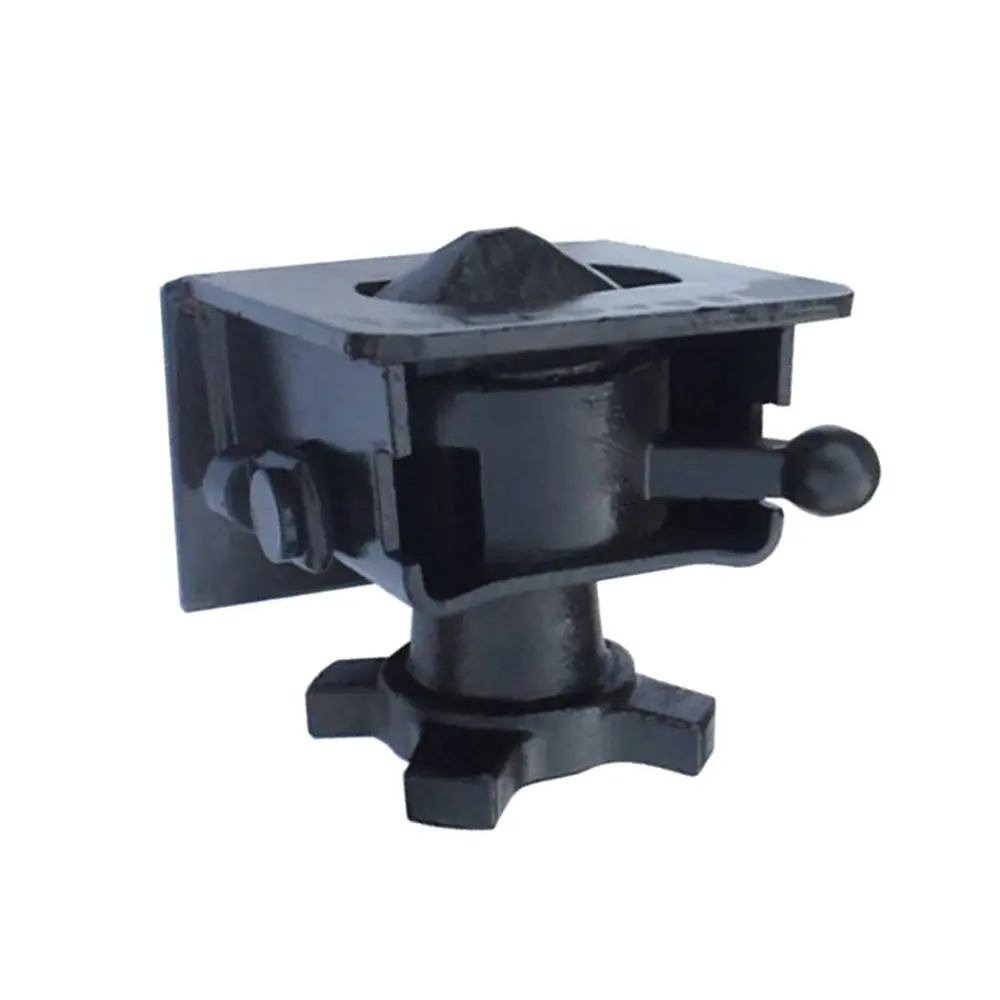
The manual twist lock is the most basic and traditional type. It requires human intervention for both locking and unlocking. The operator places the twist lock into the corner casting hole of the lower container or deck base, then manually rotates the handle or lever 90 degrees to lock it. To unlock, the handle is rotated back to its original position.
Manual twist locks are typically used to secure the first layer of containers to the deck base or chassis. On chassis, they are often welded directly onto the trailer frame.
Advantages
-
Simple and Reliable: The straightforward design means fewer mechanical issues and easy troubleshooting.
-
Cost-Effective: Manual twist locks are significantly cheaper than their automated counterparts—the price difference can be substantial when purchasing in bulk.
-
Easy Maintenance: The simple structure makes repairs straightforward and inexpensive.
-
Durable: Fewer moving parts means less that can break.
Disadvantages
-
Low Efficiency: Every step—locking and unlocking—requires manual intervention, making the process time-consuming.
-
Safety Risks: Workers must often climb to the top of containers to operate manual locks, creating fall hazards. Many international safety standards, such as OSHA, require fall protection for work above 1.8 meters.
-
Human Error: Relies on manual judgment to confirm if the lock is fully engaged, increasing the chance of mistakes.
Best Use Cases
Manual twist locks remain widely used on smaller vessels with fewer container layers, on chassis for ground transport, and in operations where budget is the primary concern. They are also commonly used in applications where OSHA-style height safety regulations do not apply.
Type 2: Semi-Automatic Twist Lock
How It Works
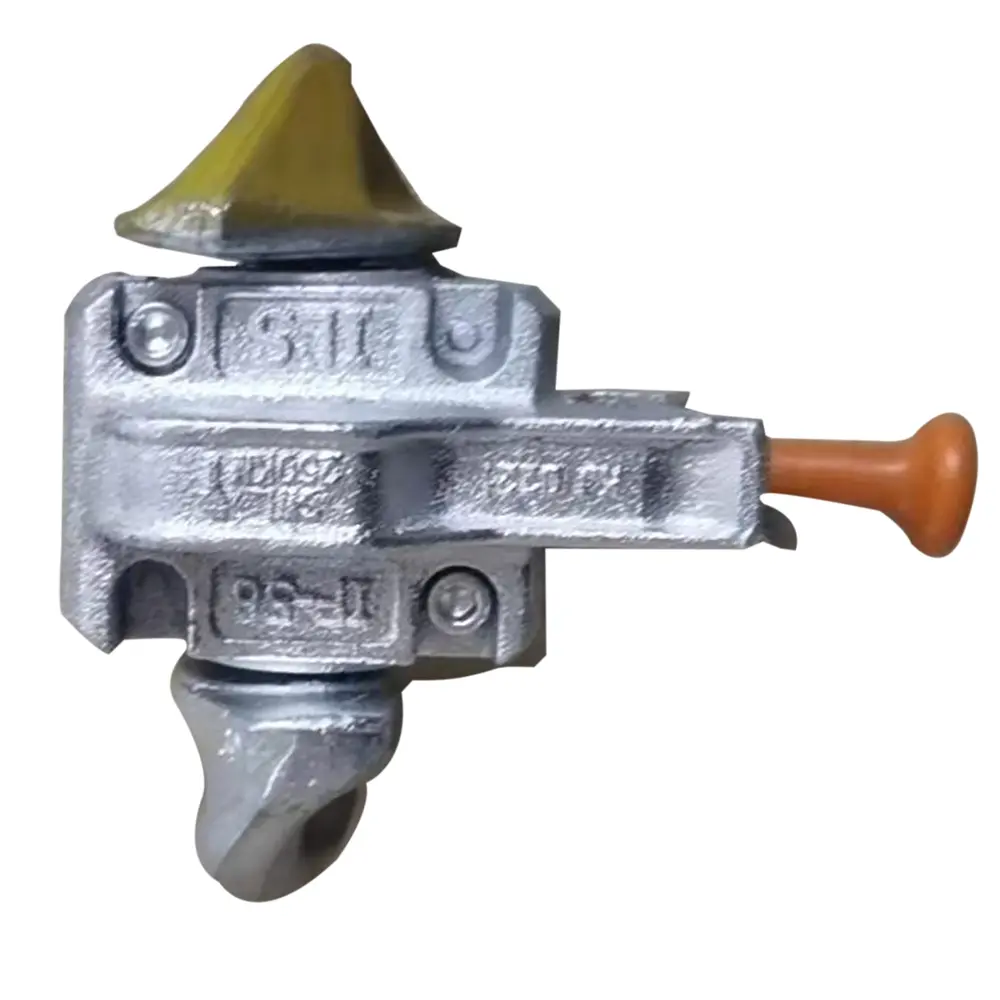
The semi-automatic twist lock represents a step up in automation. It locks automatically when a container is placed on it, but requires manual intervention to unlock.
When a container is lowered onto a semi-automatic twist lock, a spring-loaded mechanism automatically rotates the locking pin 90 degrees, securing the connection. To unlock, a worker must physically access the lock and pull a lever, rope, or operating rod—typically from ground level—which manually rotates the pin back to its unlocked position.
Semi-automatic twist locks are commonly used between two stacked containers on ships.
Advantages
-
Improved Efficiency: Automating the locking process eliminates one manual step, speeding up operations significantly.
-
Enhanced Safety: Workers no longer need to climb to the top of containers to lock them, eliminating fall risks.
-
Reduced Labor: Fewer manual interventions mean lower labor costs per container move.
-
Proven Reliability: The semi-automatic design has been成熟 and widely adopted in the industry.
Disadvantages
-
Higher Cost: More expensive than manual twist locks due to the complex spring mechanism.
-
Partial Manual Operation: Still requires workers to manually unlock each mechanism, adding time and labor per cycle.
-
Complex Maintenance: The mechanical parts are more intricate, requiring greater technical skill for repairs.
Best Use Cases
Semi-automatic twist locks are ideal for operations that need a balance between speed, safety, and budget. They are widely used in ports, container yards, and on vessels where efficiency matters but fully automatic systems are not yet cost-justified.
Type 3: Fully Automatic Twist Lock
How It Works
The fully automatic twist lock is the most advanced type, designed for maximum efficiency and minimal human intervention. It locks and unlocks entirely without direct human handling.
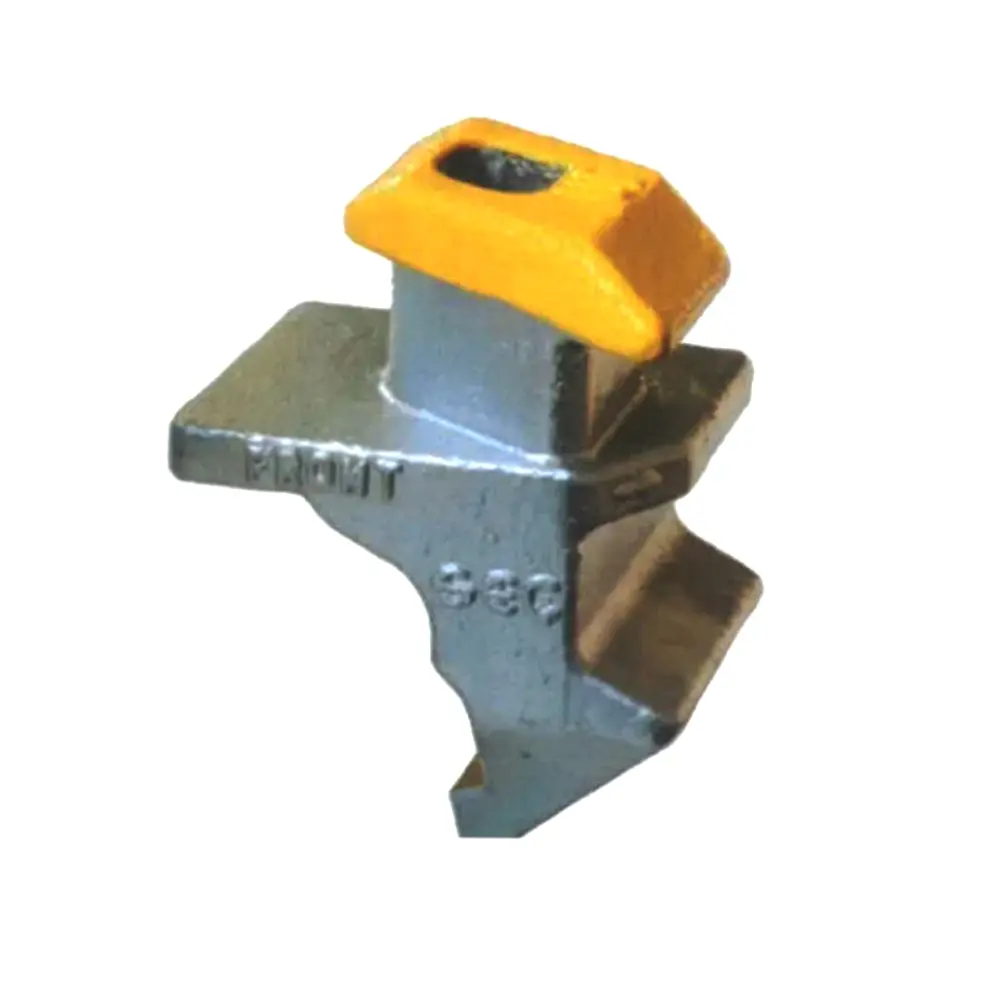
The mechanism relies on gravity and spring tension. When a container is lowered, a cone-shaped guide on the bottom of the lock engages with the corner casting hole. This physical contact pushes the locking pin upward, compressing the spring and allowing the pin to slide into the hole. Once fully seated, the spring forces the pin to rotate 90 degrees, automatically locking the two units together.
During unloading, the process is reversed: when the top container is hoisted, the locking pin is pulled upward against the corner casting, forcing it to rotate back and retract, disengaging the lock. Some designs use a spiral-shaped lock head that produces torque through gravity release, rotating the lock head as the container falls.
Fully automatic twist locks are typically placed in the lower corners of containers at the pier before they are lifted onto the vessel.
Advantages
-
Maximum Efficiency: Fully automated operation eliminates all manual intervention, enabling rapid container handling in high-throughput environments.
-
Top-Level Safety: Removes the need for workers to access container tops, eliminating fall risks.
-
Minimizes Human Error: Automated control systems ensure precise locking and unlocking.
-
Future-Proof: Fully automatic systems represent the future direction of container securing technology.
Disadvantages
-
High Cost: The most expensive option, with significantly higher per-unit costs.
-
Costly Maintenance: Requires regular servicing and advanced technical support.
-
Unlocking Reliability Concerns: The unlocking mechanism depends on the lifting force reaching a critical threshold. In extreme sea conditions, container inertial lift forces can exceed this threshold, potentially causing automatic unlocking during voyage. Some fully automatic twist locks may still disengage under extreme conditions.
-
Malfunction Risks: Stevedores have reported issues with automatic twist lock malfunctions during cargo operations, resulting in delays.
-
Skilled Operation Required: Needs trained personnel for installation and maintenance.
Best Use Cases
Fully automatic twist locks are ideal for high-demand environments like modern ports, large container terminals, and operations where speed and automation are paramount. They are the preferred choice for high-throughput facilities looking to maximize efficiency and minimize labor costs.
Head-to-Head Comparison
| Feature | Manual Twist Lock | Semi-Automatic Twist Lock | Fully Automatic Twist Lock |
|---|---|---|---|
| Locking | Manual | Automatic | Automatic |
| Unlocking | Manual | Manual | Automatic |
| Operation Speed | Slow | Medium | Fast |
| Labor Requirement | High | Medium | Low |
| Safety (Fall Risk) | High | Low | None |
| Initial Cost | Low | Medium | High |
| Maintenance | Simple | Moderate | Complex |
| Reliability | High | High | Moderate (extreme conditions) |
| Best For | Budget operations, chassis | Balanced efficiency & cost | High-throughput ports |
How to Choose the Right Twist Lock
1. Consider Your Operation Type
-
Ground Transport (Chassis/Trucks): Manual twist locks are the most common and cost-effective choice for chassis-mounted applications.
-
Vessel Operations: Semi-automatic and fully automatic locks are preferred for their efficiency and safety benefits.
-
Port Terminals: Fully automatic locks offer maximum throughput for high-volume terminals.
2. Evaluate Your Budget
-
Limited Budget: Manual twist locks offer the lowest upfront cost.
-
Moderate Budget: Semi-automatic locks provide a balance between cost and efficiency.
-
Sufficient Budget: Fully automatic locks deliver the highest efficiency and safety but require significant investment.
3. Assess Safety Requirements
-
If OSHA or similar height-safety regulations apply, semi-automatic or fully automatic locks are necessary to eliminate fall risks.
-
For operations where workers frequently access container tops, automated systems offer clear safety advantages.
4. Consider Maintenance Capabilities
-
Manual locks require minimal maintenance and can be serviced by any mechanic.
-
Semi-automatic locks require moderate technical expertise.
-
Fully automatic locks demand specialized knowledge and regular servicing.
5. Evaluate Environmental Conditions
-
For vessels operating in extreme sea conditions, the potential for automatic unlocking in fully automatic systems should be carefully considered.
-
Some operators use a combination of manual, semi-automatic, and fully automatic locks to balance security and efficiency.
Conclusion: Making the Right Choice
The choice between manual, semi-automatic, and fully automatic twist locks is not about which is “best” in absolute terms—it’s about which is best for your specific operation.
Manual twist locks remain a reliable, cost-effective solution for ground transport and smaller operations where budget is the primary concern. Their simplicity and durability make them a trustworthy choice for chassis applications.
Semi-automatic twist locks offer the sweet spot for many operations—automated locking for efficiency, manual unlocking for control, and significantly improved safety over manual systems. They are the most widely adopted type in the industry for good reason.
Fully automatic twist locks represent the cutting edge of container securing technology, delivering maximum efficiency and safety for high-throughput operations. However, their higher cost and potential reliability concerns in extreme conditions mean they are best suited for modern ports and terminals where speed is paramount.
At HangCheng, we offer a full range of container twist locks across all three types, engineered to ISO 1161 standards with rigorous quality control. Whether you need manual locks for your chassis fleet, semi-automatic locks for vessel operations, or fully automatic locks for your terminal, we have the right solution for your needs.
Contact us for more information; bulk orders enjoy discounts.
Related Products