Introduction: A Small Investment That Prevents Big Accidents
Every year, countless accidents occur because vehicles roll unexpectedly during loading, unloading, or maintenance. A wheel chock might seem like one of the simplest pieces of safety equipment in your fleet—but choosing the wrong material can mean the difference between a secure vehicle and a costly, potentially deadly incident.
The debate between rubber and plastic wheel chock is one that every fleet manager, truck operator, and safety professional faces. Both materials have their place, but they serve fundamentally different purposes and excel in different conditions.
In this comprehensive guide, we’ll break down exactly how rubber and plastic wheel chocks compare across the metrics that matter most—grip, durability, weather resistance, weight, cost, and regulatory compliance. By the end, you’ll know exactly which material is right for your specific application.
Part 1: Understanding Rubber Wheel Chocks
What Are Rubber Wheel Chocks?
Rubber wheel chocks are typically made from high-grade SBR/NR (styrene-butadiene rubber/natural rubber) blends or recycled rubber compounds. They are the most common type of wheel chocks on the market, favored for their exceptional grip and durability.
Key Characteristics
-
Superior Friction: Rubber’s natural traction provides excellent grip on various surfaces. The material’s flexibility allows it to conform to tire treads and road surfaces, creating maximum contact area.
-
Weather Resilience: High-quality rubber chocks maintain their grip even in extreme cold. They resist stress from temperature extremes and won’t crack or chip if dropped on a cold day.
-
Durability: A hardwearing blend of SBR/NR rubber offers a longer service life compared to plastic alternatives. Rubber chocks are designed to withstand impact, weather, and repeated heavy-duty use.
-
Load Capacity: Rubber chocks can handle loads ranging from 1 tonne up to 44 tonnes, making them suitable for everything from small trailers to heavy goods vehicles.
Common Applications
Rubber wheel chocks are ideal for:
-
Heavy-duty trucks and semi-trailers
-
Construction and mining equipment
-
Refrigerated trailers operating in cold environments
-
Commercial fleets requiring maximum safety compliance
-
Applications on sloped or uneven terrain
Part 2: Understanding Plastic Wheel Chocks
What Are Plastic Wheel Chocks?
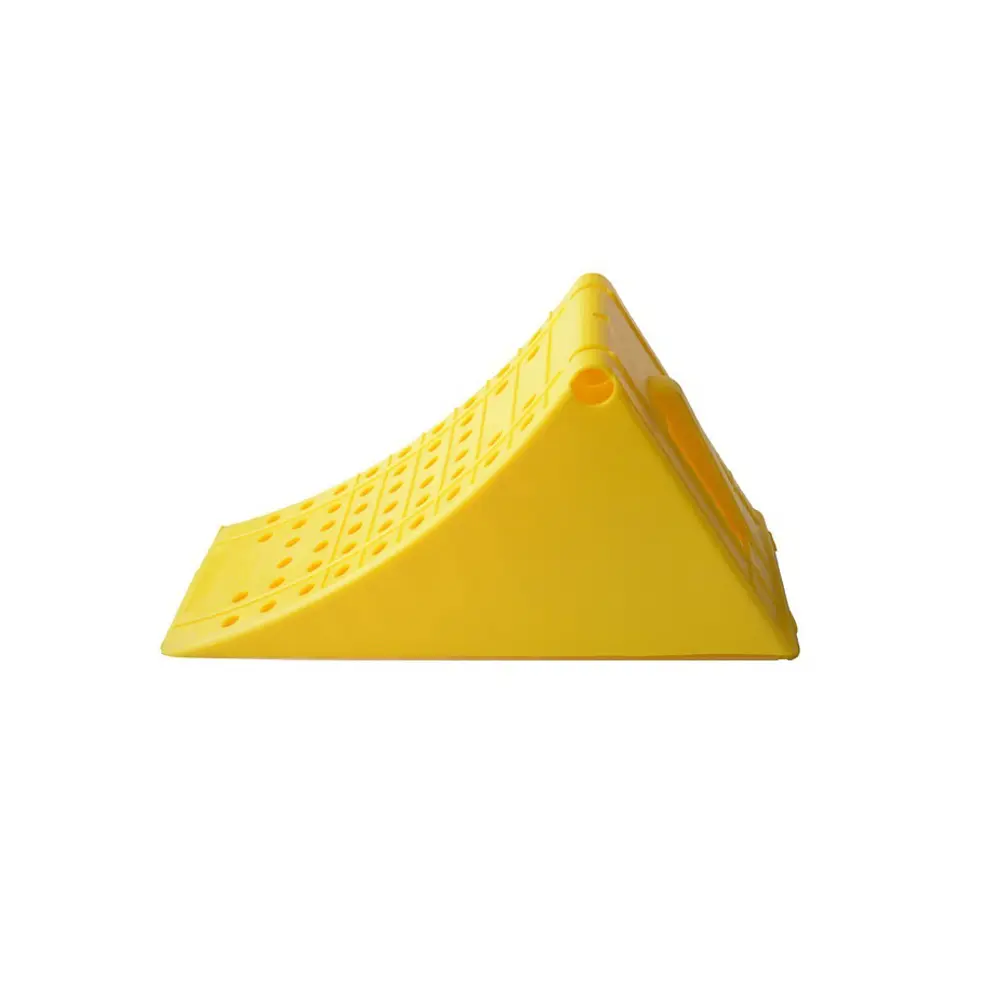
Plastic wheel chocks are typically made from injection-molded polyurethane or high-density polyethylene (HDPE). They are designed to be lightweight and portable, making them a popular choice for light-duty applications.
Key Characteristics
-
Lightweight: Plastic chocks are significantly lighter than rubber, making them easy to carry, store, and deploy. Urethane chocks can be 20 to 50 percent lighter than similarly sized rubber chocks.
-
Weather Resistance: High-quality plastic chocks made from UV-stabilized materials can withstand extreme temperatures from -40°F to 140°F. They resist damage from sunlight, oil, salt, and chemicals.
-
Chemical Resistance: Plastic chocks are better at resisting cuts, blunt damage, water damage, and wind damage than rubber chocks. They won’t absorb fluids like water or gasoline.
-
No Odor: Unlike natural rubber, plastic chocks don’t have the strong smell that some users find objectionable.
Common Applications
Plastic wheel chocks are best suited for:
-
Light trailers and recreational vehicles
-
Passenger cars and light trucks
-
Temporary parking situations on flat surfaces
-
Applications where weight is a critical factor
-
Occasional maintenance work
Part 3: Head-to-Head Comparison – 6 Critical Factors
① Grip and Traction
Rubber Wheel Chocks: Rubber chocks are the clear winner when it comes to grip. Rubber’s natural horizontal traction ribs grip the tire and protect both the tire and pavement from damage. They resist sliding under load, making them ideal for vehicles on both flat and slightly inclined surfaces. On asphalt and pavement, rubber chocks tend to have a much better grip compared to plastic, which can have a tendency to slide.
Plastic Wheel Chocks: Plastic chocks offer moderate grip on smooth, flat surfaces. However, they are “especially poor on concrete”and can be too lightweight, making them “very likely to move”. Some plastic chocks feature low-relief designs to provide more traction, but they generally don’t match rubber’s grip performance.
Verdict: Rubber wheel chocks offer superior grip, especially on sloped surfaces, asphalt, and concrete.
② Durability and Longevity
Rubber Wheel Chocks: A hardwearing blend of SBR/NR rubber provides a longer service life compared to plastic alternatives. Rubber chocks are designed to withstand impact, weather, and repeated heavy-duty use. They cannot crack or chip and will better resist stress from temperature extremes. However, rubber can wear more quickly than some other materials under certain conditions.
Plastic Wheel Chocks: Plastic chocks are “likely to crack, break easily”. While they resist cuts and blunt damage better than rubber, their brittle nature makes them vulnerable to impact damage, especially in cold weather. Some UV-stabilized plastic chocks offer good durability, but they generally don’t match rubber’s lifespan in demanding applications.
Verdict: Rubber wheel chocks offer superior long-term durability for heavy-duty and commercial applications.
③ Weather and Temperature Performance
Rubber Wheel Chocks: Rubber chocks are generally more resilient in extreme weather, maintaining grip even in cold conditions. They won’t mind too much if dropped on a very cold day. Rubber performs significantly better than plastic on icy surfaces. They are resistant to weather conditions and suitable for use in all climates.
Plastic Wheel Chocks: Plastic chocks can become brittle in cold weather and may freeze to the ground, requiring careful removal to avoid damage. While high-quality UV-stabilized plastic can withstand temperatures from -40°F to 140°F, the material’s performance degrades more quickly than rubber in extreme conditions.
Verdict: Rubber wheel chocks are the clear winner for year-round, all-weather performance.
④ Weight and Portability
Rubber Wheel Chocks: Rubber chocks are heavier and “a lot heavier to handle” compared to plastic alternatives. A typical rubber chock can weigh around 3 lbs or more. However, many rubber chocks come with built-in handles, eye bolts, or ropes to make handling easier.
Plastic Wheel Chocks: Plastic chocks are significantly lighter and easier to handle. Urethane wheel chocks have been shown to be 20 to 50 percent lighter in weight than similarly sized rubber chocks. This makes them easy to carry, store, and deploy.
Verdict: Plastic wheel chocks win for portability and ease of handling, especially when weight is a critical factor.
⑤ Regulatory Compliance and Safety Standards
Rubber Wheel Chocks: Rubber chocks are strongly preferred by regulatory bodies. The UK’s DVSA (Driver and Vehicle Standards Agency) specifically recommends solid rubber wheel chocks and does not recommend plastic or metal chocks, citing that plastic chocks are “too lightweight, very likely to move, and especially poor on concrete”. Rubber chocks conforming to SAE AIR4905 offer the best mitigation to risk. Rubber chocks also meet OSHA requirement 1910.178(k)(1) to prevent movement of trucks or trailers while loading or unloading.
Plastic Wheel Chocks: Plastic chocks generally do not meet the standards required for commercial vehicle testing facilities or heavy-duty applications. They are “not suitable for sites testing dangerous goods vehicles”.
Verdict: Rubber wheel chocks are the preferred and often required choice for regulatory compliance in commercial and heavy-duty applications.
⑥ Cost and Value
Rubber Wheel Chocks: Rubber chocks fall in the mid-range price category, offering better grip and durability. While the upfront cost is higher than plastic, the longer service life and superior safety performance provide better long-term value. Rubber chocks can handle loads up to 44 tonnes, justifying the investment for heavy-duty applications.
Plastic Wheel Chocks: Plastic chocks are the cheapest option, suitable for light-duty use. However, the lower upfront cost comes with trade-offs in durability, grip, and safety. For applications where safety is critical, the savings may not be worth the risk.
Verdict: Rubber wheel chocks offer better long-term value and safety, while plastic chocks are cost-effective for light-duty, low-risk applications.
Quick Comparison Table
| Feature | Rubber Wheel Chocks | Plastic Wheel Chocks |
|---|---|---|
| Grip on Surfaces | Excellent | Moderate, poor on concrete |
| Durability | Long service life | Can crack or break easily |
| Weather Resistance | Excellent in all conditions | Can become brittle in cold |
| Weight | Heavier | Lightweight |
| Load Capacity | Up to 44 tonnes | Light to medium duty |
| Regulatory Compliance | DVSA/OSHA preferred | Not recommended for commercial use |
| Cost | Mid-range | Cheap |
| Best For | Heavy trucks, commercial fleets, all-weather use | Light trailers, occasional use, flat surfaces |
Which One Should You Choose?
Choose Rubber Wheel Chock If:
-
You operate heavy-duty trucks, semi-trailers, or commercial vehicles
-
Your vehicles are parked on sloped, uneven, or varied surfaces
-
You need year-round, all-weather performance
-
You require regulatory compliance for commercial testing or operations
-
Safety is your top priority and you need maximum grip
-
You want a longer service life and better long-term value
Choose Plastic Wheel Chock If:
-
You’re securing light trailers, RVs, or passenger vehicles on flat surfaces
-
Weight and portability are critical factors
-
You’re using chocks for occasional or temporary applications
-
Your operation involves low-risk, light-duty scenarios
-
Budget is your primary concern and you’re not dealing with heavy loads or challenging terrain
Final Thoughts
The choice between rubber and plastic wheel chocks isn’t about which is “better” in absolute terms—it’s about which is right for your specific application.
Rubber wheel chocks are the heavy-duty champions. They deliver superior grip, exceptional durability, reliable all-weather performance, and regulatory compliance that plastic simply cannot match. They are the preferred choice for commercial fleets, heavy-duty trucks, and any application where safety is paramount.
Plastic wheel chocks offer lightweight portability and cost-effectiveness. Their ease of handling makes them ideal for light-duty applications, recreational vehicles, and occasional use on flat surfaces.
Whatever you choose, remember this: a wheel chock is a critical safety device. Choosing the wrong material for your application doesn’t just mean replacing it sooner—it means putting lives, cargo, and equipment at risk.
Contact us for more information; bulk orders enjoy discounts.
Related Products