Introduction: Why Proper Mounting is Just as Important as the Jack Itself
You’ve invested in the right trailer jack—one with ample capacity and the right features for your trailer. But its performance, safety, and longevity hinge entirely on one critical step: how you mount it. A poorly mounted jack is a ticking time bomb. It can bend your trailer frame, fail under load, detach on the highway, or simply make every hitching operation a frustrating struggle.
Whether you’re replacing a worn-out unit, upgrading, or installing a jack on a new trailer, doing it correctly is non-negotiable. This guide is more than just steps; it’s a masterclass in trailer jack installation. We’ll cover the essential tools, walk you through the different mounting types (A-frame, front-mount, receiver), and provide pro tips to ensure your jack is as solid and reliable as the trailer it supports. By the end, you’ll have the confidence to mount your jack with precision, ensuring years of safe and smooth operation.
Part 1: Pre-Installation Essentials – Tools, Safety & Planning
Gather Your Tools & Materials:
-
Basic Hand Tools: High-quality socket wrench set, combination wrenches, torque wrench (essential!), ratchet, screwdrivers.
-
Cutting/Drilling Tools: Power drill, metal drill bits (correct size for your bolts), center punch, deburring tool or file. A metal hole saw may be needed for receiver tubes.
-
Measuring & Marking: Tape measure, speed square, permanent marker or center punch.
-
Hardware: Always use the hardware provided with the jack kit. If replacements are needed, insist on Grade 5 or Grade 8 bolts, nuts, and washers. Nylock nuts or lock washers are recommended to prevent vibration loosening.
-
Safety Gear: Safety glasses, heavy-duty work gloves.
-
Supports: At least two jack stands rated for your trailer’s weight. Never rely on the jack you’re installing or the trailer’s tongue for support.
Critical Safety First Steps:
-
Unhook & Stabilize: Disconnect the trailer from the tow vehicle. Use your existing jack (if functional) or blocks to raise the trailer tongue.
-
Support the Frame: Place jack stands under the trailer’s main frame, never just under the tongue or A-frame alone, and lower the trailer onto them. This creates a stable, secure, and weight-bearing platform. The tongue should be weightless and accessible.
Part 2: Understanding Your Mounting Type – Three Common Methods
The installation process varies significantly based on your jack and trailer design.
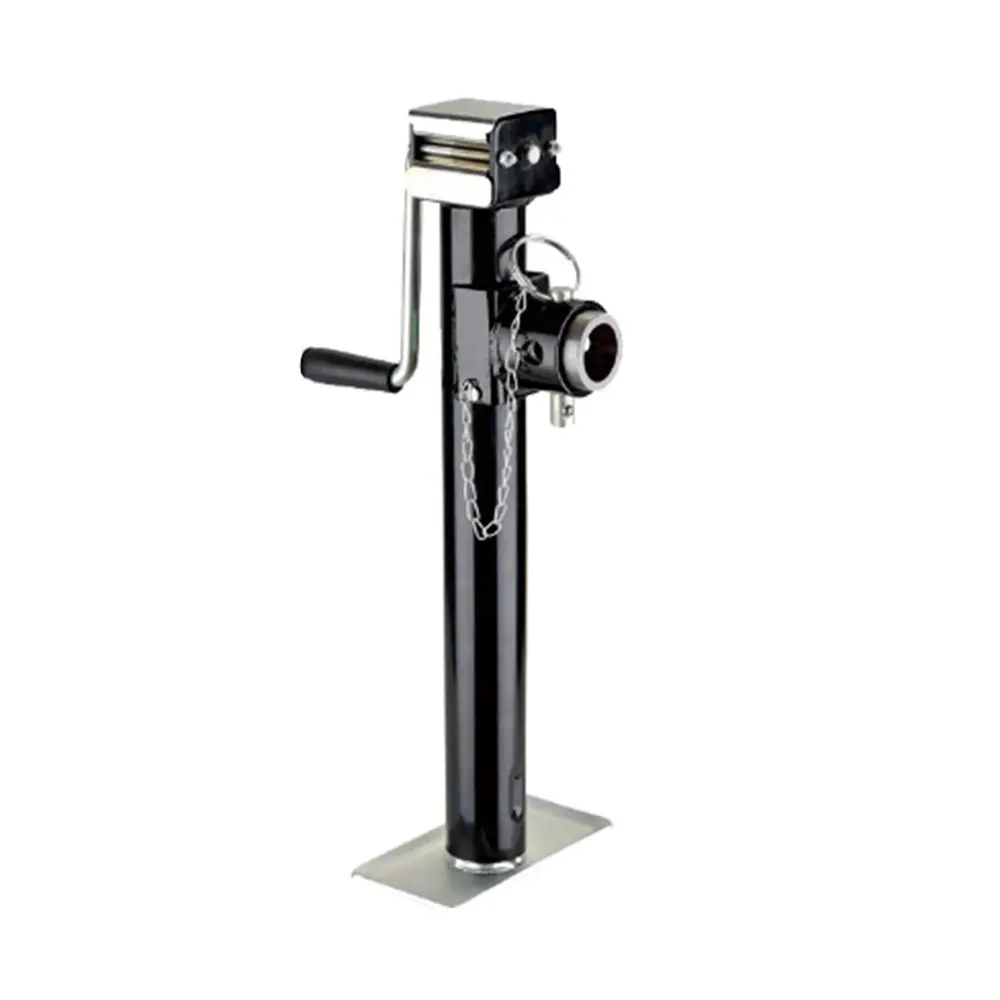
1. A-Frame or Fixed Mount Jack Installation
This is the most common type, where the jack bolts directly to the trailer’s A-frame coupler assembly.
-
The Task: You are typically replacing an existing jack or bolting onto pre-drilled flange plates.
-
Key Challenge: Ensuring perfect alignment so the jack lifts vertically without binding.
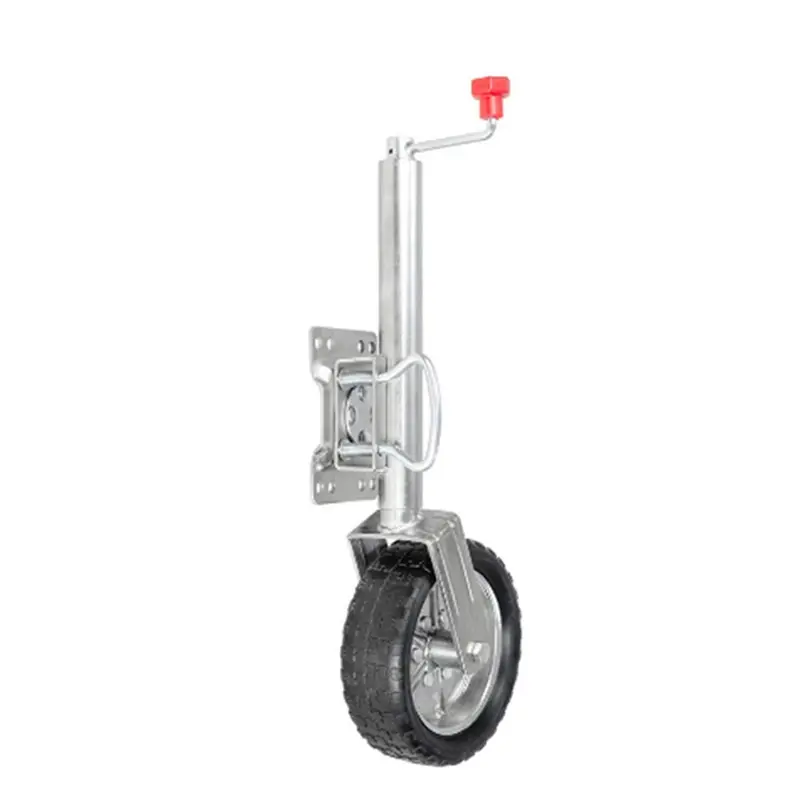
2. Front-Mount (Swivel Style) Jack Installation
This jack bolts to a crossmember on the trailer’s front frame, allowing it to swivel up for travel.
-
The Task: You are attaching a mounting bracket to a flat frame surface.
-
Key Challenge: Selecting a structurally sound location on the frame and ensuring the bracket is perfectly level and square.
3. Receiver-Style Jack Installation
This system involves installing a hitch receiver tube onto the trailer and using a separate, removable jack.
-
The Task: You are permanently welding or bolting a heavy-duty receiver tube to the trailer frame.
-
Key Challenge: Achieving a perfectly vertical and square receiver tube orientation for proper jack alignment.
Part 3: The Step-by-Step Installation Walkthrough
We’ll focus on the most common and versatile scenario: installing a new front-mount swivel jack, which covers the core principles for all types.
Phase 1: Positioning & Marking (The Most Important Step)
-
Identify the Mounting Location: Choose a section of the front frame crossmember that is flat, unobstructed, and has clear vertical clearance for the jack’s full travel. Ensure the jack, when raised, will not hit the trailer’s front panel or wiring.
-
Dry-Fit & Center: Hold the jack’s mounting bracket in place. Ensure the jack’s lift screw will be as vertical as possible when deployed. Use a speed square to check for level.
-
Mark for Bolts: Once positioned, use a marker or center punch to mark the center of each bolt hole through the bracket onto the trailer frame. Double-check measurements before drilling.
Phase 2: Drilling & Preparation
-
Pilot Punch: Use a center punch to make a small indentation at each mark. This prevents the drill bit from “walking” off-center.
-
Drill Carefully: Start with a smaller pilot bit, then drill the final hole to the exact size specified for your bolts (e.g., for a 1/2″ bolt, you typically need a 17/32″ hole). Drill straight and steady.
-
Deburr: Use a file or deburring tool to remove sharp edges and metal burrs from both sides of each hole. This ensures a flat seating surface for the hardware.
Phase 3: Dry Fit & Final Assembly
-
Test Fit: Place the mounting bracket over the holes and insert the bolts by hand. They should slide through with slight resistance. This confirms your holes are aligned.
-
Apply Thread Locker: For critical, high-vibration applications, apply a medium-strength thread locker (like blue Loctite) to the bolt threads.
-
Secure the Bracket: Insert bolts through the bracket and frame. On the inside of the frame, add a flat washer followed by a lock washer (if not using Nylock nuts), then the nut. Tighten finger-tight only at this stage.
Phase 4: Attaching the Jack & Final Torquing
-
Attach Jack to Bracket: Pivot the swivel head of the jack onto the mounting bracket’s pivot pin. Secure it with the provided hairpin clip or lynch pin. Never use a bolt or makeshift pin here.
-
The Final Torque Sequence: This is where a torque wrench is mandatory.
-
Gradually tighten the mounting bracket bolts in a criss-cross pattern, just like lug nuts on a wheel.
-
Consult the jack’s manual for the specific torque value (if given). If not, a general guideline for 1/2″ Grade 5 bolts is about 55-65 ft-lbs. Overtightening can strip threads or distort the frame.
-
The goal is a rigid, zero-movement connection between the bracket and the frame.
-
Phase 5: Post-Installation Check & Function Test
-
Visual Inspection: Check that all bolts are secure, the pivot pin is locked, and the jack swings smoothly between its stowed and operating positions.
-
Operational Test: Slowly crank the jack all the way up and down. It should move smoothly without binding, grating, or twisting. Any resistance indicates misalignment.
-
Load Test: Carefully raise the trailer tongue slightly off the jack stands using the new jack. Listen for creaks and watch for any flex or movement at the mounting points. The jack should feel solid.
Part 4: Pro Tips, Common Mistakes, and Maintenance
Pro Tips for a Flawless Install:
-
Upgrade the Footpad: If your jack has a small foot, weld or bolt on a larger steel plate to prevent sinking on soft ground.
-
Corrosion Defense: After drilling, touch up the bare metal around the holes with primer and paint to prevent rust.
-
Wiring for Electric Jacks: If installing an electric jack, route wiring securely along the frame using zip ties and conduit. Connect to a dedicated circuit with an in-line fuse.
Costly Mistakes to Avoid:
-
Mistake #1: Mounting to Unsuitable Metal. Never mount a jack to thin sheet metal, the trailer’s skin, or a hollow tongue box. It must be on the main structural frame.
-
Mistake #2: Using Poor Hardware. Avoid cheap, ungraded bolts from the hardware store bin. They shear under shear stress.
-
Mistake #3: Skipping the Torque Wrench. Uneven or improper tightness leads to loosening and fatigue failure.
-
Mistake #4: Ignoring Alignment. A jack that isn’t vertical puts extreme side-load on the screw mechanism, causing rapid wear and potential failure.
Simple Maintenance for Long Life:
-
Lubricate: Regularly grease the lift screw and pivot points with a high-quality, water-resistant grease.
-
Inspect: Before each trip, check that all mounting bolts are tight and the pivot pin is secure.
-
Clean: Keep the screw mechanism free of mud and grit.
Conclusion: A Secure Mount is the Foundation of Reliability
Knowing how to mount a trailer jack correctly transforms it from a simple accessory into an integrated, dependable component of your trailer. Taking the time to plan, use the right tools, and follow a precise installation process pays dividends in safety, ease of use, and equipment longevity. Don’t rush the job—your safety and your trailer’s integrity depend on it.
Ready to Install with Confidence?
Equip yourself with the right jack and the knowledge for a bulletproof installation.
Shop our selection of heavy-duty trailer jacks and enjoy discounts on bulk orders.
Related Products