Introduction: The Unsung Hero of Cargo Safety
Every year, thousands of accidents occur because of unsecured cargo. A load that shifts during transit can become a dangerous projectile, flip out of a truck bed on a sharp turn, or slide forward during sudden braking. Whether you’re hauling construction equipment, motorcycles, or industrial machinery, the difference between a safe journey and a disastrous one often comes down to one simple tool: the ratchet strap.
But not all ratchet straps are created equal. Understanding how they work, what makes them safe, and how to choose the right one for your application is essential for every fleet operator, logistics professional, and truck owner.
In this comprehensive guide, we’ll break down the mechanics of ratchet straps, explain why they’re the safest cargo securement option available, and give you the knowledge you need to use them properly.
What Is a Ratchet Strap?
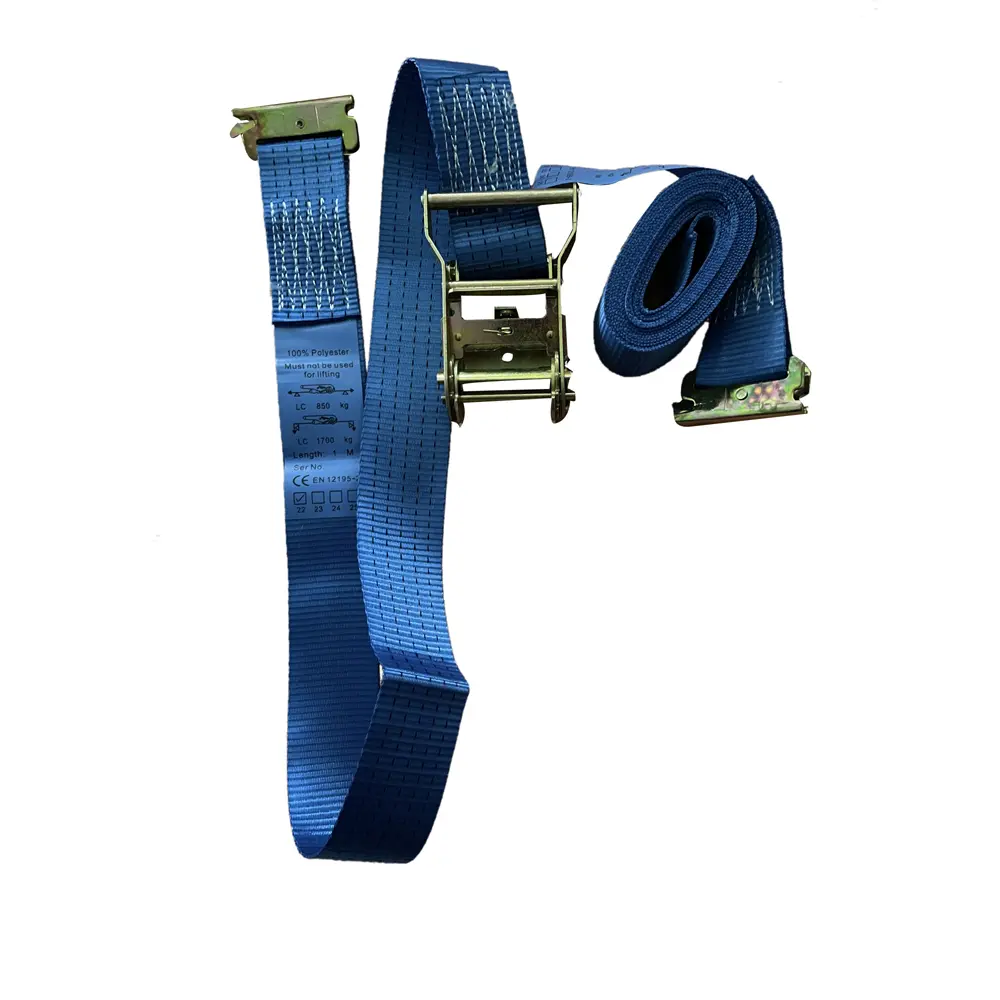
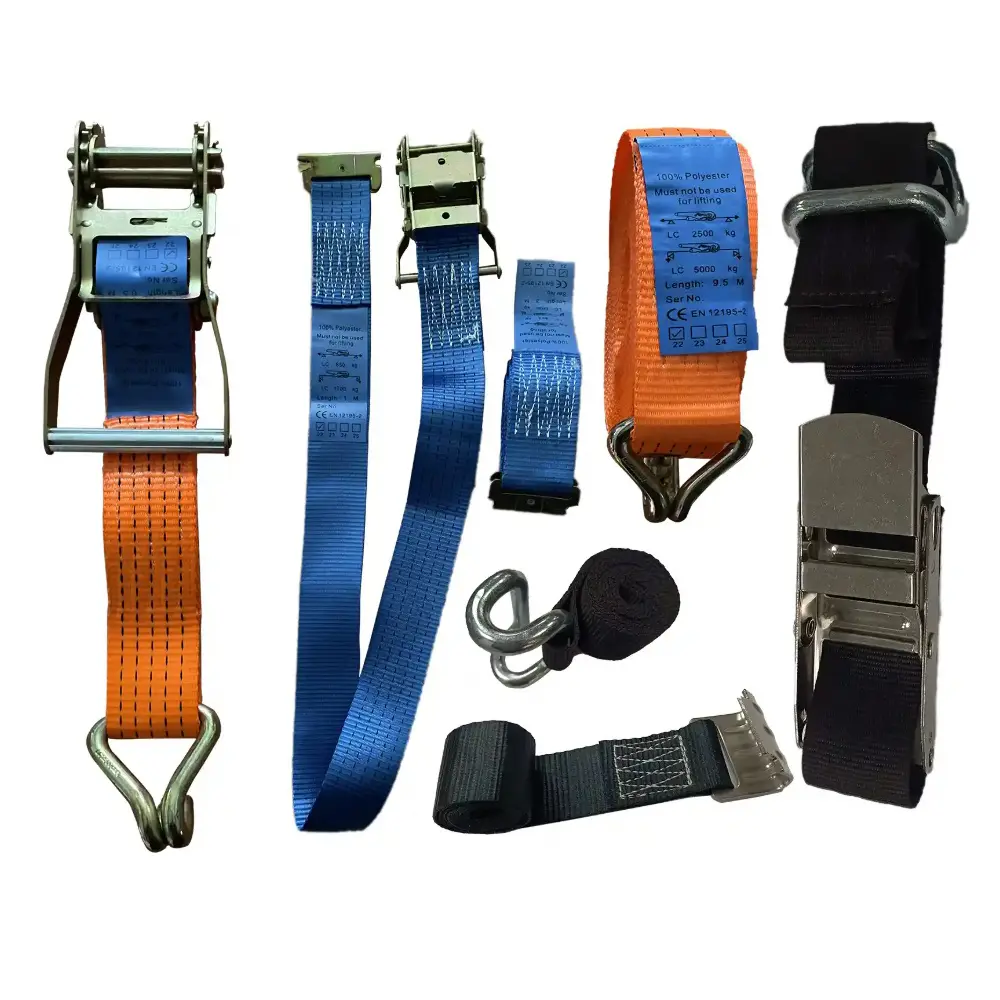
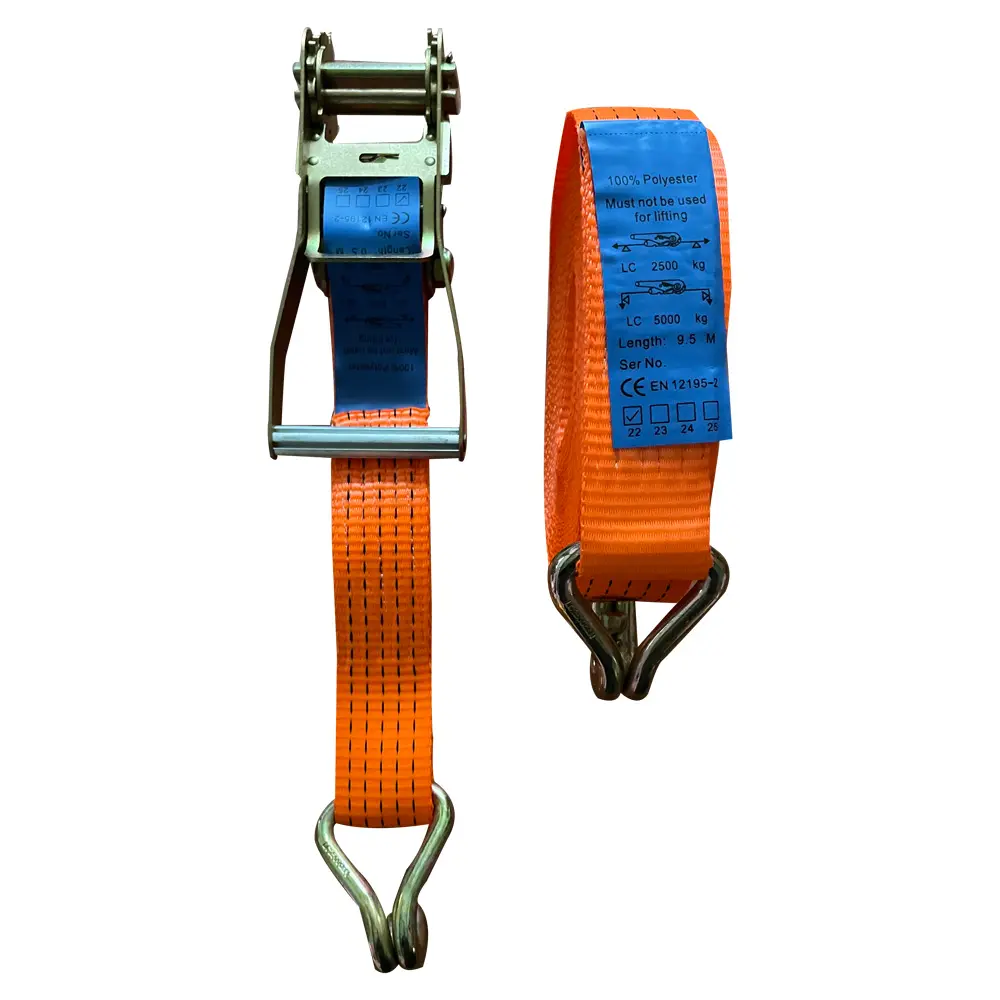
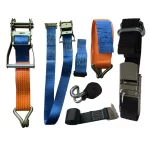
A ratchet strap is a tie-down tool made of a durable fabric belt and a ratcheting device that allows the user to create and maintain high tension between two anchored points. The ratcheting mechanism is what sets these straps apart from simpler tie-downs like cam buckle straps or ropes.
At its core, a ratchet strap is a high-performance windlass drum winch with a slot in the middle that can be locked in position. When properly used, it provides a level of tension and security that other methods simply cannot match.
The Four Main Parts of a Ratchet Strap
Understanding the components of a ratchet strap is the first step to using it correctly:
-
The Handle – Used as a lever to tighten the strap. When fully opened, it releases the strap’s tension.
-
The Ratcheting Pawl – Allows the handle to spin the windlass and wind the strap around it.
-
The Windlass (Axle) – The spool that is spun around and collects the strap.
-
The Locking Pawl – Prevents the windlass from unwinding until you release it by fully opening the handle.
Additionally, every ratchet strap has a slot on the axle where the loose strap is fed through, and hooks on each end that serve as anchor points.
How Does a Ratchet Strap Work?
The genius of the ratchet strap lies in its mechanical advantage. Here’s how it works step by step:
Step 1: Feed the Strap
Lay out the strap and open the handle flat. Take the loose end of the strap (the end without the hook) and insert it into the slot on the axle. Pull it through until you have your desired length.
Step 2: Anchor the Hooks
Attach the hook on the ratchet end to your vehicle’s anchor point. Attach the hook on the opposite end to the second anchor point on your cargo or trailer.
Step 3: Ratchet to Tighten
Open and close the handle repeatedly. Each stroke rotates the windlass, winding the strap around the axle and building tension. The ratcheting pawl allows the windlass to rotate in only one direction, while the locking pawl prevents it from spinning backward.
Step 4: Lock and Secure
Once the strap feels tight and your load is secure, close the handle completely. The locking pawl engages and holds the tension until you’re ready to release it.
To release: Firmly grip the handle and release mechanism, squeeze the release, and pull the handle back toward the axle. Leave the handle open and pull out the rest of the strap.
Why Ratchet Straps Are the Safest Choice
1. Superior Tension and Hold
Unlike ropes or cam buckle straps, ratchet straps can achieve and maintain extremely high tension. The mechanical advantage of the ratcheting mechanism allows you to apply far more force than you could with manual pulling alone. This means your cargo stays firmly in place, even during sudden stops or sharp turns.
2. The 3:1 Safety Ratio – A Critical Standard
The single most important safety feature of ratchet straps is the 3:1 safety ratio. This industry-standard principle means:
Working Load Limit (WLL) = Breaking Strength ÷ 3
In other words, the safe working load of a ratchet strap is one-third of its breaking strength.
For example, if a ratchet strap has a breaking strength of 10,000 pounds, its Working Load Limit (WLL) is approximately 3,330 pounds. This 3:1 safety margin accounts for dynamic forces during transport—such as braking, acceleration, and cornering—that multiply the static weight of your cargo.
Every compliant ratchet strap must come with a label indicating its size, maximum load, and WLL. Always use the WLL when selecting ratchet straps, never the breaking strength. If you don’t see this information on the strap or its packaging, don’t buy it.
3. High-Strength Polyester Webbing
Most quality ratchet straps are made from polyester webbing. Unlike nylon (which stretches) or polypropylene (which can be brittle), high-quality polyester offers minimum stretch. This means once you tension a polyester ratchet strap, it stays tight. The tight weave of quality polyester webbing also provides exceptional durability and resistance to abrasion.
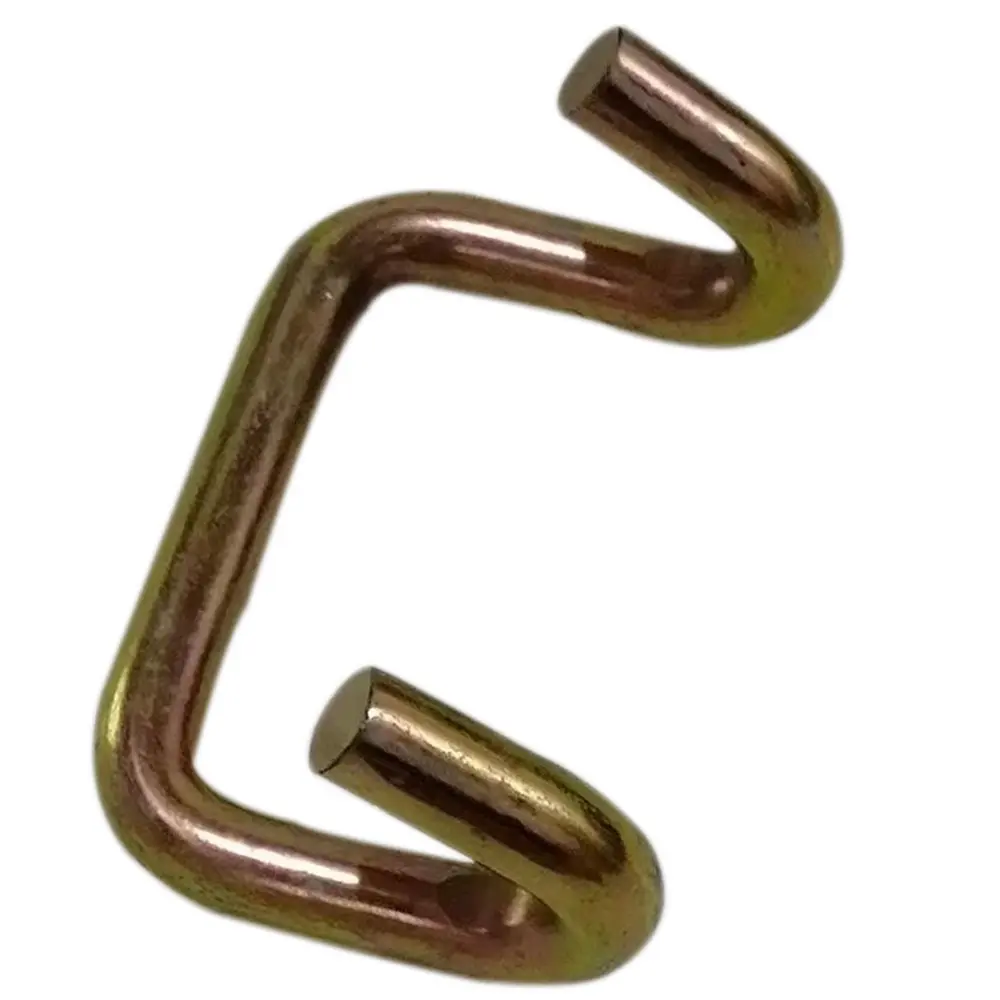
4. Versatile Hook Options for Any Application
Ratchet straps come with various hook types to suit different anchoring needs:
| Hook Type | Best For |
|---|---|
| S-Hooks | Standard holes and anchor points |
| Snap Hooks | Secure grip with spring-tensioned closure |
| Flat Hooks | Low-profile use over trailer rub rails |
| J-Hooks (Wire Hooks) | Gripping anchor points tightly, preferred for heavy cargo |
| Double J-Hooks | Heavy loads—lie at 90° to the strap for direct connection and prevent twisting |
| Clevis Grab Hooks | Heavy-duty use with chains for equipment loads |
5. Reliability in Extreme Conditions
High-quality ratchet straps are engineered to withstand harsh environments. Many feature UV-resistant webbing that won’t degrade under prolonged sun exposure, and the polyester material resists moisture damage better than nylon. This makes ratchet straps ideal for outdoor transport, flatbed trucks, and marine applications.
Ratchet Straps vs. Cam Buckle Straps: What’s the Difference?
Many people confuse ratchet straps with cam buckle straps, but they serve very different purposes:
| Feature | Ratchet Straps | Cam Buckle Straps |
|---|---|---|
| Load Capacity | High (often 3,000+ lbs WLL) | Low (typically max ~500 lbs) |
| Tension | High, mechanical advantage | Low, manual pulling only |
| Best For | Heavy cargo, equipment, vehicles | Light loads, moving boxes, camping gear |
| Size | Larger, bulkier | Compact, lightweight |
The bottom line: If you’re securing anything heavier than a push mower, you need ratchet straps.
How to Choose the Right Ratchet Strap
1. Determine the Right Capacity
Calculate the total weight of your cargo. Remember that the combined WLL of all straps must exceed the cargo weight. For a 5,000-pound load, you need straps with a combined WLL of at least 5,000 pounds—which means each strap’s breaking strength should be three times that.
2. Choose the Right Width
Ratchet straps commonly come in 1-, 1.5-, 2-, and 3-inch widths. Smaller 1- and 1.5-inch straps are sufficient for most pickup truck loads, while larger sizes are needed for vehicles and heavy equipment on trailers.
3. Select the Right Length
Your straps should be at least 1.5 times as long as your cargo to ensure enough strap to secure the load.
4. Consider the Hook Type
Choose hooks that match your vehicle’s anchor points. Flat hooks work well with trailer rub rails; J-hooks are ideal for D-rings and frame rails.
How to Use Ratchet Straps Properly: A Step-by-Step Guide
Before You Start: Inspection
Always inspect your ratchet straps before each use:
-
Check the webbing for cuts, abrasions, fraying, or protruding fibers
-
Look for fading—discoloration indicates UV or moisture damage that weakens the strap
-
Inspect the ratchet mechanism for smooth operation; it should not bind
-
Any cut or erosion greater than 1/4″ renders the strap unsafe—discard it immediately
Step-by-Step Usage
-
Attach the hooks to proper tie-off points on your vehicle and cargo
-
Feed the loose strap through the windlass drum slot
-
Take up slack, then release about 12–16 inches of strap
-
Crank the handle until you have at least two complete windings on the drum (three is preferable)
-
Continue ratcheting until the strap feels tight and your load is secure
-
Push on the load to ensure it’s not shifting or sliding
-
Use multiple straps—never rely on just one, especially for large or heavy cargo
Common Mistakes to Avoid
-
Not enough windings – Failure to wind the strap a minimum of two times around the drum is the biggest mistake users make
-
Over-tightening – Can bend the ratchet frame and damage the mechanism
-
Using damaged straps – Frayed webbing or rusted mechanisms are accidents waiting to happen
-
Insufficient straps – For heavy equipment over 10,000 lbs, the DOT requires a minimum of four tie-downs、
Maintenance and Storage: Extending the Life of Your Ratchet Straps
Regular Inspections
Inspect your straps every time you use them and before storing them. Look for:
-
Fraying, cuts, or abrasions
-
Rust or damage to the ratchet mechanism
-
Fading that indicates UV degradation
Cleaning
After use, hose down the straps with water and let them dry before storing. For stubborn dirt, use mild detergent and warm water with a scrub brush.
Storage
-
Store straps in a dark, cool, dry area
-
Never leave straps exposed to sunlight on the back of a truck bed—UV rays break down the webbing
-
Keep them out of prolonged wet conditions
Lubrication
Lubricate the ratchet mechanism weekly so that parts operate smoothly.
When to Replace
If the strap shows any cut greater than 1/4″, significant fraying, or if the ratchet mechanism is damaged or bent, discard it and replace it. If only the long end of the strap (without hardware) is damaged, you can replace just that end economically. If the ratcheting end is damaged, replace the entire strap.
Applications: Where Ratchet Straps Excel
Ratchet straps are used across countless industries and applications:
-
Flatbed trucks – Securing steel coils, lumber, pipes, and machinery
-
Enclosed trailers – Holding motorcycles, ATVs, and vehicles in place
-
Roof racks – Strapping down cargo on top of vehicles
-
Shipping containers – Interior load securement
-
Tow trucks – Securing disabled vehicles
-
Agriculture – Holding equipment and hay bales
-
Construction – Securing scaffolding, generators, and tools
Why Choose Our Ratchet Straps?
At HangCheng, we understand that cargo securement is not just about compliance—it’s about safety, reliability, and peace of mind. Our ratchet straps are engineered with:
-
High-strength polyester webbing with tight weave for minimum stretch and maximum durability
-
Zinc-plated ratchet mechanisms for corrosion resistance
-
Clear WLL labeling on every strap for easy identification
-
Multiple hook options to suit your specific application
-
Full-cycle design-to-manufacturing capability – from precision engineering to ISO-compliant production
We offer ratchet straps in various widths (1″, 2″, 3″), lengths, and load capacities to meet the needs of fleets of all sizes. Our integrated approach—design, prototyping, and manufacturing under one roof—ensures consistent quality, shorter lead times, and competitive pricing.
Final Thoughts
Ratchet straps are the gold standard for cargo securement for good reason. Their mechanical advantage, 3:1 safety ratio, durable polyester webbing, and versatile hook options make them the safest and most reliable choice for securing heavy loads.
But a tool is only as good as the person using it. Understanding how ratchet straps work, choosing the right strap for your application, inspecting them regularly, and using them correctly are all essential to ensuring your cargo—and everyone on the road—stays safe.
Secure your cargo. Protect your investment. Choose quality ratchet straps from a manufacturer you can trust.
Contact us for more information; bulk orders enjoy discounts.
Related Products