Introduction: Why Getting It Right Matters
In the world of industrial equipment, material handling, and trailer manufacturing, caster wheel are the unsung heroes of mobility. They determine how easily your equipment moves, how safely it stays in place, and how long it lasts under demanding conditions. Yet selecting the right caster wheel often feels like navigating a maze of technical specifications: load ratings, wheel materials, brake types, and sizes. Choose incorrectly, and you face premature failure, damaged floors, safety hazards, and costly downtime.
This comprehensive guide demystifies the selection process. We’ll walk you through the four most critical factors—load capacity, wheel material, brake vs. non-brake decisions, and wheel size—and provide a clear, step-by-step framework to ensure you choose the perfect caster for your specific application. Whether you’re outfitting a heavy-duty trailer, equipping a warehouse cart, or designing custom industrial equipment, this guide will transform you from confused buyer to informed specifier.
Part 1: Caster Wheel Load Capacity
Load capacity is the single most important specification. Get this wrong, and nothing else matters—your caster will fail, potentially catastrophically.
What Is Load Capacity?
Load capacity is the maximum weight a single caster can safely support under normal operating conditions. This isn’t a suggestion—it’s a safety limit. Exceeding it risks:
-
Wheel deformation or cracking
-
Bearing failure
-
Swivel section fracture
-
Complete caster collapse, causing equipment damage and potential injury
How to Calculate Your Required Load Capacity
Follow this simple formula:
Step 1: Determine Total Equipment Weight
Include the empty equipment weight plus the maximum load it will carry.
Step 2: Account for Dynamic Forces
Equipment isn’t always perfectly balanced. Loads shift, floors aren’t perfectly level, and impacts occur during movement. Add a safety margin of 25-50% to your calculated weight.
Step 3: Distribute Weight Across Casters
The basic formula is:
Required Capacity Per Caster = (Total Weight × Safety Factor) ÷ Number of Casters
Example Calculation:
-
Equipment weight: 500 lbs
-
Maximum load: 1,000 lbs
-
Total weight: 1,500 lbs
-
Safety factor: 30% (1.3 multiplier)
-
Number of casters: 4
(1,500 lbs × 1.3) ÷ 4 = 487.5 lbs per caster minimum
In this case, you’d need casters rated for at least 500 lbs each.
Important Note: If your equipment will be towed or pulled at speed, or if it will travel over rough surfaces, increase your safety factor further—sometimes to 2-3× the calculated load.
Load Rating Standards
Reputable manufacturers provide clear load ratings based on standardized testing. Look for casters certified to meet or exceed industry standards such as ISO 22883 (formerly DIN EN 12530). These standards ensure consistent, reliable performance.
Part 2:Caster Wheel Material – Matching the Wheel to the Environment
The wheel material determines how your caster performs on different floors, in different environments, and under different loads. This choice affects rolling ease, floor protection, noise, and longevity.
Common Wheel Materials Compared
| Material | Load Capacity | Floor Protection | Rolling Ease | Noise | Chemical Resistance | Best Applications |
|---|---|---|---|---|---|---|
| Polyurethane | High | Excellent | Good | Quiet | Good | General industrial, trailers, carts where floor protection matters |
| Rubber | Medium | Excellent | Moderate | Quiet | Moderate | Quiet operation, sensitive floors, indoor use |
| Nylon | High | Poor | Excellent | Noisy | Excellent | Heavy loads on smooth floors, wet environments |
| Steel | Very High | Poor (damages floors) | Good | Very Noisy | Excellent | Extreme loads, outdoor rail applications, rough surfaces |
| Phenolic | High | Good | Moderate | Moderate | Good | High-temperature environments, wet conditions |
| Cast Iron | Very High | Poor | Good | Noisy | Excellent | Extreme heavy-duty, foundries, steel mills |
Polyurethane: The Versatile Champion
Polyurethane has become the preferred material for most industrial and trailer applications—and for good reason.
Advantages:
-
Excellent load-bearing capacity (often rivaling steel)
-
Outstanding floor protection—won’t mark or damage surfaces
-
Quiet operation compared to hard materials
-
Good chemical and oil resistance
-
Available in various hardness levels for different applications
-
Long wear life
Disadvantages:
-
Higher cost than rubber or nylon
-
Can be damaged by extreme heat
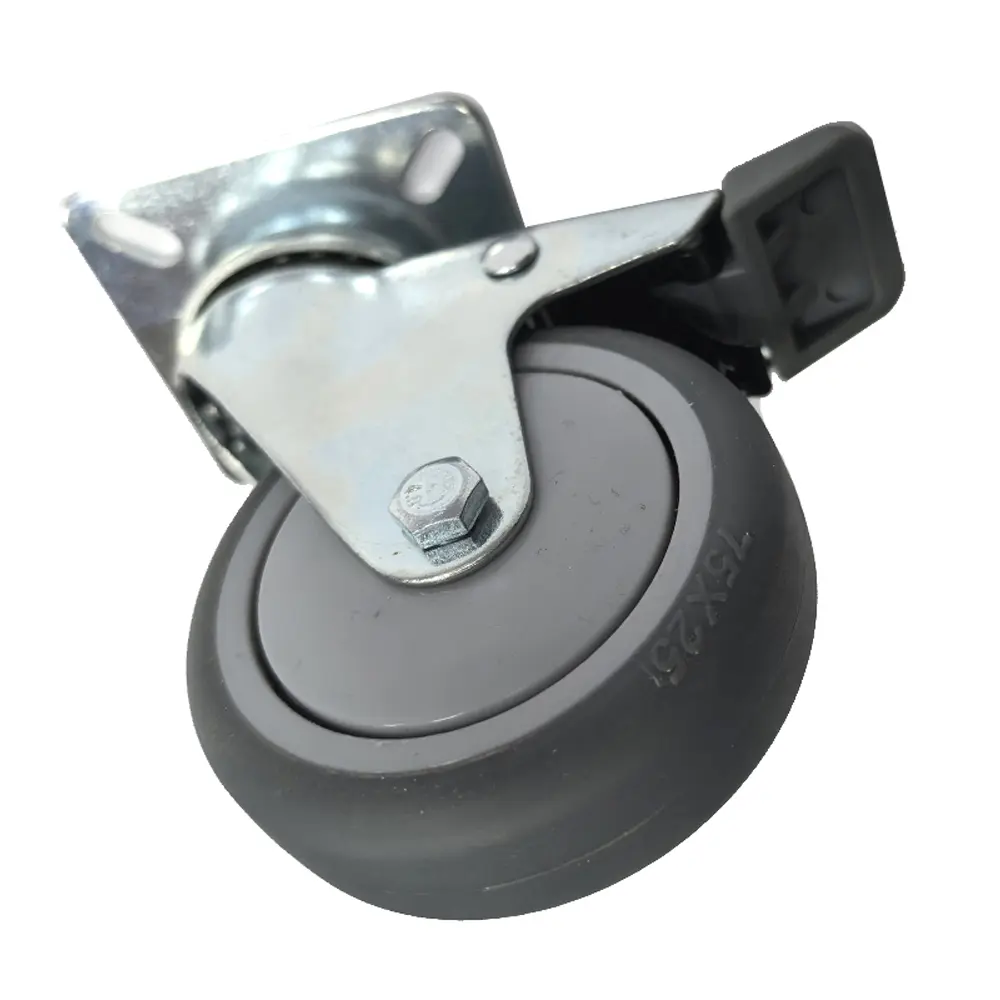
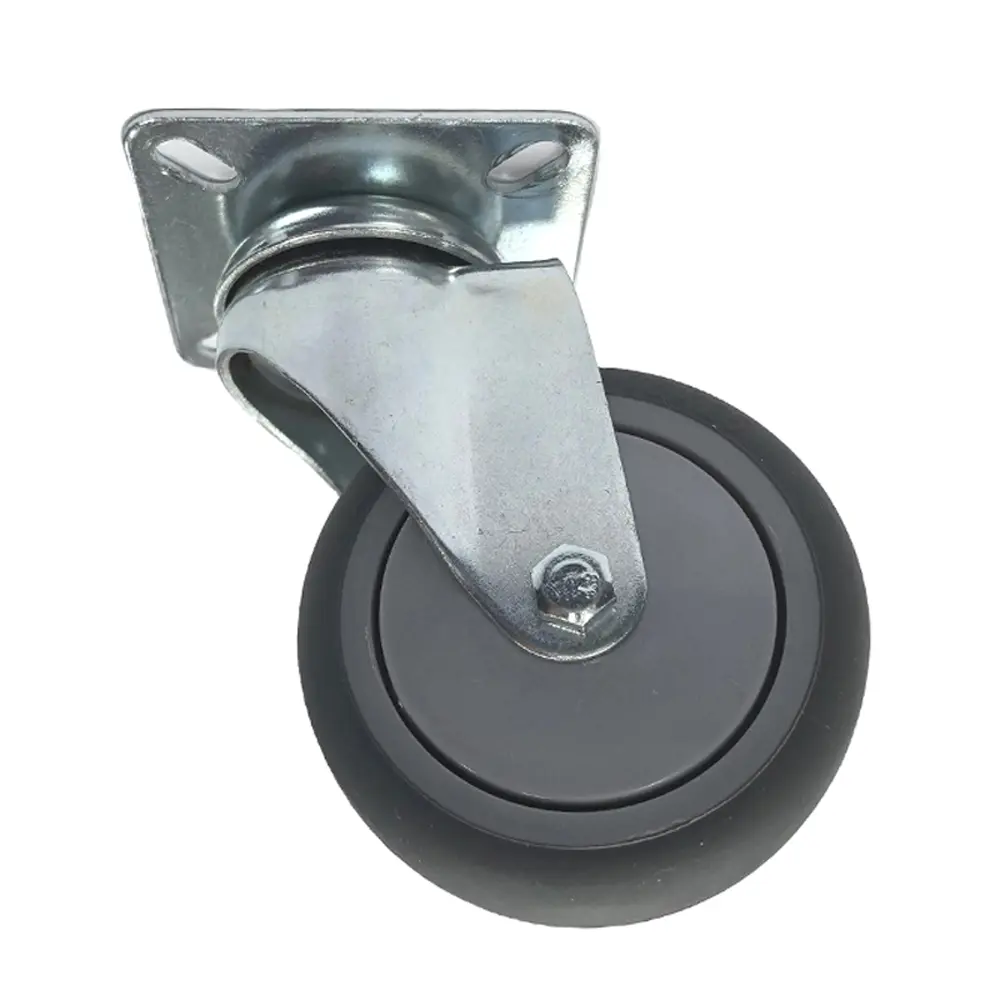
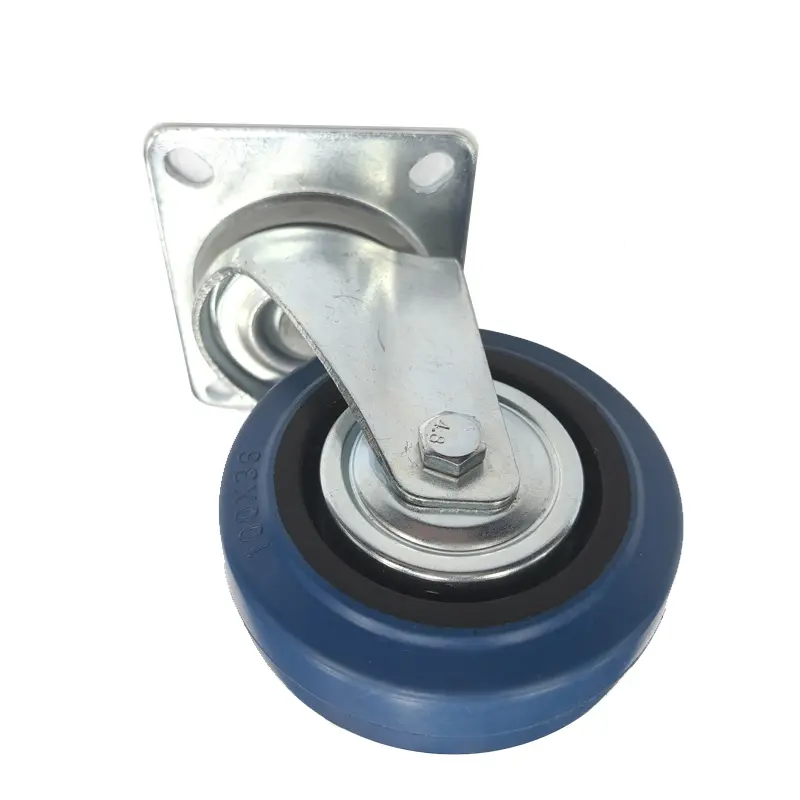
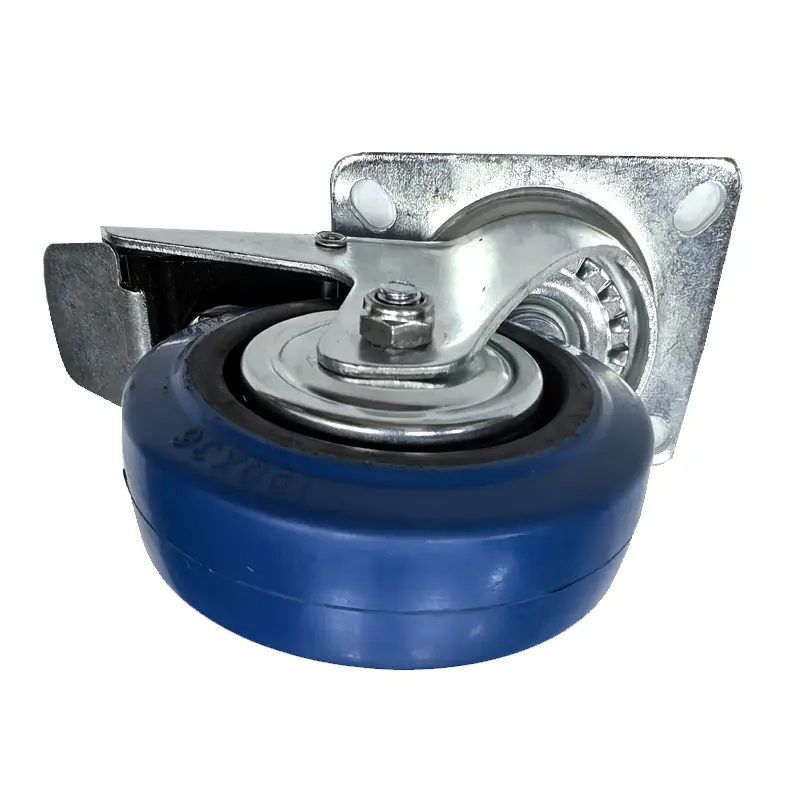
For Hangcheng’s CW Series casters, polyurethane options provide the ideal balance of strength and floor protection for most applications.
Rubber: The Quiet Performer
Rubber wheels excel where noise reduction and floor protection are top priorities.
Advantages:
-
Quietest operation
-
Excellent shock absorption
-
Great traction and grip
-
Protects delicate floors
Disadvantages:
-
Lower load capacity than polyurethane
-
Can degrade from oil and certain chemicals
-
Higher rolling resistance
Nylon: The Easy Roller
Nylon wheels offer exceptionally low rolling resistance, making equipment easier to move.
Advantages:
-
Very easy rolling—reduces operator fatigue
-
Good chemical resistance
-
Affordable
-
Non-marking
-
Resists moisture
Disadvantages:
-
Can be noisy on hard floors
-
Lower shock absorption
-
Less floor-friendly than polyurethane or rubber
Making Your Material Decision
Consider these questions:
-
What type of floor will the caster roll on?
-
Polished concrete or tile? Choose polyurethane or rubber
-
Rough industrial floor? Polyurethane or steel may be needed
-
Outdoor gravel or dirt? Pneumatic or semi-pneumatic wheels
-
-
Is floor protection important?
-
Always choose polyurethane or rubber. Avoid nylon and steel on finished floors
-
-
How much weight will you carry?
-
Heavy loads (>1,000 lbs per caster) may require polyurethane, steel, or phenolic
-
-
Is noise a concern?
-
For quiet operation, choose rubber or soft polyurethane
-
-
What’s the environment?
-
Wet/outdoor: Nylon, stainless steel, or sealed bearings
-
Chemicals: Check material compatibility charts
-
High heat: Phenolic or steel
-
Food processing: Special non-toxic, easy-clean materials
-
-
How far will equipment travel?
-
Long distances benefit from low-rolling-resistance materials like nylon or hard polyurethane
-
Part 3: Brake vs. Non-Brake – Stability When You Need It
The brake decision is fundamentally about one question: Does your equipment need to stay put?
Understanding Brake Types
Not all brakes are created equal. Understanding the options is essential:
| Brake Type | What It Locks | Best For |
|---|---|---|
| Wheel Brake | Wheel rotation only | General stability, preventing rolling |
| Swivel Lock | Swivel rotation only | Converting swivel to rigid for straight-line movement |
| Total-Lock Brake | Both wheel and swivel | Maximum stability on slopes or for safety-critical applications |
| Face Contact Brake | Wheel (applies to tread) | Heavy loads requiring exceptional holding force |
| Side Brake | Wheel hub | Medium-duty applications, most common type |
When to Choose Non-Brake Caster Wheel
Non-brake casters are the right choice when:
-
Equipment is in constant motion (assembly line carts, delivery trolleys)
-
The floor is perfectly level with no risk of rolling
-
There’s no need for stationary operation (loading/unloading, precise positioning)
-
Budget is a primary concern (non-brake casters cost less)
-
Minimal maintenance is desired (fewer moving parts)
Ideal applications: Warehouse carts constantly moving between zones, assembly line flow carts, light-duty furniture.
When to Choose Brake Caster Wheel
Brake casters are essential when:
-
Equipment must remain stationary during use (workbenches, medical equipment, loading operations)
-
Safety is at risk if equipment moves unexpectedly
-
The floor has any slope or incline
-
Precise positioning is required
-
Equipment will be loaded or unloaded while stationary
Ideal applications: Medical equipment, mobile workbenches, retail displays, loading dock carts, equipment on inclines.
The “Best of Both Worlds” Approach
For most applications, the optimal solution is not all-or-nothing. A mixed configuration provides maximum functionality:
-
Two swivel casters with brakes on the steering end
-
Two rigid casters without brakes on the fixed end
This setup delivers:
-
Control and stability when needed
-
Efficient straight-line tracking
-
Lower cost than four braked casters
-
Perfect for most carts, dollies, and light equipment
For heavier equipment or applications requiring absolute stability, consider brakes on all casters.
Part 4: Caster Wheel Size – Diameter and Width Matter
Wheel size—both diameter and width—significantly impacts performance. Choosing the right size ensures smooth rolling, obstacle clearance, and proper weight distribution.
Caster Wheel Diameter
Larger diameters roll easier. A larger wheel:
-
Reduces rolling resistance, making equipment easier to move
-
Rolls more smoothly over uneven floors, thresholds, and debris
-
Distributes load over a larger contact area, reducing floor pressure
-
Typically offers higher load capacity
Smaller diameters are more compact and may be necessary for low-profile equipment, but they require more effort to push and are more susceptible to getting stuck on obstacles.
General Guidelines:
-
For smooth, level floors: 3-4 inch diameter may suffice
-
For rough floors or frequent obstacles: 5-8 inch diameter recommended
-
For outdoor use or very rough terrain: 8+ inch diameter with pneumatic tires
Wheel Width
Wider wheels distribute weight over a larger area, reducing floor pressure and improving stability. They are ideal for:
-
Soft floors (wood, tile) where marking is a concern
-
Heavy loads requiring lower floor loading
-
Applications needing extra stability
Narrower wheels offer lower rolling resistance on hard surfaces and are suitable for:
-
Smooth, hard floors where floor protection isn’t critical
-
Applications with space constraints
Floor Loading Calculation
To prevent floor damage, calculate the floor loading pressure:
Floor Pressure (psi) = Total Weight ÷ (Wheel Contact Area × Number of Wheels)
Wheel contact area depends on wheel material and load. Soft materials (rubber) deform more, increasing contact area and reducing pressure. Hard materials (nylon, steel) have smaller contact areas, increasing pressure.
If floor protection is critical, choose wider wheels with softer tread materials.
Size Selection Checklist
Consider these factors when choosing size:
-
Obstacle height: Wheel diameter should be at least 3× the height of typical obstacles (cords, thresholds) for smooth rolling
-
Equipment height clearance: Ensure the caster’s total height (wheel + mounting) fits under your equipment
-
Floor condition: Rough floors demand larger diameters
-
Load weight: Heavier loads benefit from larger diameters and widths
-
Maneuverability requirements: Larger wheels may reduce maneuverability in tight spaces
Part 5: Putting It All Together – A Step-by-Step Selection Framework
Now that you understand the four key factors, use this systematic approach to choose your perfect caster:
Step 1: Calculate Load Requirements
-
Determine total weight (equipment + maximum load)
-
Add 25-50% safety margin
-
Divide by number of casters
-
Round up to nearest available capacity
Step 2: Choose Caster Wheel Material
-
Assess floor type and protection needs
-
Consider environment (moisture, chemicals, temperature)
-
Evaluate noise requirements
-
Match to load capacity needs
-
Select material: Polyurethane for most applications, rubber for quiet/floor-sensitive, nylon for easy rolling, steel for extreme loads
Step 3: Decide on Brakes
-
Ask: Does equipment need to stay put?
-
If yes, when? Occasionally or always?
-
Choose brake type based on stability requirements
-
Consider mixed configuration (2 braked + 2 non-braked)
Step 4: Select Caster Wheel Size
-
Determine minimum diameter needed for floor conditions and obstacles
-
Choose width based on floor loading and stability needs
-
Verify clearance under equipment
Step 5: Select Mounting Type and Additional Features
-
Plate mount: More stable, distributes load better. Best for heavy equipment
-
Stem mount: Easier to install, good for lighter applications and retrofits
-
Swivel vs. rigid: Usually 2 swivel + 2 rigid
-
Bearing type: Ball bearings for easy rolling, roller bearings for heavy loads, plain bearings for economy
-
Special requirements: Corrosion resistance, food-grade materials, cleanroom compatibility
Part 6: Common Selection Mistakes to Avoid
Mistake #1: Underestimating Load
The most common and dangerous error. Always add a safety margin.
Mistake #2: Ignoring Floor Protection
Hard wheels on soft floors damage both. Match wheel material to floor type.
Mistake #3: All Brakes or No Brakes
The mixed configuration often works best. Don’t assume all four need brakes—or that none do.
Mistake #4: Forgetting About Environment
Standard casters fail quickly in corrosive or wet environments. Choose appropriate materials.
Mistake #5: Overlooking Swivel Radius
Ensure swivel casters have clearance to rotate fully without hitting equipment frames.
Mistake #6: Buying on Price Alone
The cheapest caster is almost always the most expensive in the long run, considering replacement costs and downtime.
Mistake #7: Choosing Too Small a Diameter
Larger wheels roll easier and handle obstacles better. Don’t undersize.
Conclusion: Confident Selection, Reliable Performance
Choosing the right caster wheel doesn’t have to be complicated. By systematically evaluating your load requirements, wheel material needs, brake requirements, and size considerations, you can make an informed decision that ensures safety, efficiency, and long service life.
At Hangcheng, our CW Series caster wheel are engineered to meet the demanding requirements of industrial, trailer, and material handling applications.
Request a quote for volume orders or custom configurations.
Related Products