Introduction: Why Standard E-Track Isn’t Always Enough
In the world of cargo securement, E-Track has long been the gold standard. These high-strength steel rails, with their distinctive slotted design, have revolutionized how we secure loads in trailers, trucks, and vans. But here’s the reality that fleet managers and trailer owners eventually discover: standard, off-the-shelf E-Track rarely fits perfectly.
Whether you’re dealing with non-standard trailer dimensions, specialized cargo requirements, or unique mounting surfaces, the limitations of mass-produced rails can create frustration, wasted time, and compromised safety. That’s where custom E-Track tie-down rails come in—engineered solutions designed to match your exact specifications rather than forcing your project to adapt to standard sizes.
This comprehensive guide will walk you through everything you need to know about custom E-Track rails: when you need them, how to specify them, proper installation techniques, and how to maximize their value for your specific application.
Part 1: Understanding E Track Tie Down Rail Fundamentals
What Is E-Track?
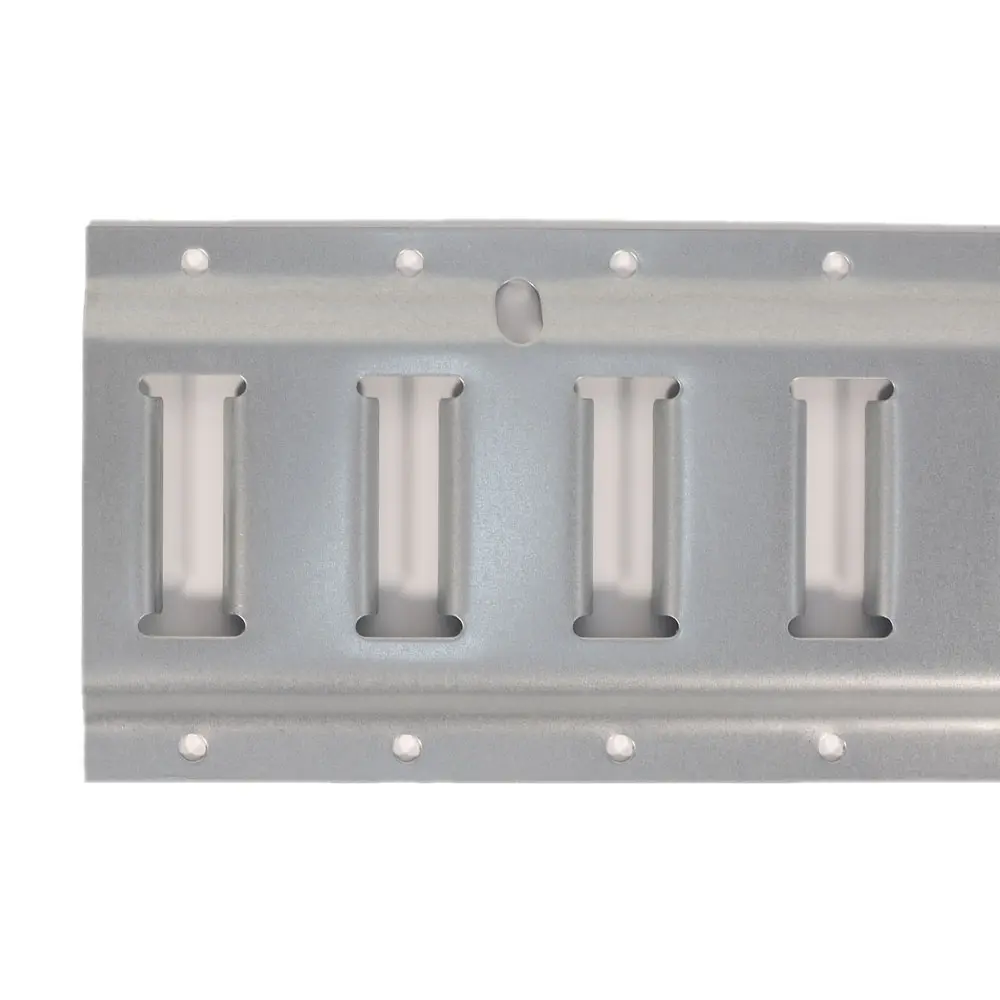
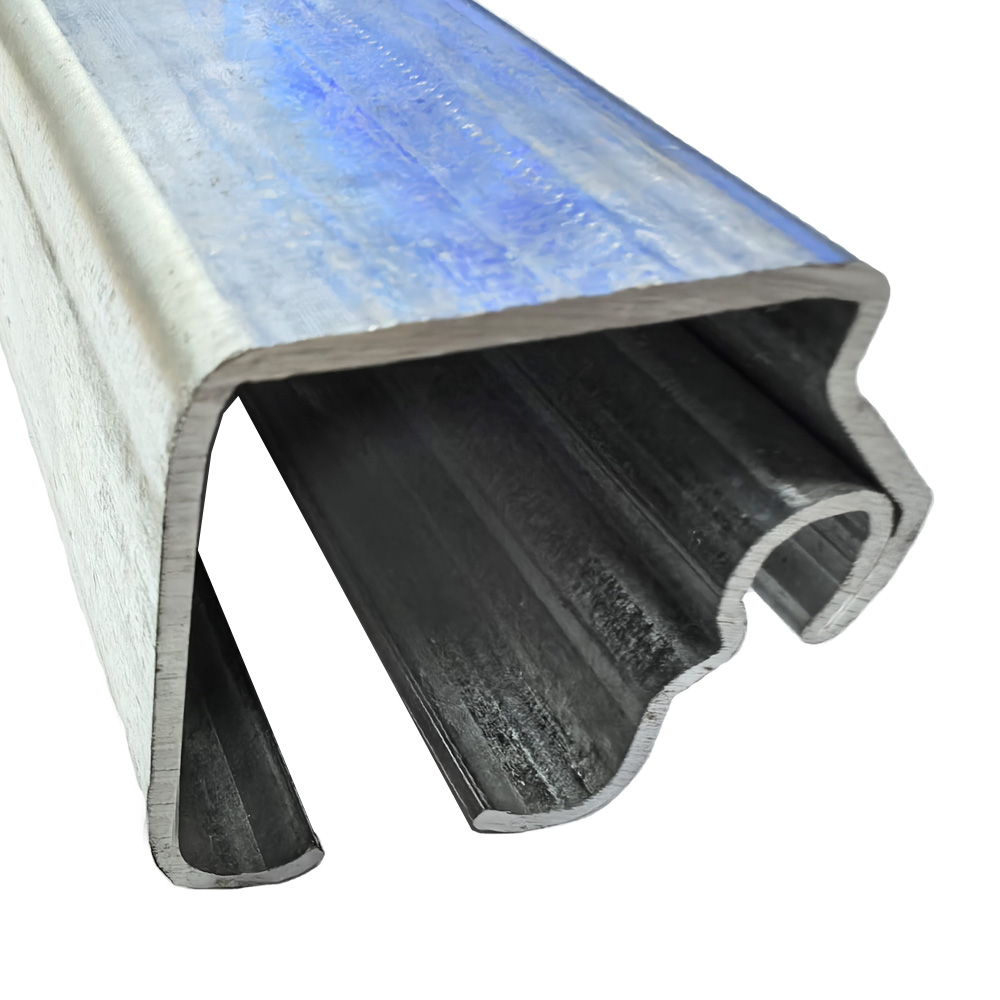
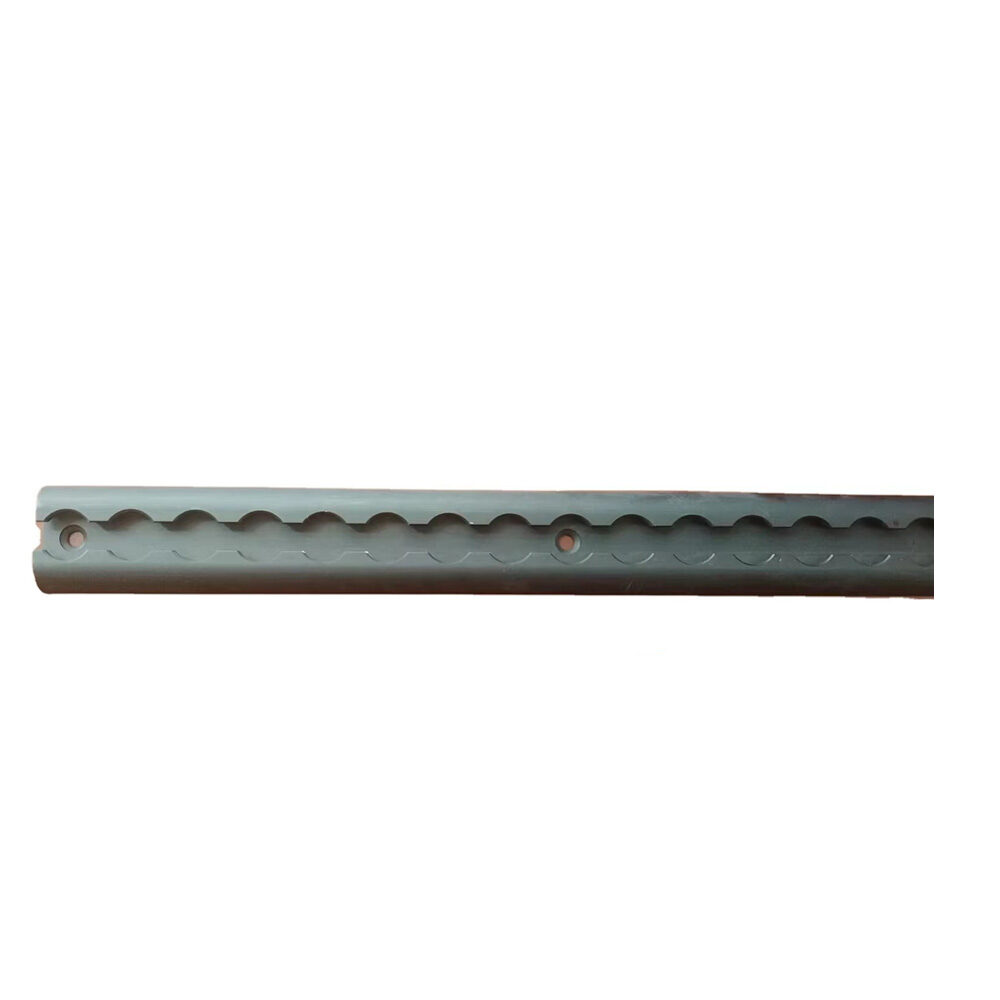
E-Track is a cargo securement system featuring steel rails with multiple rectangular slots at regular intervals. These slots accept a wide variety of fittings—D-rings, O-rings, straps with E-track fittings, hooks, and more—creating a highly versatile anchoring system.
The system consists of three main components working together: the steel rails themselves, the various fittings that attach to them, and the mounting hardware that secures everything to your vehicle. When properly installed, E-Track can handle impressive loads—typical working load limits reach 1,800-2,000 lbs per rail, with breaking strengths up to 5,400 lbs.
Horizontal vs. Vertical E-Track: Know Your Options
Before diving into customization, it’s essential to understand the two primary rail configurations:
Horizontal E-Track features perpendicular slots and a wider profile, providing more tie-down points per foot. It’s typically installed on walls and floors and works best for securing equipment and larger cargo. Standard lengths include 2′, 5′, 8′, and 10′ options.
Vertical E-Track has parallel slots with a narrower profile. It’s designed to accommodate various cargo heights and support second-level shelving using shoring beams. This configuration is ideal for smaller cargo and maximizing vertical space, typically available in 5′ lengths.
Both types come in galvanized or painted finishes. Galvanized rails offer superior corrosion resistance for exterior applications like flatbed trailers, while painted (typically powder-coated) options provide a cost-effective solution for enclosed environments
Part 2: When Do You Need Custom E-Track Rail?
Standard E-Track works well for many applications, but several scenarios demand custom solutions:
1. Non-Standard Trailer Dimensions
If your trailer’s interior height, width, or length doesn’t align with standard rail lengths (2′, 5′, 8′, 10′), you’re left with gaps or the need to overlap rails—both compromising the system’s integrity. Custom rails cut to your exact dimensions ensure continuous coverage and maximum usable anchor points.
2. Specialized Cargo Requirements
Irregular loads—turbine blades, oversized machinery, cylindrical tanks—often require specific anchor point configurations that standard spacing doesn’t accommodate. FMCSA testing has shown that standard E-track straps failed 34% faster when securing irregular loads compared to customized setups.
3. Unique Mounting Surfaces
Trailers come in various materials—wood floors, aluminum walls, steel framing. Custom rails can be engineered with specific hole patterns, countersinking requirements, or reinforcement plates to match your exact mounting surface and structural members.
4. Integration with Existing Systems
If you’re adding E-Track to a trailer already equipped with other securement systems (L-track, D-rings, wood decking), custom rails can be designed with hybrid hole patterns or special brackets to create a seamlessly integrated system.
5. Fleet Standardization
For operations with multiple trailers that have slight dimensional variations, custom E-Track allows you to standardize on a single rail specification—simplifying inventory, maintenance, and driver training.
The Bottom Line: According to recent FMCSA data, customized E-track setups reduced cargo shift incidents by 68% compared to generic installations. That’s not just a convenience improvement—it’s a significant safety enhancement.
Part 3: How to Specify Custom E Track Tie Down Rail
When ordering custom E-Track, providing detailed specifications ensures you get exactly what you need. Here’s what matters most:
Material Selection
Most E-Track rails are manufactured from high-strength steel—typically 12-gauge or 45# steel. For standard applications, galvanized steel provides excellent corrosion resistance at a reasonable cost. For marine environments or extreme conditions, stainless steel offers maximum protection against saltwater and chemical exposure.
Industry surveys show that approximately 90% of transportation professionals specifically look for rust protection and strong welds when selecting rails for demanding conditions.
Length and Dimensions
Specify your exact required length. Quality manufacturers can achieve precision cuts to within tight tolerances, ensuring your rails fit perfectly without gaps or overhang.
Key dimensions to specify include:
-
Overall rail length
-
Rail width (standard is approximately 5.2″ or 132mm)
-
Material thickness (typically 2-2.3mm)
Slot Configuration
Standard E-track slots measure approximately 1″ x 2.5″ (25mm x 60mm) with 1″ spacing between slots . However, custom rails can feature:
-
Modified slot dimensions for specialized fittings
-
Adjusted slot spacing for specific cargo patterns
-
Staggered slot configurations for improved load distribution
-
Pre-drilled mounting holes at custom intervals
Finish Options
Your choice of finish significantly impacts longevity:
-
Hot-dip galvanized: Superior corrosion resistance for exterior use; reflective silver appearance
-
Powder-coated paint: Cost-effective for interior use; available in various colors including matte gray and black
-
Zinc-plated: Moderate protection for dry environments
-
Stainless steel: Maximum protection for marine or chemical exposure
The marine logistics sector now drives 42% annual growth in seawater-resistant E-track components, with aluminum alloy anchors increasingly replacing galvanized variants in coastal operations.
Part 4: Installation Best Practices for Custom E Track Tie Down Rail
Proper installation is just as important as the rails themselves. Even the highest-quality custom rails will underperform if incorrectly mounted.
Pre-Installation Planning
-
Measure twice: Confirm all dimensions and mark rail positions carefully. Ensure rails are straight and properly aligned with each other.
-
Locate structural members: Identify where your trailer’s frame members, studs, or crossmembers are located. This information influences bolt placement and ensures proper load transfer.
-
Consider cargo flow: Think about how you’ll load and unload. Will rails on walls interfere with cargo placement? Will floor rails create tripping hazards?
Installation Steps
Step 1: Position and Mark
Lay out all rail sections in their approximate final positions. Use a level to ensure straight alignment and mark mounting hole locations.
Step 2: Drill
Begin drilling at the ends of each rail section. It’s not necessary—or desirable—to drill every hole. Industry best practice recommends drilling both sides at every fourth hole, then filling the remaining holes with appropriate fasteners.
Step 3: Select Proper Fasteners
Your choice of fasteners depends on your mounting surface:
| Surface | Recommended Fastener | Benefits |
|---|---|---|
| Wood floor | Wide-washer wood screws | Superior holding power |
| Metal framing | Self-drilling screws | Skip pre-drilling step |
| Any surface | Nut-bolt-washer combo | Maximum hold, best for floors |
Step 4: Secure the Rails
For floor installation, insert hex bolts through the drilled holes, add washers and nuts from below, and tighten securely. For wall mounting, use appropriate fasteners based on your wall construction.
Step 5: Final Check
Verify all rails are secure and properly aligned. Install plastic end caps on rail ends to prevent abrasion and create a finished look.
Installation Tips from the Pros
-
Don’t over-tighten: Stripped threads or crushed material compromise safety
-
Use thread-locker: For high-vibration environments, consider thread-locking compound
-
Pre-drill metal: Even with self-drilling screws, a pilot hole ensures accurate placement
-
Leave expansion gaps: In extreme temperature environments, allow minimal clearance for thermal expansion
Part 5: Maximizing Your Custom E-Track System
Once your custom rails are installed, the real versatility begins. Here’s how to get the most from your investment:
Essential Accessories
E-Track Straps: Available in various lengths (commonly 12′, 16′, and 20′), these tie-downs feature E-track fittings on one or both ends for easy attachment. Quality straps offer 6,000-lb break strength with color-coded webbing for quick length identification.
Tie-Down Points: O-rings, D-rings, and heavy-duty round rings attach to rails via spring fittings, providing versatile anchor points compatible with various hook types.
Shoring Beams/Load Bars: These adjustable aluminum or steel bars lock into vertical E-track, creating second-level decking or providing cargo confinement.
Storage Solutions: E-track-compatible baskets, hooks, and holders transform your trailer into an organized workspace.
Application-Specific Configurations
Motorcycle Transport: A typical setup uses four E-track rails (two on each side) with ratchet straps featuring E-hooks. Soft loops attach to handlebars and frame, then connect to straps for secure, balanced hold-down.
Mixed Freight: Modern fleets often combine 3-7 E-track anchors per load to counteract highway vibrations and sudden stops. This multi-point approach distributes stress across the trailer structure, reducing individual anchor strain by 34-41%.
Automotive Parts: Hybrid configurations might use horizontal rails with sliding D-rings for engine blocks, angled straps from ceiling tracks for alloy wheels, and floor-mounted pivoting hooks for suspension components—all working together
Part 6: Maintenance and Inspection
Regular maintenance ensures your custom E-track system delivers years of reliable service:
-
Visual inspections: Periodically check rails for damage, corrosion, or deformation. Replace any compromised rails immediately.
-
Fastener checks: Verify all mounting hardware remains tight, especially after the first few trips.
-
Keep rails clean: Debris in slots can prevent proper fitting engagement.
-
Lubricate moving parts: Occasional lubrication of accessory mechanisms ensures smooth operation.
Part 7: Custom E-Track vs. Other Systems
How does custom E-Track compare to alternatives?
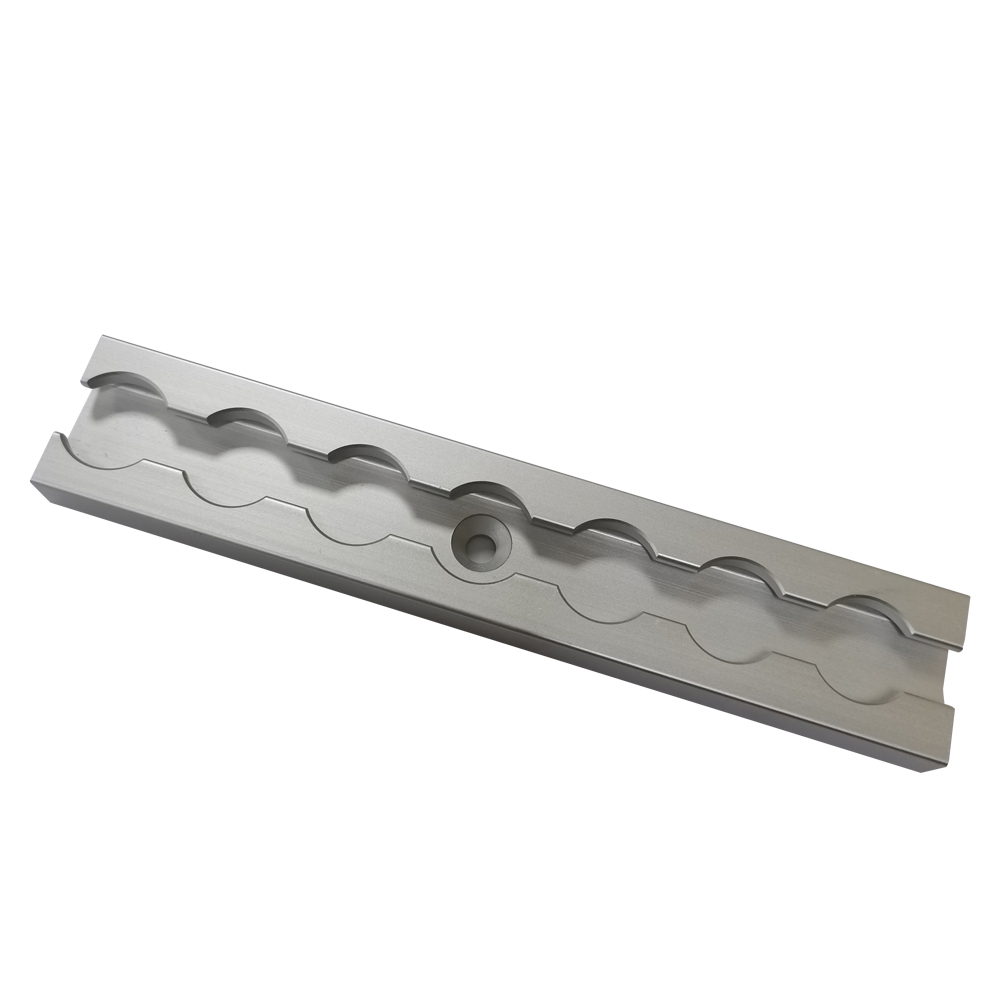
E-Track vs. L-Track: E-Track is heavier-duty, made from steel rather than aluminum, with a wider profile. It offers more accessory options due to its popularity and is generally preferred for heavy industrial applications. L-Track offers a lower profile and is often chosen for applications where aesthetics or weight savings matter more.
Custom vs. Standard: While standard E-Track works for general applications, custom rails eliminate compromises—no gaps, no overhang, no misaligned mounting holes. The initial investment pays dividends in installation time saved and long-term performance.
Conclusion: Invest in Precision, Secure with Confidence
Custom E-Track tie-down rails represent the difference between a system that simply works and one that works perfectly for your specific application. By taking the time to specify rails matched to your exact dimensions, mounting requirements, and cargo needs, you eliminate the compromises inherent in off-the-shelf solutions.
The data is clear: customized E-track setups significantly outperform generic installations in safety metrics. For operations where cargo security, driver safety, and equipment longevity matter, custom E-Track isn’t an expense—it’s an investment with measurable returns.
Whether you’re outfitting a single utility trailer or standardizing an entire fleet, working with a manufacturer that understands your needs and can deliver precision-engineered rails ensures your cargo control system starts with the strongest possible foundation.
Ready to Design Your Custom E-Track Solution?
At Hangcheng, we specialize in manufacturing custom E-Track tie-down rails to your exact specifications. Our team works with you from concept to delivery, ensuring every rail meets your dimensional requirements, material preferences, and quality standards. Contact us for a quote.
Related Products