Introduction: The Underestimated Security Component on Every Truck
You invest thousands in tools, cargo, and equipment stored in your truck’s side boxes, tool cabinets, and trailer compartments. Yet the small component that stands between your valuables and the outside world—the truck cabinet lock—is often an afterthought.
A cheap or improperly selected lock can mean:
-
Corrosion that jams the mechanism after one winter
-
Vibration that loosens the cam, leaving your toolbox unsecured
-
Key confusion when drivers waste minutes fumbling with dozens of different keys
-
Theft that costs far more than a proper lock would have
This ultimate guide covers everything you need to know about cabinet locks for trailers and trucks: the different types (cam locks, T-handles, compression latches, push button locks), material choices (stainless steel vs. zinc alloy), keying systems (keyed alike, master key, keyed different), and how to select the right lock for your specific application.
By the end, you’ll be equipped to make a confident, informed decision that balances security, convenience, and cost.
Part 1: What Is a Truck Cabinet Lock? (And Why It’s Different from a Door Lock)
A truck cabinet lock is a locking device specifically designed to secure storage compartments on commercial vehicles. Unlike door locks that protect the cab or cargo area, cabinet locks secure toolboxes, side boxes, trailer storage compartments, electrical panels, and equipment lockers.
Key Differences from Standard Door Locks:
| Feature | Truck Cabinet Lock | Standard Door Lock |
|---|---|---|
| Mounting | Typically surface-mounted or flush; shorter backset | Recessed into door edge; longer backset |
| Cam/Throw | Rotating cam that engages a strike (not a latch bolt) | Spring-loaded latch bolt |
| Environment | Exposed to weather, road salt, vibration | Partially protected inside door |
| Keying | Often fleets need keyed-alike or master key | Usually keyed different per vehicle |
Part 2: Types of Truck Cabinet Lock – A Complete Breakdown
Understanding the different cabinet lock types is the first step to choosing the right one.
2.1 Cam Locks (The Most Common Choice)
How it works: A cylinder with a flat metal cam (or tongue) that rotates 90° or 180° to hook behind a strike or bracket. The cam length must match the door thickness.
Best for: Utility toolboxes, electrical cabinets, interior compartments, and applications where a low-profile, simple lock is sufficient.
Pros: Inexpensive, widely available, easy to replace, various cam lengths (from 15mm to 80mm+).
Cons: Lower security (can be bypassed with force), cam can vibrate loose, limited weather protection unless fitted with a dust shutter.
HangCheng offers: Zinc alloy or stainless steel cam locks with hardened cams, dust shutters to keep contaminants out, and rubber gaskets for weather sealing.
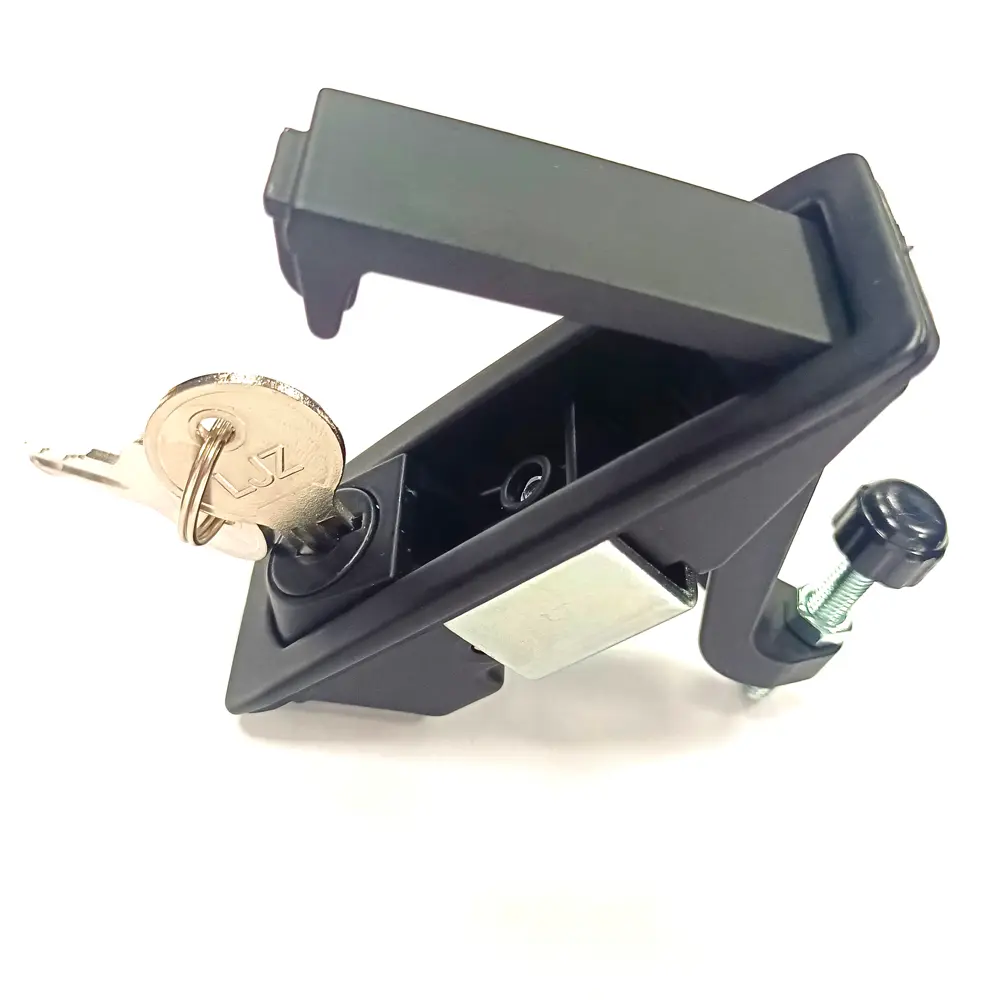
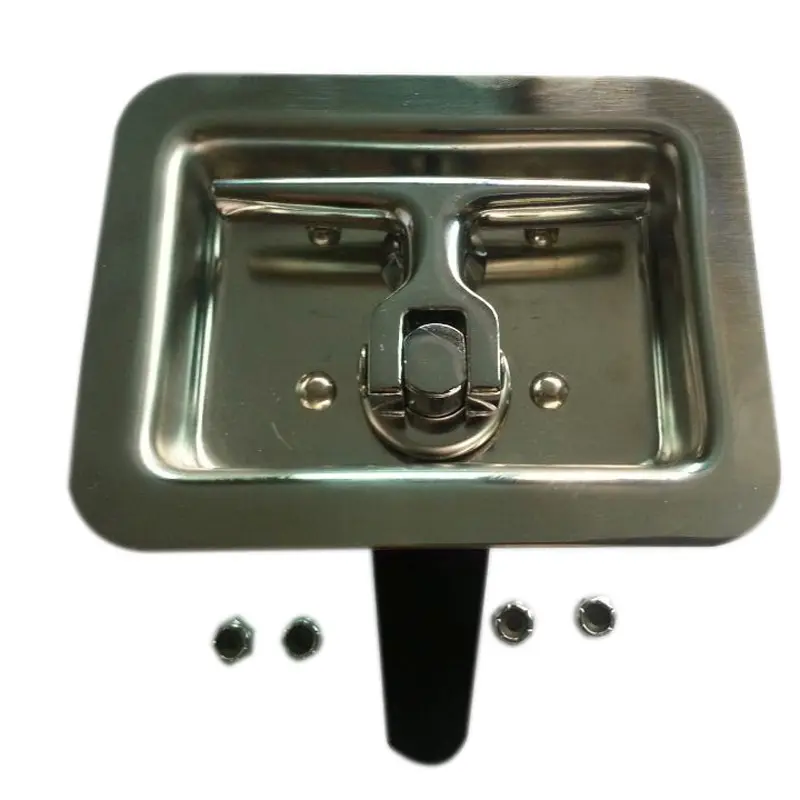
2.2 T-Handle Locks (Heavy-Duty Security)
How it works: A T-shaped handle that you grip to rotate a latch mechanism. Often used on larger compartment doors where a cam lock would be too small.
Best for: Large toolboxes (semi-trailer side boxes), compartment doors on work trucks, heavy equipment storage.
Pros: High mechanical advantage (easy to turn), robust construction, can integrate padlock hasp or built-in cylinder.
Cons: More expensive than cam locks, requires larger mounting hole.
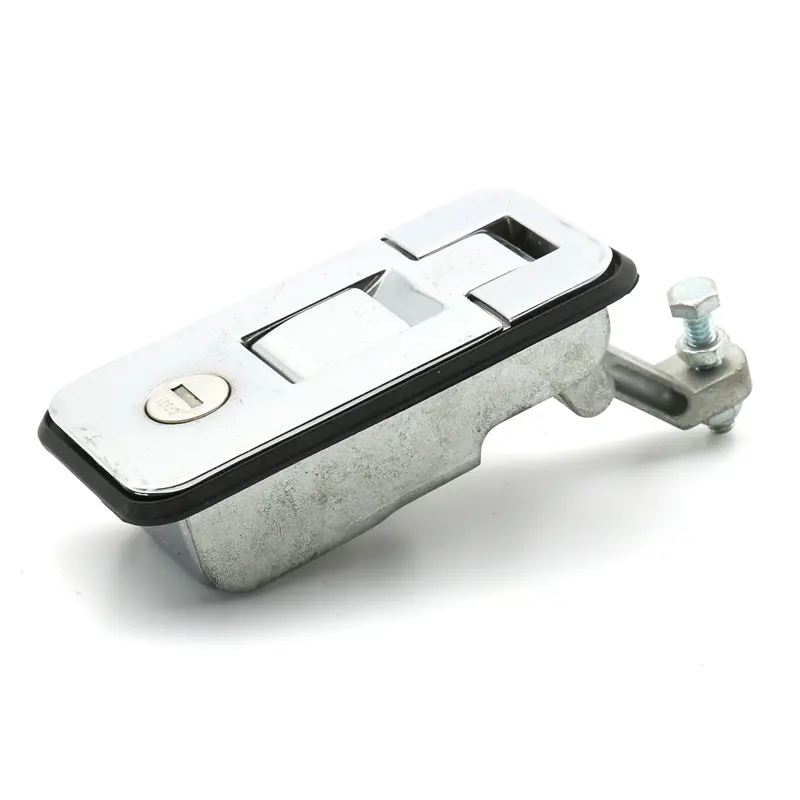
2.3 Compression Latches (Weather-Tight Sealing)
How it works: When you rotate the handle or trigger, the latch draws the door inward, compressing a gasket to create a tight seal against water, dust, and air.
Best for: Weatherproof enclosures, refrigerated compartments, electronic equipment cabinets, and any application where moisture or dust ingress is a concern.
Pros: Excellent sealing, available in stainless steel or zinc alloy, low-profile design.
Cons: More complex mechanism, higher cost.
HangCheng’s compression latches feature corrosion-resistant materials and smooth operation with optional key release.
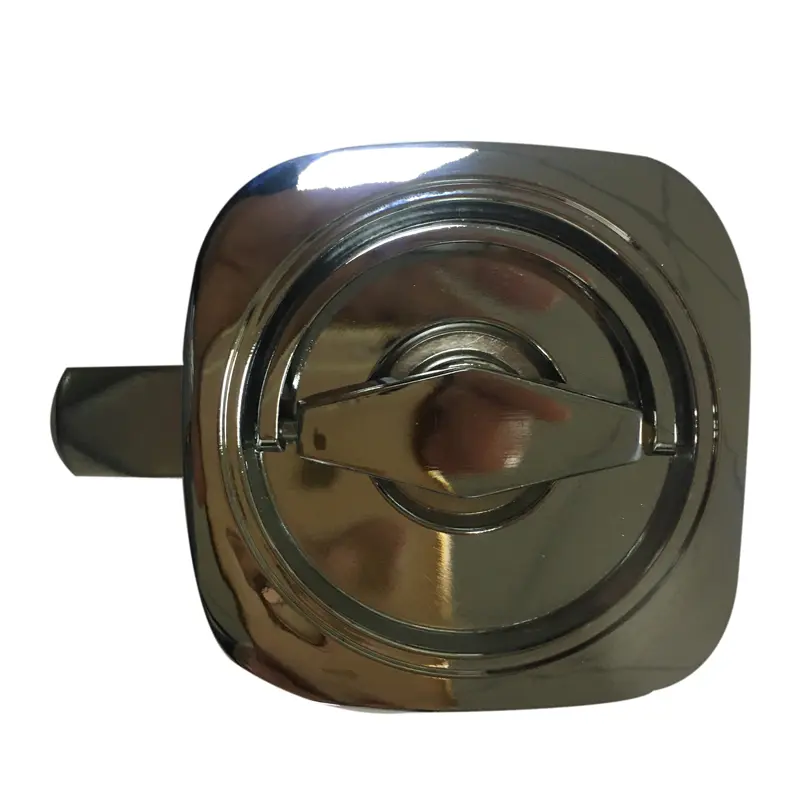
2.4 Push Button Panel Locks (Sleek & Modern)
How it works: A flush-mounted lock with a push button that releases the latch. Some versions include a key cylinder for locking/unlocking, others are purely mechanical with a key‑override.
Best for: Control panels, modern toolbox designs, and applications where a low-profile appearance matters.
Pros: Clean aesthetic, no protruding handle, quick one-hand operation.
Cons: Limited to lighter-duty applications, typically lower security than T-handle.
2.5 Compression Trigger Locks (One-Hand Operation)
How it works: Spring-loaded trigger mechanism – push to close, pull the trigger to release. Often used on frequent-access compartments.
Best for: Service truck compartments, utility trailers, emergency vehicles where quick access is needed.
Pros: Very fast to operate, available in stainless steel.
Cons: Spring mechanism can wear over time, less security than keyed locks.
Part 3: Material Selection – Stainless Steel vs. Zinc Alloy
The material of your cabinet lock for trailer directly impacts longevity, especially in harsh environments.
| Material | Properties | Best For |
|---|---|---|
| Stainless Steel (304/316) | Excellent corrosion resistance, strong, non-magnetic (304), higher cost. | Coastal regions, chemical exposure, food-grade applications, any weather‑exposed compartment. |
| Zinc Alloy (Zamak) | Good strength, moderate corrosion resistance (needs plating), lower cost. | Interior toolboxes, dry environments, budget-conscious fleets. |
HangCheng’s standard: Zinc alloy bodies with chrome or zinc plating for general use; stainless steel (marine grade) for harsh environments.
When to upgrade to stainless steel: If your trucks operate in coastal areas, winter road-salt regions, or you need wash-down capability (food service).
Part 4: Keying Systems – Solving the Fleet Key Nightmare
One of the biggest pain points for fleet managers is key management. Here’s what you need to know about keying systems for truck cabinet locks.
4.1 Keyed Different (KD)
Each lock has a unique key. Best for: Applications where individual security matters (e.g., driver personal toolboxes). Downside: Drivers need many keys.
4.2 Keyed Alike (KA)
All locks in a set use the same key. Best for: Fleet standardization – one key opens every toolbox on every trailer. Benefits: Greatly reduces key clutter, simplifies driver training, speeds up access.
4.3 Master Keyed (MK)
Individual locks have their own key (keyed different), but a separate master key can open all of them. Best for: Hierarchical access – drivers get only their key, supervisors have master key.
4.4 Master Keyed – Keyed Alike (MKA)
Combination: multiple locks share the same key, and a master key opens all groups. Best for: Large fleets with multiple drivers per vehicle.
HangCheng offers: All these keying options, including stamped key codes for easy reordering.
Part 5: How to Choose the Right Truck Cabinet Lock – A Decision Framework
Follow these 5 steps to make the right selection.
Step 1: Identify Your Application
| Application | Recommended Lock Type |
|---|---|
| Small interior toolbox | Cam lock, zinc alloy |
| Large exterior side box | T-handle or heavy-duty cam lock, stainless steel |
| Weather‑sensitive compartment | Compression latch with gasket |
| Frequent-access panel | Push button or trigger lock |
| Fleet-wide standardization | Keyed-alike cam locks or T-handles |
Step 2: Measure Door Thickness
The cam length or body length must match your door thickness. Measure from the outside surface to the inside strike surface. Standard cam lengths: 15mm, 20mm, 25mm, 30mm, 40mm, 50mm, 60mm, 80mm. If in doubt, choose a longer cam that can be cut down.
Step 3: Choose Material Based on Environment
-
Dry, interior: Zinc alloy with plating is fine.
-
Outdoor, road salt, coastal: Stainless steel (304 or 316).
Step 4: Select Keying System
Ask yourself:
-
How many locks on each truck?
-
How many drivers share the same truck?
-
Do you need supervisor access?
-
If any answer points to multiple locks or drivers → Choose keyed-alike or master key.
Step 5: Consider Additional Features
-
Dust shutter – keeps dirt out of keyway (recommended for exterior use)
-
Rubber gasket – weather seal between lock body and mounting surface
-
Hardened cam – resists bending under force
-
Anti‑vibration spring – keeps cam from rattling loose
Part 6: Common Mistakes and How to Avoid Them
| Mistake | Consequence | Correct Practice |
|---|---|---|
| Choosing the wrong cam length | Lock doesn’t close properly or can’t engage strike | Measure door thickness precisely; test with trial cam |
| Using zinc alloy outdoors | Corrosion, jamming after one winter | Upgrade to stainless steel for exterior compartments |
| Ignoring key management | Drivers carry dozens of keys; lost keys cause downtime | Specify keyed-alike or master key for fleets |
| Skipping dust shutters | Keyway fills with dirt, lock fails | Always spec dust shutter for exterior locks |
| Overtightening mounting screws | Stripped threads, cracked housing | Use torque driver; follow manufacturer spec |
Part 7: Maintenance Tips for Long Service Life
Even the best truck cabinet lock needs occasional care:
-
Lubricate: Use dry graphite lubricant (not WD‑40) in keyway twice a year.
-
Clean: Remove debris from cam area and strike.
-
Inspect: Check for loose mounting screws, bent cams, or worn springs.
-
Replace as sets: For keyed-alike systems, replace all locks in a group at the same time to maintain key consistency.
Part 8: Why HangCheng for Your Cabinet Lock Needs
With over 20 years of experience in commercial vehicle hardware, HangCheng designs and manufactures cabinet locks specifically for the harsh demands of trucking and trailer applications.
Our cabinet lock range includes:
-
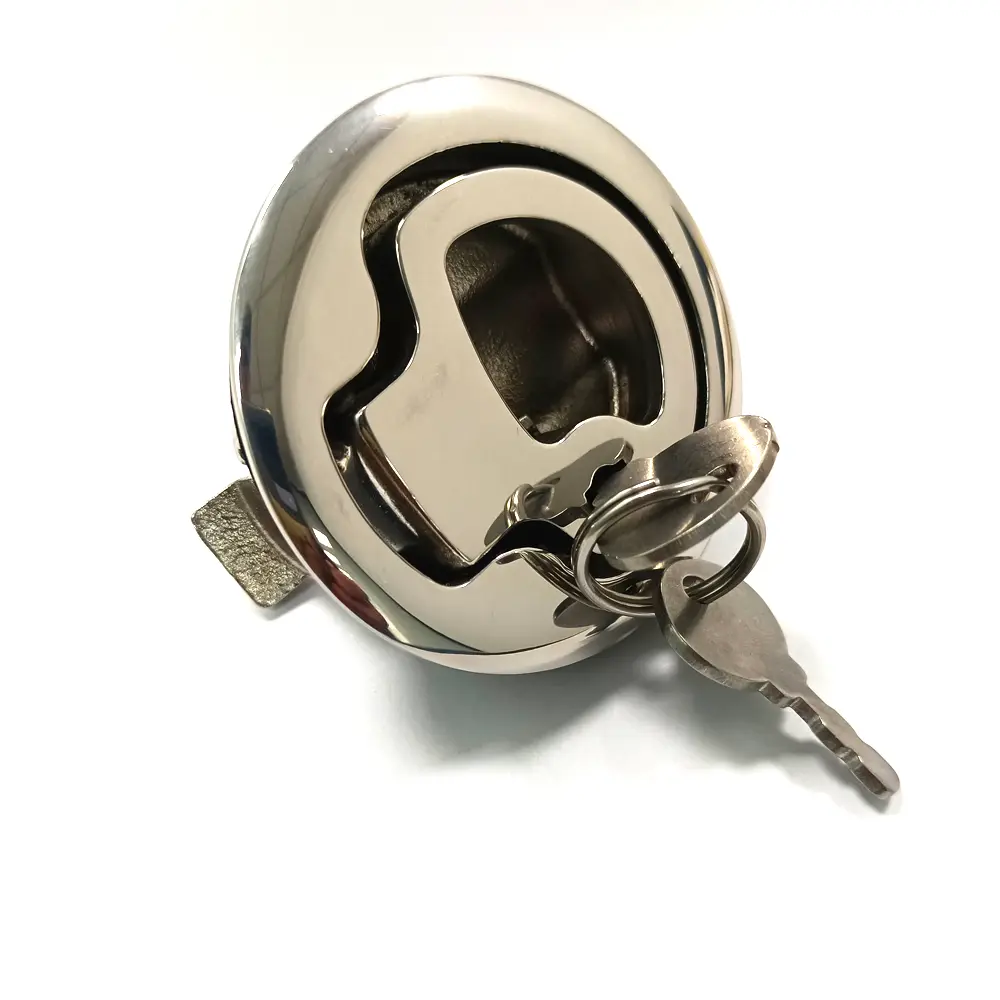
Stainless steel round locks with dust shutters and rubber gaskets
-
Zinc alloy cam locks in multiple cam lengths
-
Compression latches for weather‑tight sealing
-
Push button panel locks and compression trigger locks
-
Full keying options: KD, KA, MK, MKA
Why choose HangCheng:
-
ISO 9001-certified manufacturing
-
Bulk order capability – from 100 to 50,000 units
-
Custom cam lengths and finishes available
-
Keyed-alike and master key systems for fleets
-
Fast lead times and reliable shipping worldwide
Conclusion: Secure Your Cargo with the Right Lock – Every Time
The truck cabinet lock may be small, but its impact on security, driver efficiency, and peace of mind is immense. By understanding the types (cam, T-handle, compression latch), materials (stainless steel vs. zinc alloy), and keying systems (KD, KA, master key), you can specify locks that fit your application perfectly.
Don’t let a mismatched lock be the reason your tools go missing or your drivers lose time. Take the extra few minutes to measure the door thickness, assess the environment, and choose the right keying option.
Contact us for more information; bulk orders can enjoy discounts.
Related Products