Introduction: A Small Tool That Prevents Catastrophic Accidents
Imagine this: a delivery driver finishes unloading, jumps back in the cab, and pulls away—but the trailer wasn’t properly secured. A forklift operator inside the trailer is crushed as the trailer rolls away from the dock. Or a maintenance technician working under a raised vehicle is killed when it suddenly moves. These aren’t hypothetical scenarios. They’re real accidents that happen when wheel chock are used incorrectly—or not at all.
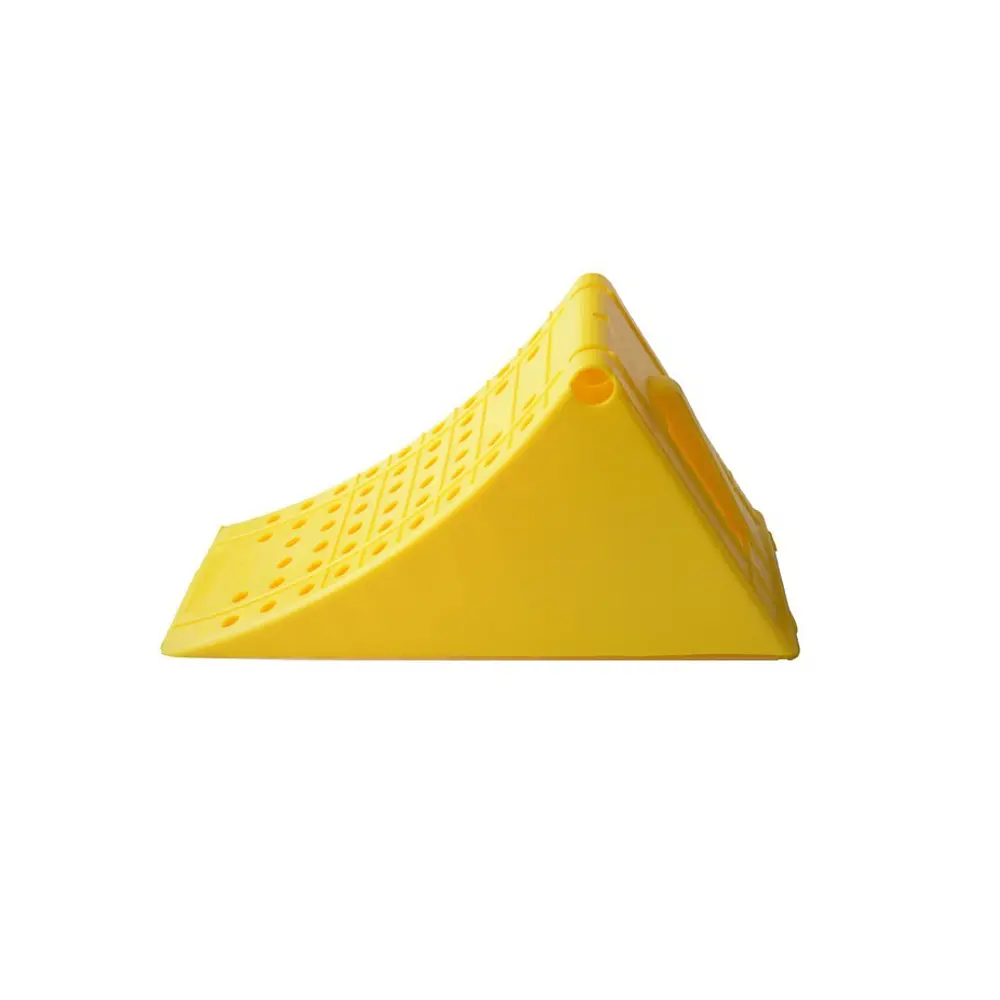
Chocking is the simple act of using a wedge to immobilize the wheels of a vehicle or equipment, physically stopping movement to prevent runaways that can injure workers and destroy property. Yet despite its simplicity, improper chocking remains a leading cause of loading dock accidents and maintenance injuries.
For truck fleet managers, safety directors, and drivers, knowing how to properly use wheel chock isn’t just a best practice—it’s a legal requirement with serious consequences. OSHA has issued citations with penalties exceeding $8,000 for failing to use wheel chock during loading operations. The financial cost pales in comparison to the human cost of a preventable accident.
This comprehensive guide will walk you through everything you need to know about using truck wheel chock correctly. From basic positioning rules to OSHA compliance requirements and selection guidelines, you’ll learn how this small but critical tool can protect your people, your equipment, and your bottom line.
Part 1: When Must You Use Wheel Chock?
Understanding when chocks are required is the first step to proper use. According to OSHA regulations and industry best practices, wheel chock must be used in several situations:
1. During Loading and Unloading Operations
When a truck or trailer is positioned at a loading dock for freight handling, wheel chock are mandatory. OSHA standard 29 CFR 1910.26(d) requires that measures, such as wheel chock, be used to prevent the transport vehicle from moving while employees are on the dockboard -3. A forklift entering a trailer exerts significant force—without proper chocking, the trailer can creep forward, creating a dangerous gap between the trailer and dock.
2. During Vehicle Maintenance and Repairs
Any time a vehicle is raised, or a technician works underneath or around it, wheel chock must be in place. This applies whether the work is in a professional maintenance shop or field repairs. Chocking prevents accidental movement that could cause the vehicle to roll and crush workers.
3. When Parking on Inclines
If a vehicle or trailer is parked on any slope, the parking brake alone may not be sufficient. Chocks provide essential backup security. For trailers disconnected from a tractor—which typically have no brake system when unhitched—chocks are the primary means of preventing rollaways .
4. During Coupling and Uncoupling Operations
When connecting or disconnecting a tractor from a trailer, wheel chock must be firmly in place behind the trailer wheels to prevent movement. This ensures the trailer remains stationary during the critical coupling process.
The Legal Reality: OSHA’s enforcement history makes clear that failing to chock is a serious violation. In one case, an employer was cited for failing to “use measures, such as wheel chock or loading docks, to prevent a transport vehicle from moving while using a dockboard”. The penalty: $5,646.90 after settlement.
Part 2: The Golden Rules of Wheel Chock Positioning
Proper positioning is the difference between effective chocking and a false sense of security. Follow these essential rules every time.
Rule 1: Always Use Chocks in Pairs
This is non-negotiable. Securing only one tire won’t do much to prevent a rollaway and could make any potential accident more dangerous and unpredictable. Wheel chocks must be used in pairs, typically placed on the left and right wheels of the same axle.
Rule 2: Match Placement to the Grade
The direction of potential roll determines where chocks should be positioned:
| Grade Condition | Correct Chock Placement |
|---|---|
| Level ground | Place chocks on both the front and back of a single wheel on each side |
| Downhill grade | Position chocks in front of the front wheels |
| Uphill grade | Position chocks behind the rear wheels |
This positioning ensures the chocks are on the “downhill” side of the tire, where they can most effectively resist movement.
Rule 3: Center and Square the Chock
Always ensure the chock is centered and squared with the tire. Position it snugly against the tire tread. A chock placed off-center can twist or slide when force is applied, allowing the tire to roll past it. A light foot tap or push may be needed to seat it properly.
Rule 4: Consider Loading Dock Dynamics
At loading docks, placement requires additional consideration. The safest approach is to chock both the front and back wheels on both sides of a vehicle.
For the wheels closest to the loading dock, proper placement allows a forklift to push down on the trailer wheels and seat them more firmly against the chock. When only the front axle is chocked, the forward motion of a forklift entering the trailer can loosen the chock, allowing the vehicle to creep forward or jump the chock.
Part 3: Step-by-Step Chocking Procedures
Follow this systematic process every time you need to secure a vehicle.
Step 1: Prepare and Communicate
-
Ensure the parking brake is firmly set
-
Confirm the vehicle is at a complete standstill
-
For loading dock operations, use established communication procedures to alert drivers and forklift operators that chocking will occur
Step 2: Select the Correct Chocks
-
Choose chocks designed specifically for trucks and heavy vehicles
-
Match chocks to the vehicle’s weight and tire size
-
Inspect chocks for cracks, excessive wear, or damage
Critical Warning: Never use lumber, cement blocks, rocks, or other makeshift items as wheel chocks. Only use chocks designed for the purpose.
Step 3: Position the Chocks
-
Place chocks on the left and right wheels of the axle closest to the loading dock
-
For maximum safety, chock both the front and back wheels on both sides
-
Center the chock against the tire and push snugly into place
-
On slopes, position chocks according to grade direction as outlined above
Step 4: Verify and Communicate
-
Confirm chocks are properly seated and secure
-
Use established signals or communication to inform drivers and operators that chocking is complete and loading/unloading can begin
-
Never drive a forklift into a trailer until wheels are properly chocked
Step 5: Removal Protocol
-
Only remove chocks when loading/unloading or maintenance is complete
-
Ensure no personnel are in hazardous positions before removal
-
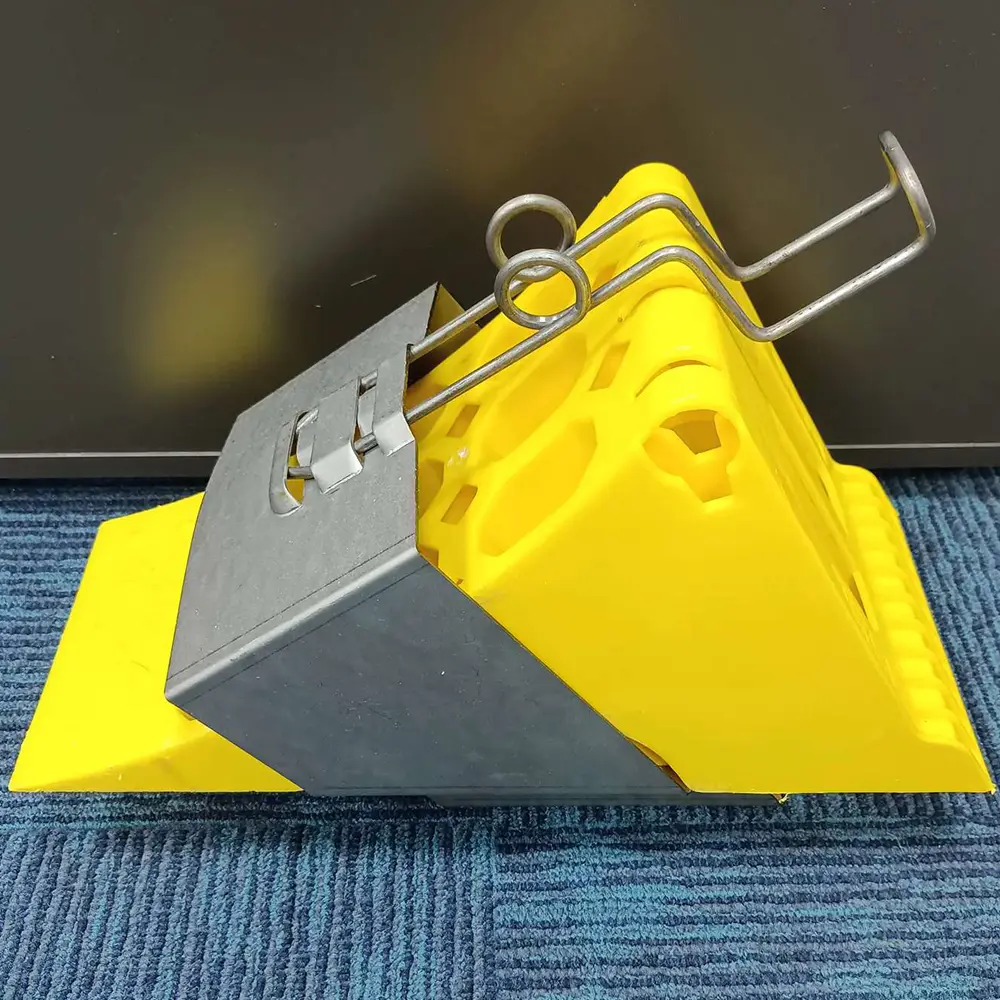
Store chocks properly for next use—inside trailers or chained to loading docks to prevent misplacement
Part 4: Special Considerations for Different Environments
Winter Conditions
Ice and snow create special challenges. Chocks can easily slip on icy surfaces, resulting in trailer creep. When chocking in winter:
-
Clear as much ice and snow from the area as possible
-
Consider chocks with cleated bottoms for icy terrain
-
Inspect more frequently, as cold can make some materials brittle
Soft or Uneven Ground
On soft, muddy, or frozen terrain, multiple chocks may be necessary to ensure safe chocking. The condition of the ground—whether firm, soft, wet, dry, icy, or frozen—is a key determination in the type of chock to use.
Radial Tires vs. Bias-Ply Tires
Radial tires deflect more than bias-ply tires. While this flexibility allows smoother movement, it also allows the tire to wrap around the wheel chock, reducing effectiveness. This must be considered when selecting chocks for vehicles with radial tires.
Part 5: Selecting the Right Wheel Chocks
Not all chocks are created equal. Choosing the right chocks for your fleet is essential for safety.
Material Options
| Material | Advantages | Best For |
|---|---|---|
| Rubber | Durable, affordable, good grip | Most fleet vehicles, general use |
| Polyurethane | Lightweight, weather-resistant, durable | Outdoor use, heavy equipment |
| Steel | Maximum durability, highest strength | Largest commercial vehicles, extreme conditions |
Size Considerations
Chocks must be matched to tire size and vehicle weight. Key factors include:
-
Tire diameter: Smaller tires require smaller chocks, larger tires need larger chocks
-
Gross vehicle weight: Heavier vehicles require larger, higher-capacity chocks
-
Tire pressure: Improperly inflated tires can lead to chocking failures
The Golden Rule: Many safety experts recommend that chock height should be approximately 1/4 of the tire diameter for effective securing.
Compliance Considerations
For operations subject to OSHA or DVSA oversight, ensure your chocks meet applicable standards. The Occupational Safety and Health Administration requires that chocks be used to prevent movement during loading and unloading, but does not mandate a specific number—one chock per wheel may satisfy requirements if it effectively prevents movement
Part 6: Common Mistakes and How to Avoid Them
| Mistake | Why It’s Dangerous | Correct Practice |
|---|---|---|
| Using makeshift chocks | Lumber, blocks, or rocks can split, crumble, or slide | Only use purpose-designed wheel chock |
| Using only one chock | Won’t prevent rotation; vehicle can roll | Always use chocks in pairs |
| Poor positioning | Chock can slide or be bypassed | Center and square against tire |
| Ignoring grade direction | Chocks placed on wrong side won’t stop roll | Position based on slope (front for downhill, rear for uphill) |
| Using damaged chocks | Can fail under load | Inspect regularly; replace cracked or worn chocks |
| No communication protocol | Loading may begin before chocks are set | Establish clear signals between dock workers and drivers |
Conclusion: Small Investment, Big Returns in Safety
Wheel chocks are a small investment that pays enormous dividends in safety. Despite their limitations—they can slip on ice, be damaged or misplaced, and don’t offer enough restraining force to fully prevent early departure from loading docks—they should always be used as an added safety measure against accidents.
The difference between a safe workday and a tragic accident often comes down to simple procedures done correctly. When you’re loading or unloading, hitching or unhitching, or performing maintenance on a vehicle, you must take time to chock the equipment properly. Your life and the lives of those around you depend on it.
At Hangcheng, we take safety seriously. Our heavy-duty rubber and polyurethane wheel chocks are engineered to meet the demanding requirements of commercial trucking and industrial applications. Available in multiple sizes and configurations—from standard wedge designs to V-shaped chocks for dual-wheel applications—our chocks provide the grip, durability, and reliability your fleet needs.
👉 Explore our range of truck wheel chock or contact our team for bulk fleet pricing. Let’s keep your operation safe, together.
Related Products