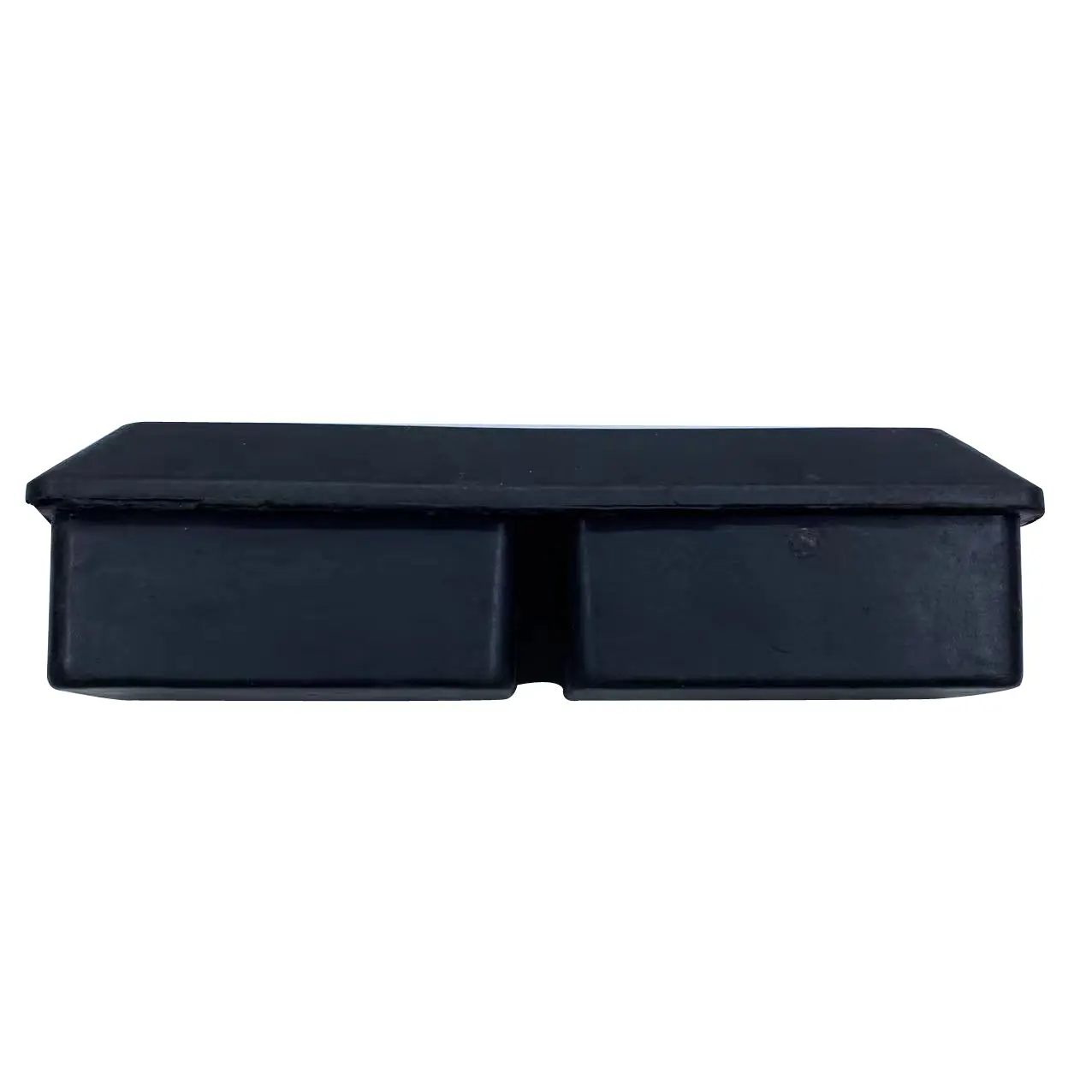
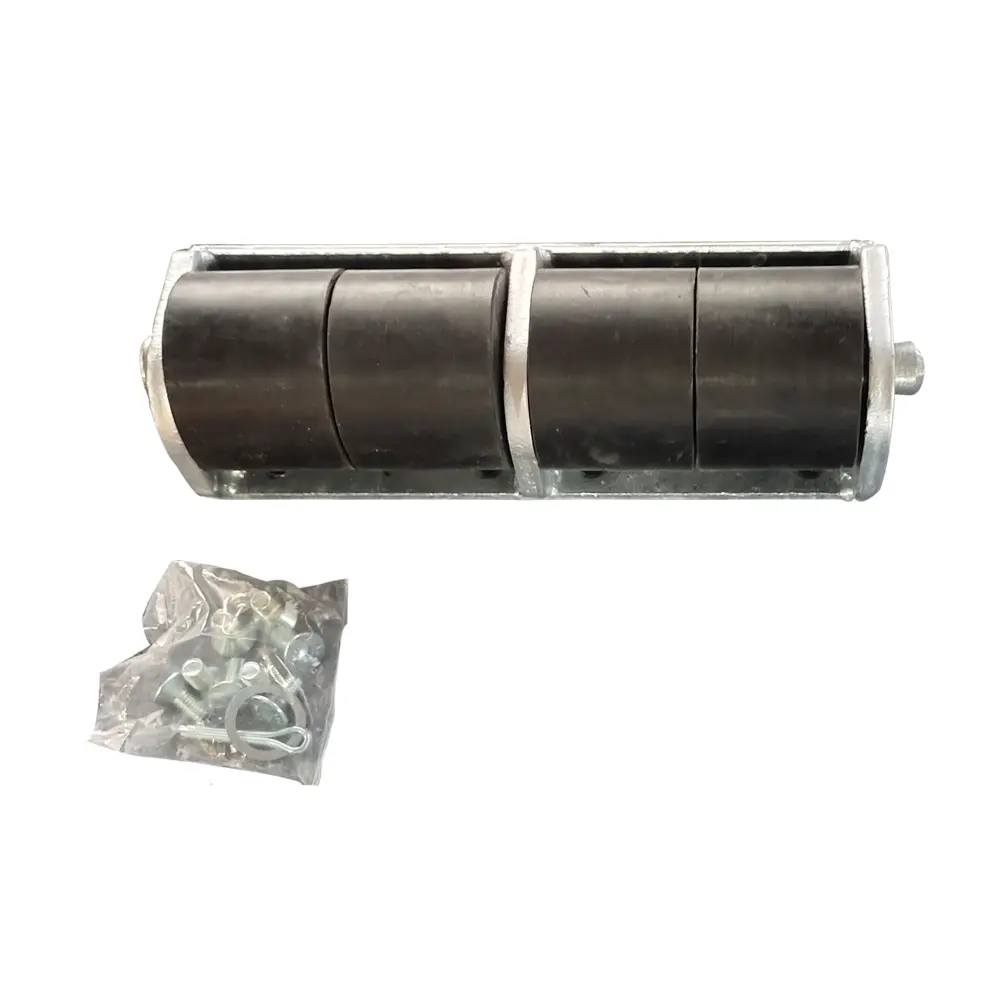
Rubber bumper—small components with an outsized job. They protect trailers from impact damage, absorb operational shocks, prevent metal-on-metal contact, save expensive repair bills, and extend the service life of commercial fleets. When a trailer door slams, a ramp drops, or a truck reverse-docks, it’s the rubber bumper that takes the hit so the equipment doesn’t have to.
But not all rubber bumpers are the same. Shape is the single most important factor determining how a bumper performs in a given application. From the curved protection of a round bumper to the heavy-load capacity of a rectangular block and the specialized standoff function of a top hat design, each shape solves a distinct real-world problem.
This guide walks you through the three most common rubber bumper shapes for trailers—Round, Rectangular, and Top Hat—compares their performance characteristics, provides installation and material selection guidance, and helps you match the right profile to your specific application.
Why Shape Matters in a Rubber Bumper
Rubber bumpers are not one-size-fits-all. The shape of a bumper directly determines its:
-
Load-deflection response – how the bumper compresses and transfers force upon impact. Cylindrical bumpers produce a linear response, whereas dome or conical shapes generate a progressive response that gets stiffer as deflection increases.
-
Contact pressure distribution – how impact forces are spread across the bumper surface.
-
Mounting compatibility – whether a bumper can be fitted securely using pre-drilled holes, adhesive backs, threaded studs, or press-fit bases.
-
Application readiness – whether the bumper can function effectively as an impact absorber, a travel stop/position limiter, or a surface protector/damper.
Choosing the right shape means your trailer doors close properly, your loading ramps don’t dent the chassis, and your vehicle bodies remain damage-free after thousands of cycles of use.
Round Rubber Bumper
Round (or cylindrical) rubber bumpers are the most common profile in trailer applications. Their simple geometry delivers reliable, predictable performance at a low manufacturing cost.
Design & engineering characteristics:
Round rubber bumpers produce an approximately linear load-deflection response—the greater the force applied, the more the bumper compresses in direct proportion. This makes them suitable for general-purpose stops, door buffers, and equipment feet. Round bumpers are simple to tool and can be manufactured with multiple mounting options including flat bases, through-bolts, threaded studs, and press-fit stems.
Key specs commonly seen in the market:
Most trailer bumpers use round profiles around 2.5 inches in diameter with approximately 1-inch thickness, though sizes range from as small as 12mm standoff for light-duty tailboards up to 38mm or larger for heavier applications.
Best applications:
Round bumpers work well for tailboard protection on truck and trailer ramps, door and hatch bump stops that bear light to moderate repeated impacts, vibration-damping equipment feet, and corner protection on curved or rounded trailer surfaces. Their compact size and uniform compression make them a go-to for applications where the impact direction is predictable and consistent.
What to look for in a round bumper:
-
Shore hardness: 55A to 70A for general door and ramp applications; higher for heavy-load stops.
-
Mounting holes: pre-drilled for screw or bolt-through installation (typically 5mm–8mm hole diameter).
-
Material: EPDM for outdoor UV and weather resistance; NBR for oil-contact applications.
Rectangular Rubber Bumpers
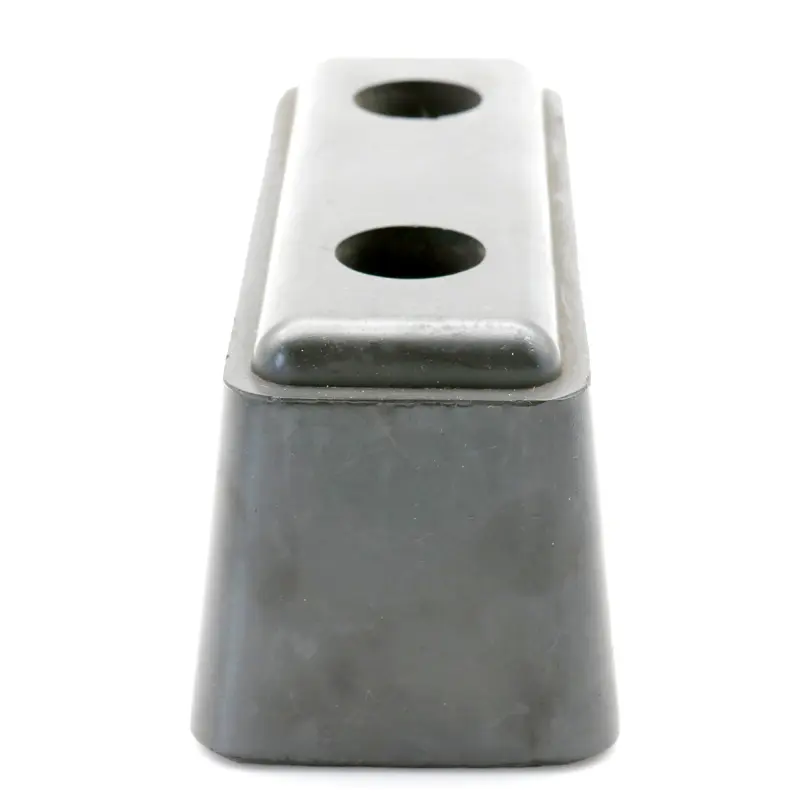
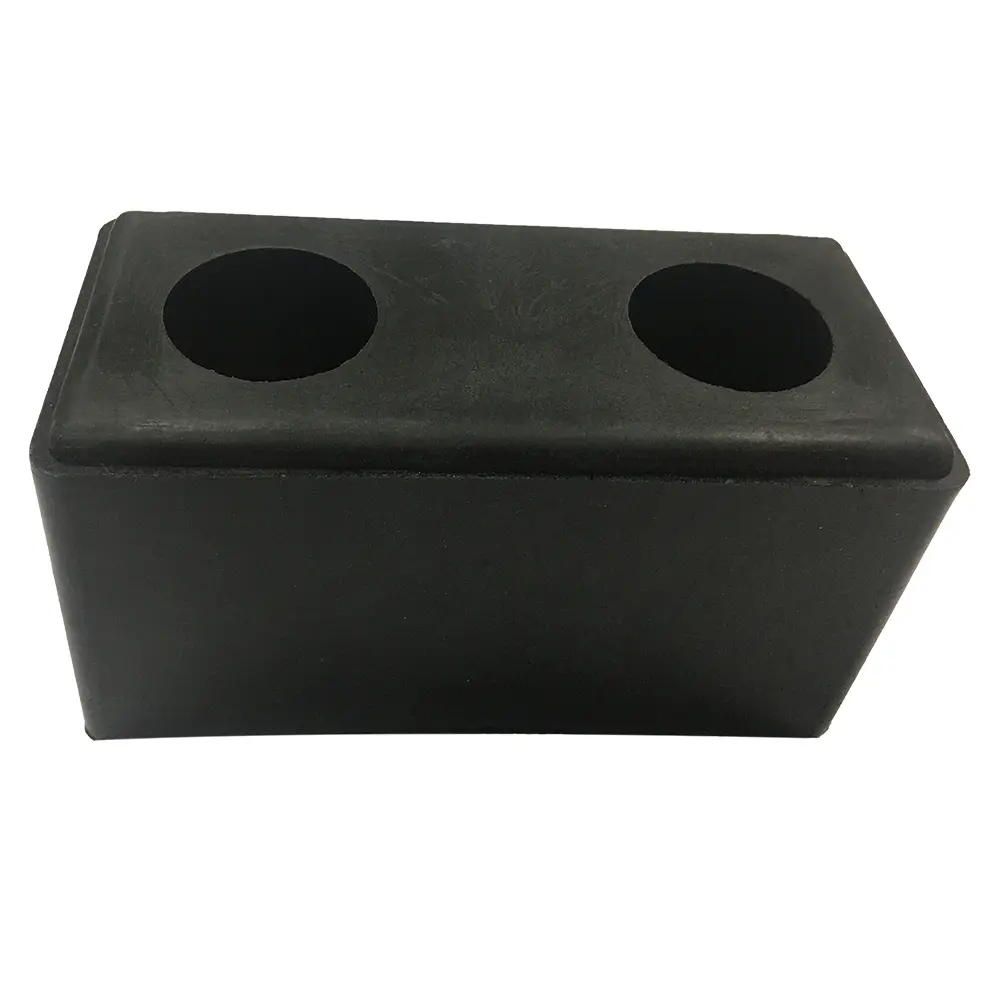
Rectangular and square rubber bumpers offer a large contact area and robust impact absorption. They are the workhorses of heavy-load trailer protection—designed to take serious repeated impacts without failing.
Design & engineering characteristics:
Rectangular bumpers distribute impact loads across a wider surface area than round ones, reducing peak contact pressure. This broad-face profile excels in applications such as loading dock bumpers and structural buffers, where the bumper must absorb the full kinetic energy of a moving vehicle or trailer without bottoming out against its mounting surface. Depending on the aspect ratio, rectangular bumpers can produce a load-deflection response ranging from linear to stiff. Harder compounds such as 70A–80A Shore are commonly specified for these applications to ensure consistent positional accuracy and resistance to compression set under sustained high loads.
Key specs:
For heavy-duty trailer applications, rectangular bumpers can be as large as 13 inches wide by 10 inches tall with a depth of 4 inches for heavy docking, or as moderate as 6 inches by 3.5 inches for general service body doors. Many feature rounded corners to reduce tearing and breaking under repeated stress.
Best applications:
Primary applications include loading dock side and rear bumpers where trailers repeatedly back into dock faces; heavy trailer doors and ramps that carry substantial mass; agricultural and construction trailer tailboards; and any scenario where the bumper must withstand high impacts with minimal compression set.
What to look for in a rectangular bumper:
-
Hard durometer: 70A–80A Shore for maximum durability and position-holding under load.
-
Mounting holes: 2 or 4 pre‑drilled holes with recessed bolt seats to prevent head damage on impact.
-
Material weighting: natural rubber or reinforced EPDM for abrasion and weather resistance.
Top Hat Rubber Buffer
Top hat (or standoff) rubber buffers feature a stepped, hat-like geometry with a raised central boss. This distinctive “standoff” design creates an air gap between the bumper and its mounting base, providing a unique cushioning profile unavailable in flat round or rectangular designs.
Design & engineering characteristics:
The stepped profile produces a non‑linear load‑deflection response with a soft initial contact that progressively stiffens as the buffer compresses. This makes a top hat buffer ideal for absorbing impact without creating a hard rebound, cushioning each actuation and preventing contact with the mounting surface for as long as possible. The standoff height—the distance the buffer projects from the mounting surface before initial contact—is the critical design variable. Typical standoff depths range from 12mm for light-duty tailboard protection to 38mm or higher where greater impact absorption is required.
Key specs:
A common top hat specification for trailer and commercial vehicle use is 38mm standoff depth, overall length of roughly 102mm, width of 25mm, and a 7mm mounting hole diameter, manufactured from synthetic rubber for maximum strength and durability. Smaller versions at 12mm (24mm×24mm overall) are also widely available.
Best applications:
Top hat buffers are essential for tail-lift and rear-loading protection on commercial vehicles, where tailboard assemblies must be prevented from contacting the chassis or ground during loading and unloading. They are also widely used on horse box and livestock trailer rear gates, motorhomes and camper van tail-lifts, garage and rolling shutter door jamb stops, and any application that requires long standoff distance from a mounting surface.
What to look for in a top hat buffer:
-
Standoff height: 20mm–40mm for most trailer and tail-lift applications.
-
Through-bolt design: ensures permanent mounting through the central hole of the step.
Material Selection: Choosing the Right Rubber Compound for Your Bumper Shape
Shape alone does not make a bumper. The rubber compound determines how a bumper performs over time across temperature cycles, UV exposure, chemical contact, and repeated impacts. The table below compares the most common rubber compounds used for trailer bumper production:
| Material | Hardness Range (Shore A) | Key Benefits | Limitations | Best Applications |
|---|---|---|---|---|
| Natural Rubber (NR) | 30–95 | Superior resilience, high tensile strength, excellent abrasion resistance | Poor UV/ozone resistance; degrades outdoors without protection | General trailer doors & ramps (indoor / covered storage) |
| SBR (Styrene-Butadiene) | 40–95 | Better abrasion and heat aging resistance than NR; cost-effective | Poor elasticity; poor low-temperature flexibility | Budget-friendly door and tailboard bumpers |
| EPDM (Ethylene-Propylene) | 40–85 | Outstanding UV, ozone, and weather resistance; excellent for outdoor applications | Poor resistance to petroleum-based oils | Outdoor-exposed bumpers– loading docks, uncovered trailers, tailgates |
| NBR (Nitrile) | 40–100 | Excellent oil, fuel, and chemical resistance; good abrasion performance | Poor UV resistance | Trailers exposed to diesel, hydraulic fluids, greas |
*Hardness determines flexibility: 40A–60A for soft cushioning and vibration absorption; 60A–70A for balanced general-purpose use; 70A–90A for rigid impact resistance where shape retention is critical*.
For outdoor trailers, EPDM bumpers provide the best longevity under sun and rain. For workshops or oil‑handling vehicles such as tankers and tow trucks, NBR offers superior chemical resistance. For general indoor or covered trailer use, natural rubber or SBR delivers cost‑effective performance.
Getting the Installation Right
Proper installation ensures that the selected shape delivers its intended performance. Key considerations include:
-
Mounting hole pattern & fastener compatibility – Match pre‑drilled hole diameter (typically 5mm–12mm) with bolt specification (M6–M12). Recessed bolt seats, common in rectangular bumpers, prevent bolt head damage from impact and are increasingly specified in high‑use environments.
-
Surface preparation – Clean and dry mounting surfaces before installation to ensure proper seating and seal.
-
Torque and spacing – For industrial applications with metallic mounting frames or back plates, follow recommended torque values(typically M10–M12 with 45–115 N·m)to avoid over‑compression and accelerated material fatigue.
-
Gap consideration – With top hat standoffs, confirm the standoff height fully achieves the required air gap before compression.
Why Partner with Hangcheng Parts for Your Rubber Bumper Needs
Hangcheng Parts brings over 20 years of full‑cycle manufacturing experience to every rubber bumper we produce. Unlike distributors who simply resell stock items, we engineer from design to tooling to final inspection—all under one roof.
-
Design & development – From initial concept and drawing to digital prototyping and DFM (design for manufacturing) analysis, we help customers optimize shapes and dimensions for both function and production economy.
-
Material expertise – In‑house compound selection guidance: NR, SBR, EPDM, NBR, and specialty blends. We help select the right durometer and formulation for your exact environment.
-
Manufacturing capability – Compression molding and injection molding with ISO 9001:2015 certified quality controls. Typical tooling lead time: 2–4 weeks; mass production lead time: 2–3 weeks after sample approval.
-
Finishing & assembly – Pre‑drilled mounting holes, recessed bolt seats, threaded inserts, adhesive backings, and custom colors upon request.
-
Quality assurance – Tensile strength testing, Shore hardness verification, salt spray corrosion testing (ASTM B117), compression set measurement, and 100% dimensional inspection prior to packaging.
What this means for you:
-
Quality – Every batch is tested to specification; no guesswork.
-
Cost – No supply chain middlemen; direct pricing from the source.
-
Delivery – In‑house mold making and production slots reserved for repeat customers.
Final Thoughts
Round, rectangular, and top hat rubber bumpers each serve distinct roles in trailer protection. The round bumper delivers simple, low‑cost linear protection for doors, hatches, and equipment feet. The rectangular bumper provides large‑surface, heavy‑duty impact absorption for high‑load applications. The top hat buffer offers unique standoff cushioning for tail lifts, rear gates, and rolling shutters.
The key to long‑term performance is matching shape to application, selecting the right rubber compound, and working with a manufacturer—like Hangcheng Parts—who understands the engineering behind every bumper.
Looking for the right rubber bumper shape for your trailer application? Contact Hangcheng Parts for expert guidance and custom manufacturing.
📧 Email:
🌐 Website: www.hangchengparts.com
Related Products