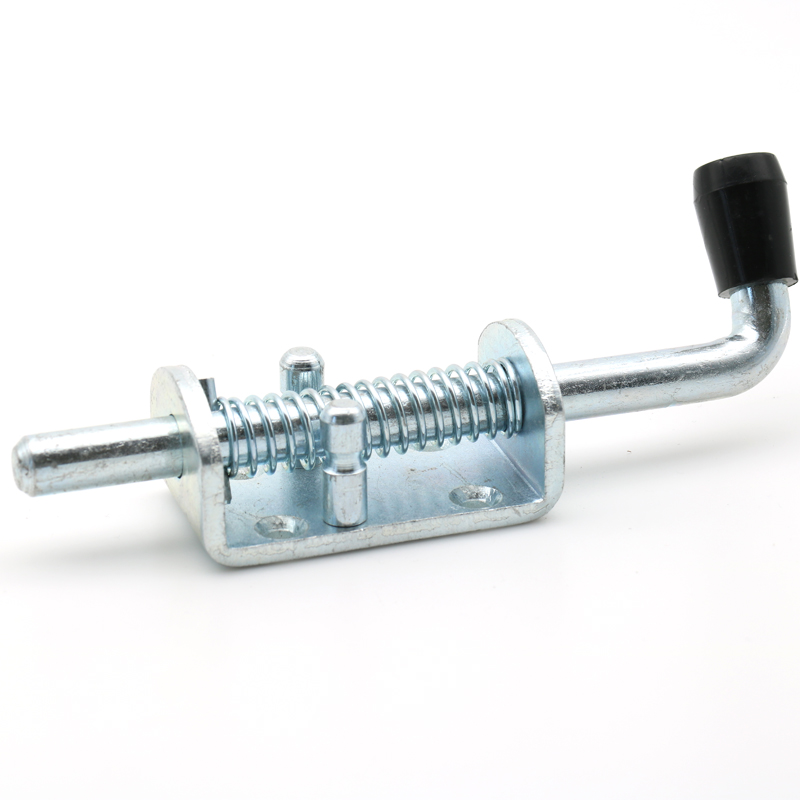
Introduction: Why Your Bulk Latch Order is a Capital Investment, Not a Purchase
Ordering trailer door latches in bulk is a defining moment for any B2B buyer. It’s not a simple procurement task; it’s a capital investment in your fleet’s operational integrity, security, and long-term profitability. A single, seemingly minor oversight in specification can ripple into a cascade of failures: thousands of latches failing prematurely, leading to cargo damage, compliance violations, and a massive, unplanned capex do-over.
The market is flooded with options that look similar but hide critical differences in performance and longevity. Relying on price alone or vague promises is a high-stakes gamble. This guide is your strategic defense. We cut through the noise to reveal the 7 non-negotiable technical specifications you must verify before signing any bulk order for trailer door latches. This isn’t just a checklist; it’s a due diligence framework to protect your assets and ensure your investment pays dividends in reliability.
Part 1: The Foundation – Material Composition & Certification
Spec 1: Base Material Grade and Forging vs. Casting
-
Why It Matters: The material is the soul of the trailer door latches. It determines tensile strength, impact resistance, and fatigue life.
-
What to Verify:
-
Ask for the specific material grade. For example: “Are your handles forged from ASTM A576 Grade 1022 steel?” or “Is the housing a high-tensile zinc alloy, such as ZAMAK 5?”
-
Understand the manufacturing process. Forged components have a continuous grain structure, making them significantly stronger and more resistant to shock than cast parts, which can have hidden porosity and are more brittle.
-
Request Material Test Reports (MTRs) or Certificates of Conformity from the supplier’s mill or foundry. This traceability is non-negotiable for bulk orders.
-
-
The Cost of Ignoring It: Trailer door latches made from sub-standard or improperly cast materials will crack under stress or routine impact, especially in high-cycle dock environments.
Spec 2: Corrosion Protection: Coating Type and Thickness
-
Why It Matters: A latch can be strong but fail quickly if it rusts or corrodes. The coating is its shield against road salt, chemical washdowns, and marine environments.
-
What to Verify:
-
Go beyond “galvanized” or “plated.” Ask: “What is the exact coating process? (e.g., Electroplating, Mechanical Zinc Plating, Powder Coating)”
-
Demand a measurable standard. For zinc plating, the critical metric is coating thickness, often measured in microns (µm). A superior commercial-grade coating will be 8-12µm or more. For powder coating, ask about the primer and topcoat system.
-
Require Salt Spray Test Results (ASTM B117). A latch should withstand a minimum of 500 hours of neutral salt spray (NSS) testing without red rust formation. High-performance latches aim for 750+ hours.
-
-
The Cost of Ignoring It: Premature rust leads to seized mechanisms, unsightly appearance, and the complete breakdown of moving parts, forcing early replacement.
Part 2: Trailer Door Latches The Mechanics
Spec 3: Mechanical Load Rating & Safety Factor
-
Why It Matters: Every latch has a job: to keep the door closed against wind, vibration, and internal cargo pressure. It must be engineered for the force.
-
What to Verify:
-
**Ask for the official Static and Dynamic Load Ratings in pounds or kilograms. The static load is the force it can hold when locked; the dynamic load accounts for shock and vibration.
-
Understand the Safety Factor. A latch with a 2,000 lb rating and a 3:1 safety factor was tested to fail only at 6,000 lbs. A higher safety factor (3:1 or 4:1) indicates a more robust, conservative design.
-
Confirm the rating applies to the entire assembly (handle, pawl, strike plate), not just one component.
-
-
The Cost of Ignoring It: Under-specified latches will bend, deform, or snap, causing doors to fly open—a catastrophic safety and liability event.
Spec 4: Cycle Life Testing Data
-
Why It Matters: A latch might be strong enough for one slam, but will it last for 50,000 door operations? Cycle life predicts long-term reliability and maintenance intervals.
-
What to Verify:
-
Ask: “Has this latch model undergone cycle life testing? To what standard?” Reputable manufacturers test their products.
-
Look for a quantifiable claim. e.g., “Rated for 100,000 operational cycles without failure of the primary mechanism.”
-
Inquire about what constitutes a “failure” in their test (e.g., loss of clamping force >20%, breakage, malfunction).
-
-
The Cost of Ignoring It: Latches with untested or poor cycle life will wear out rapidly in high-frequency applications like distribution centers, leading to constant, costly repairs and replacements.
Part 3: The Fit & Function – Compatibility and Consistency
Spec 5: Dimensional Tolerances and Interchangeability
-
Why It Matters: In a bulk order, every single latch must be identical and must fit the door exactly as the sample did. Loose tolerances cause misalignment, poor sealing, and installers’ nightmares.
-
What to Verify:
-
Request the detailed engineering drawing with clearly stated tolerances (±0.5mm is very different from ±2mm).
-
Check critical dimensions: Mounting hole center-to-center distance, handle throw length, overall protrusion.
-
Ask about their Statistical Process Control (SPC) in manufacturing. This ensures consistency from the first to the ten-thousandth unit in your order.
-
-
The Cost of Ignoring It: Installation labor time skyrockets. Latches don’t fit, requiring door modification or shimming, which compromises strength and sealing.
Spec 6: Seal Integration & Compression Force
-
Why It Matters: For refrigerated trailers or dry vans requiring weather-tight integrity, the latch’s primary job is to compress the door gasket evenly.
-
What to Verify:
-
**For compression latches: Ask for the compression travel range (e.g., 10-15mm) and the final clamping force it applies.
-
Evaluate how the latch interfaces with the seal. Does it have a broad, smooth pressure foot to evenly distribute force without cutting into the gasket?
-
Request information on gasket compatibility if you are sourcing seals separately.
-
-
The Cost of Ignoring It: Inconsistent compression leads to water ingress, dust infiltration, and for reefers, massive energy loss and temperature spoilage—costs that dwarf the latch price.
Conclusion: From Checklist to Confidence
Verifying these seven specifications transforms your bulk buying process from a commodity transaction into a strategic sourcing partnership. It shifts the conversation from “What’s the price per unit?” to “What is the total cost of ownership and risk mitigation you provide?”
A supplier that readily provides this level of detail is a supplier invested in quality and your long-term success. They are not just selling parts; they are delivering engineered reliability.
Contact Us for Your Bulk Quote and Full Technical Dossier
Related Products