Introduction
Ordering custom piano hinge for your trailer design might seem straightforward—until a $20 hinge failure causes a $15,000 door collapse. Most buyers discover too late that not all hinges are created equal. In fact, 68% of trailer door malfunctions stem from improper hinge selection, material corrosion, or poor installation.
At Suzhou Industrial Park HangCheng Industrial Parts, we have customized piano hinges for customers in many countries. This comprehensive guide reveals the 10 non-negotiable factors to consider when ordering custom hinges—ensuring your investment enhances safety, durability, and operational efficiency while avoiding expensive mistakes that could halt your operations.
1. Piano Hinge Material Selection
The material you choose for your piano hinge ultimately determines its performance lifespan and maintenance requirements. While many suppliers will simply offer “stainless steel” as a solution, true professionals understand that not all stainless steels perform equally in various environments.
For trailer applications, you’ll typically encounter three primary material options:
-
304 Stainless Steel: This versatile material offers excellent general corrosion resistance and is ideal for most trailer applications where exposure to moisture and chemicals is moderate. Its chromium-nickel composition provides good formability and weldability.
-
316 Stainless Steel: Essential for marine and coastal applications, this grade contains molybdenum, which provides superior resistance to saltwater corrosion. If your trailers operate near ocean environments or in areas where road salts are frequently used, this investment will pay dividends in longevity.
-
Carbon Steel with Protective Coating: For budget-conscious applications in dry environments, carbon steel with hot-dip galvanizing (minimum 80μm zinc coating) provides adequate protection at a lower cost point.
Critical question for your supplier:
“Can you provide mill test reports certifying the specific material grade and composition?”
2. Piano Hinge Load Capacity Calculations
Heavy duty piano hinges must withstand not just static door weight but dynamic loads including wind resistance, vibration from road conditions, and operational stress from frequent opening and closing. Underestimating these forces represents one of the most common—and costly—errors in hinge selection.
Proper load calculation begins with understanding your specific application:
-
For standard trailer doors weighing under 400 pounds, a hinge thickness of 2.0-2.5mm typically suffices
-
For heavier doors, ramps, or lifting applications, thickness should increase to 3.0-5.0mm depending on the weight distribution
-
Extra reinforcement may be needed near stress concentration points such as door edges and locking mechanisms
3. Corrosion Protection Systems: Beyond Basic Coatings
The coating system you select must match your operational environment. A hinge that performs perfectly in arid climates may fail catastrophically in coastal regions without appropriate protection.
Consider these coating options based on your specific needs:
-
Zinc Plating (8-12μm): Provides moderate corrosion protection suitable for inland use where exposure to corrosive elements is limited. This economical option works well for dry van trailers and enclosed transportation units.
-
Hot-Dip Galvanizing (80-100μm): Offers superior protection for severe environments where road salts, industrial pollutants, or marine conditions are present. The thick zinc layer sacrificially protects the underlying steel even if the surface becomes scratched or damaged.
-
Passivation Treatment (for Stainless Steel): This chemical process removes surface iron particles from stainless steel, enhancing its natural corrosion resistance by allowing the formation of a more uniform protective oxide layer.
4. Custom Piano Hinge Size
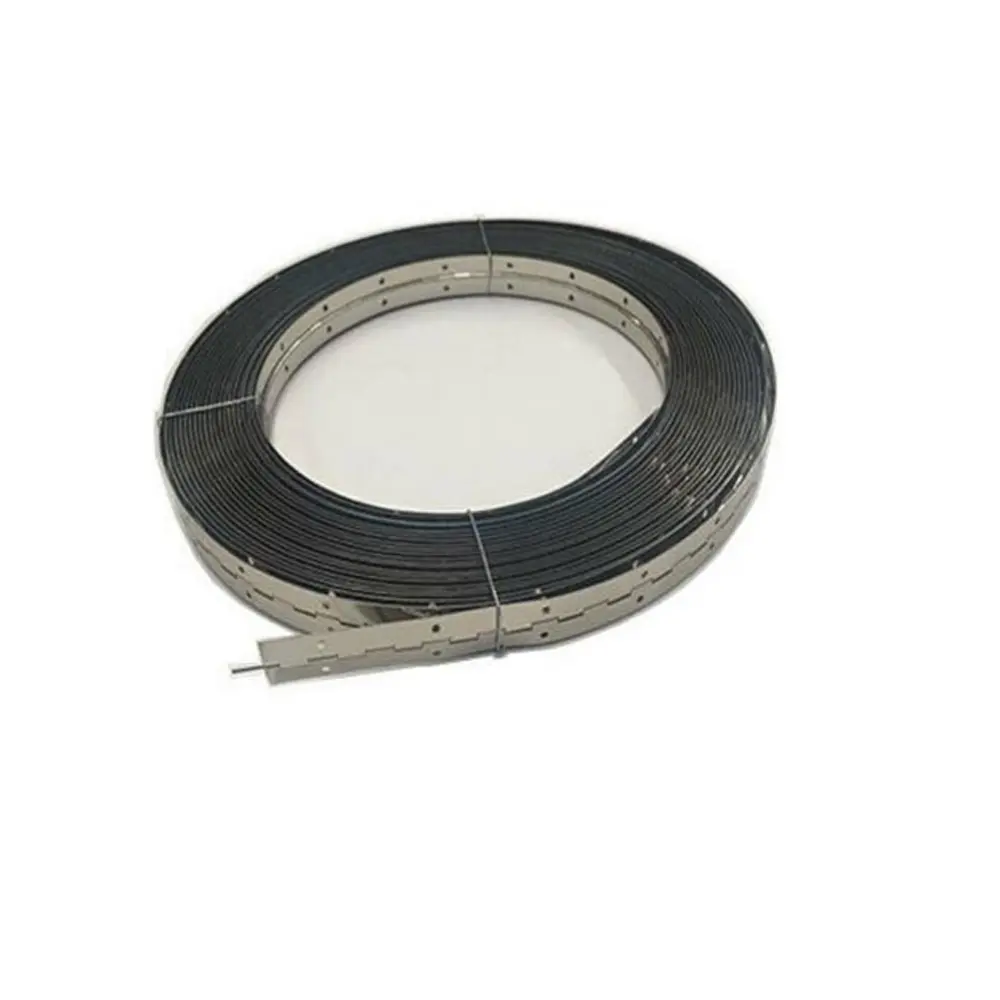
A truly custom piano hinge should accommodate your specific design requirements rather than forcing you to adapt to limited stock options. The most effective customization encompasses three key areas:
Length Specifications: Precision-cut to ±0.5mm tolerance ensures perfect alignment along the entire door span. Even minor deviations can cause binding, uneven wear, or premature failure.
Hole Pattern Engineering: CNC-punched slots or round holes positioned according to your structural requirements eliminate the need for field drilling and ensure perfect alignment during installation. Consider staggered patterns for improved load distribution.
Finish Options: Powder coating availability in your company colors enables seamless branding integration while providing additional UV and corrosion protection. Textured finishes can also help conceal operational wear and tear.
5. Compliance and Certification: Verifying Quality Standards
Regulatory compliance isn’t just paperwork—it’s your assurance that the hinges meet minimum safety and performance standards. Different markets require different certifications, so your hinges must comply with the regulations governing your operations.
Essential certifications to request:
-
ISO 1461: Governs hot-dip galvanizing processes and coating quality
-
ASTM A653: Specifies coating requirements for steel substrates
-
DOT/EN Standards: Ensure roadworthiness for transportation applications
-
ISO 9001: Indicates quality management system compliance
Warning sign: Suppliers who cannot immediately provide compliance documentation or who offer vague assurances without test certificates may be cutting corners on quality control.
6. Piano Hinges Installation Considerations
Even the best-designed hinge will underperform if installation proves difficult or requires special tools. Smart design choices dramatically reduce installation time and improve long-term performance.
Pre-drilled holes designed to match your existing mounting patterns can reduce installation time by up to 40% compared to field-drilling requirements. This becomes particularly valuable in high-volume production environments where minutes saved per unit translate to significant annual savings.
Continuous hinge designs distribute load evenly across the entire door length rather than concentrating stress at intermittent points. This design approach significantly reduces the risk of door sagging and improves overall durability.
Self-lubricating pins represent a valuable feature for fleet operators seeking to minimize maintenance requirements. These specialized pins contain lubricant reservoirs that gradually release lubrication during operation, extending service intervals and reducing downtime.
7. Different Types Trailer Piano Hinge Consideration
Different trailer applications create unique challenges that demand specialized hinge solutions. Recognizing these environmental factors ensures optimal performance in your specific use case.
Refrigerated trailers create particular challenges due to constant condensation and temperature cycling. Hinges must resist corrosion from moisture while maintaining flexibility in sub-zero conditions. Stainless steel with appropriate low-temperature lubrication typically provides the best solution.
Flatbed and utility trailers often feature hinge applications on ramps and access panels where abrasion resistance becomes critical. In these applications, consider reinforced coating systems or hardened steel components in high-wear areas.
Off-road and heavy-equipment trailers experience exceptional vibration levels that can loosen fasteners and accelerate wear. Here, locking pin designs and reinforced knuckle structures provide the reliability needed in demanding environments.
8. Supplier Expertise Evaluation: Critical Questions to Ask
Your hinge supplier should function as a technical partner rather than just a component vendor. These questions help identify truly capable partners:
-
“Can you provide references from trailer industry clients with similar applications?”
-
“What is your historical defect rate, and how do you handle quality issues?” (Industry-acceptable rates typically run below 0.5%)
-
“Do you offer prototyping services before committing to full production?”
-
“What engineering support do you provide during the design phase?”
-
“How do you handle material traceability throughout production?”
The answers to these questions will reveal whether you’re dealing with a true engineering partner or merely a parts supplier.
9. Total Cost of Ownership Analysis: Looking Beyond Unit Price
The initial purchase price represents only a fraction of the total cost of hinge ownership. A cheaper hinge often becomes dramatically more expensive when considering replacement costs, downtime, and safety implications.
Consider these often-overlooked cost factors:
-
Replacement frequency: A hinge costing 30% less but requiring replacement twice as often ultimately costs 40% more in total ownership costs
-
Installation time: Designs that reduce installation time by even 15 minutes per door can save thousands annually in labor costs
-
Downtime impact: A single door failure that sidelines a trailer can cost $1,000-$2,000 per day in lost revenue
-
Warranty coverage: Comprehensive warranty protection provides insurance against premature failure
Investment perspective: View hinge selection as a long-term investment rather than a simple purchase decision. The right choice pays dividends throughout the product lifecycle.
10. Future-Proofing Considerations: Smart Features Worth Exploring
Innovations in hinge design continue to emerge, offering enhanced functionality and operational intelligence. While not essential for all applications, these features provide competitive advantages in many scenarios:
Embedded sensors can monitor door position, security status, and even usage patterns. This data helps optimize maintenance schedules and provides valuable operational intelligence.
Self-lubricating systems significantly extend maintenance intervals, particularly valuable for fleets operating in remote areas or with limited maintenance facilities.
Modular designs allow replacement of individual components rather than entire hinge assemblies, reducing spare parts inventory and repair costs.
Hybrid materials combining different metals or incorporating composite elements can optimize strength-to-weight ratios for specialized applications.
Conclusion: The Strategic Importance of Expert Partnership
Ordering custom piano hinges represents a technical decision with significant implications for your trailers’ safety, reliability, and total operating costs. By prioritizing material quality, verification testing, and supplier expertise, you ensure that this small component doesn’t become the source of major operational problems.
The right hinge partner brings engineering expertise, quality assurance capabilities, and industry knowledge that transforms this simple component into a reliability asset. Don’t settle for commodity thinking when specialized solutions exist.
Ready to Spec Hinges Engineered for Your Exact Needs?
Our custom piano hinges deliver:
-
Full ISO certification with complete material traceability
-
Independent load testing exceeding industry standards
-
Direct engineering support from design through installation
-
Global logistics network ensuring timely delivery worldwide
If you have any order requirements for refrigerated trailer piano hinges, semi-trailer piano hinges, enclosed trailer piano hinges, or truck piano hinges or continuous hinges, please contact us.
Related Products