Introduction: The Small Component That Holds Global Trade Together
Imagine a towering stack of containers, ten units high, swaying on the deck of a massive vessel crossing stormy seas. What keeps that 80-foot steel skyscraper from toppling? The answer lies in a small but brilliantly engineered component: the container twist lock.
Each shipping container has four corner castings. When stacked, these castings are connected by twist locks—mechanical devices that use a rotating head to lock one container to another or to a chassis. When engaged correctly, these components transform individual containers into a rigid, unified structure capable of withstanding the immense forces of ocean transit. A single improperly locked corner can compromise an entire stack, risking catastrophic cargo loss and safety hazards.
However, not all twist locks are the same. They vary in type, function, and operation—manual, semi-automatic, and fully automatic—each with its own specific loading and unloading procedures. Using the wrong technique for the wrong lock type is not just inefficient; it is dangerous. This comprehensive guide provides clear, step-by-step instructions for handling each type of container twist lock during loading and unloading operations. Whether you are a crane operator, dockworker, or fleet manager, mastering these procedures is essential for safety, efficiency, and cargo integrity.
Part 1: Understanding Twist Lock Basics – The Common Foundation
Before diving into type-specific procedures, understand the core components and universal principles that apply to all twist locks.
What is a Twist Lock?
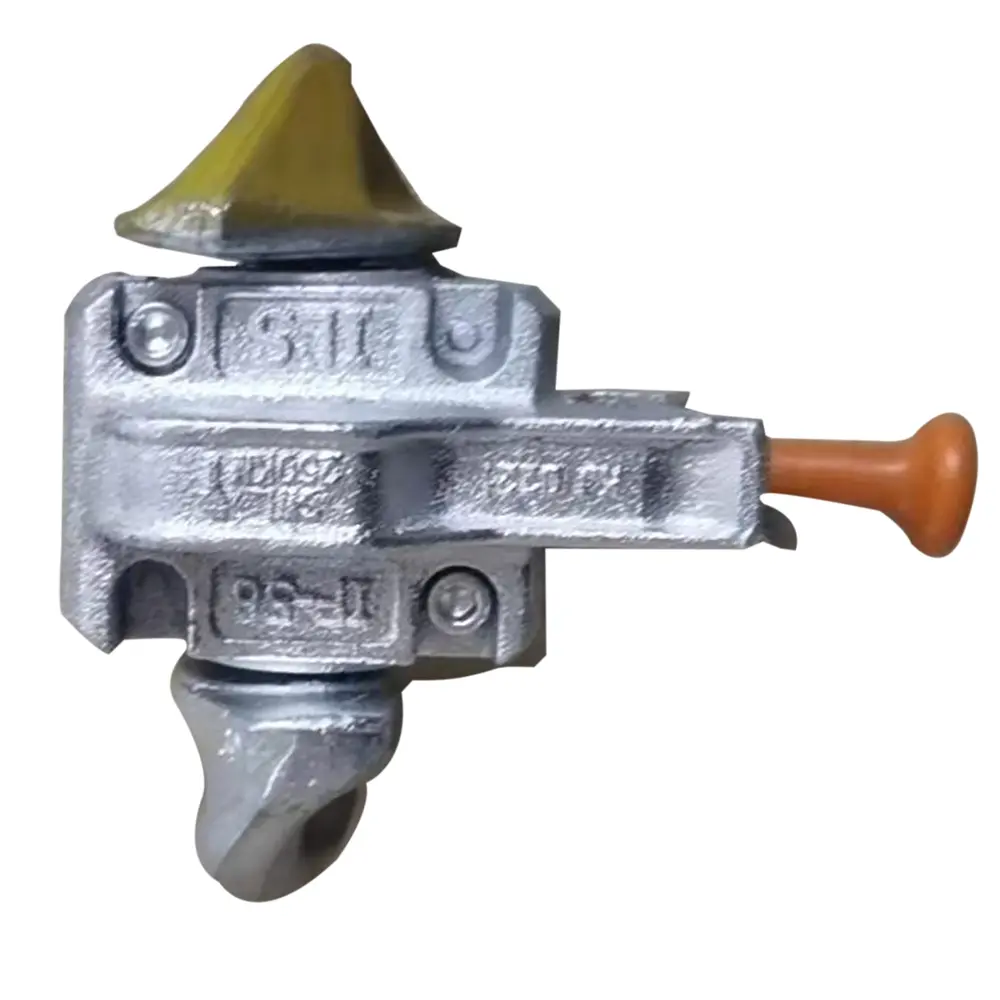
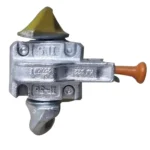
A twist lock is a mechanical locking device that uses a standardized rotating system to secure containers. It consists of a rotating head (the part that locks into a container’s corner casting), a base or shank (the stem that sits in a bottom container’s top casting), and often a visual indicator (a mark showing whether the head is in the “LOCK” or “UNLOCK” position).
Universal Pre-Operation Inspection – Do This Every Time
-
Inspect the receiving surface: Ensure the bottom container’s top corner castings are clean, free of damage, ice, or debris. A deformed casting will prevent proper lock seating.
-
Verify stack stability: Confirm the existing stack is level and stable before adding another tier.
-
Inspect the twist lock: Look for cracks, excessive rust, or deformation, especially on the head and shank. Manually rotate the head—it must turn smoothly through its full range and lock positively without slipping. If the lock has a spring mechanism, it must provide firm resistance. If in doubt, take it out; defective locks must be removed from service immediately.
Universal Positioning Rule:
For stacking applications, the twist lock’s base is inserted into the top corner castings of the container on the bottom. The head is set to the UNLOCK position before the top container is lowered.
Part 2: Manual Twist Locks – The Standard for Yard Stacking and Chassis Securement
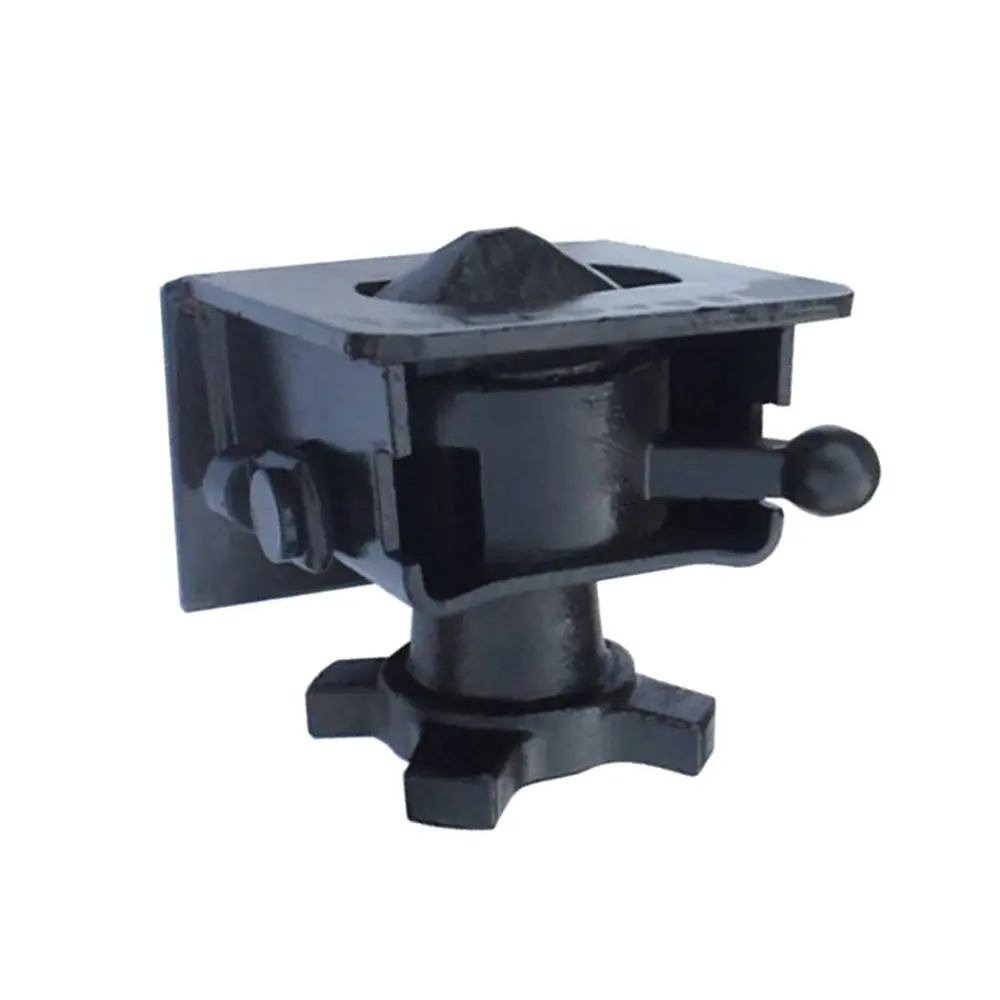
Manual twist locks are the most basic and widely used type in container handling. They are common for yard stacking, securing containers to chassis, and general land-based operations.
How They Work:
Operators must manually insert the lock and rotate the head—typically 90 degrees—to lock or unlock it. Manual locks are simple, reliable, and cost-effective, but they require full human intervention for both loading and unloading.
Loading Procedure (Securing a Container):
Step 1: Position the Lock.
For chassis securement: The lock is already mounted on the chassis. For stacking: A worker places the manual twist lock into the top corner castings of the bottom container by hand or via the spreader, with the head set to UNLOCK.
Step 2: Align and Lower the Container.
The crane or spreader lowers the container. Its bottom corner castings descend over the waiting twist lock heads. Guide the process to ensure proper alignment. The weight of the container will seat itself onto the locks.
Step 3: Lock Manually.
Using a specialized operating rod or by hand, rotate each twist lock head 90 degrees into the LOCK position. A clear, solid “clunk” should be felt. The head’s visual indicator should now show “LOCK.” For lifting-type manual twist locks, push the handle longitudinally, lift the lock head, extend it into the inner position of the bottom corner casting, and then rotate to the specified angle.
Step 4: Verify.
Physically attempt to move the head slightly in the opposite direction. A properly locked head will not move. Confirm all four corners are locked.
Unloading Procedure (Releasing a Container):
Step 1: Unlock Manually.
Prior to lifting the top container, use the operating rod to rotate each twist lock head back to the UNLOCK position. For lifting-type locks, push the handle, lift the lock head, and rotate to the release angle.
Step 2: Verify All Unlocked.
Check that every twist lock is in the UNLOCK position before signaling for lifting.
Step 3: Lift.
As the container is lifted, observe the twist locks disengage cleanly. Any snagging indicates a problem requiring immediate stoppage.
Step 4: Remove or Store Locks.
For stacking applications, the twist locks remain in the top castings of the lower container for future stacking, or are removed manually.
Part 3: Semi-Automatic Twist Locks – Speed with Manual Release
Semi-automatic twist locks are used primarily between stacked containers, especially on vessel decks and in high-throughput terminals. They offer the critical safety benefit of automatic locking—the most dangerous human error (forgetting to lock) is eliminated.
How They Work:
Semi-automatic locks lock automatically when the weight of the container is set down. However, they still require manual release via an operating rod or handle. They improve speed but demand rigorous inspection to confirm full engagement.
Loading Procedure (Securing a Container):
Step 1: Insert Locks in Bottom Container.
Workers insert semi-automatic twist locks into the top corner castings of the bottom container. The locks are typically pre-set in the armed position.
Step 2: Lower the Top Container.
The crane lowers the container onto the waiting semi-automatic locks. The weight of the container automatically activates the locking mechanism—the lock head rotates into the LOCK position without human touch.
Step 3: Verify Locking.
Crucially, the lock status must be confirmed. For semi-automatic locks, this requires visual inspection. Look for any clear “LOCKED” indicator. Some semi-automatic spreaders display a “locked” sign to the crane driver. Never assume automatic engagement—always verify.
Unloading Procedure (Releasing a Container):
Step 1: Manual Unlocking.
This is the critical manual step. Using an operating rod, the worker must pull the lock pin or release mechanism to unlock the twist lock. This opens the connection between the lock and the bottom container’s corner casting.
Step 2: Verify Unlocked.
Confirm all four locks are manually released before the container is lifted.
Step 3: Lift and Remove Locks.
After the top container is lifted, the semi-automatic twist locks remain in the bottom container’s top castings. They can be manually removed for repositioning or storage.
Note: Semi-automatic twist locks are also used on chassis and can be found as semi-automatic spreaders where lowering the spreader on top of the container locks the twistlocks, with a sign showing “locked” to the crane driver. All four twistlocks should be locked, and the container weight should never exceed the spreader’s safe working load.
Part 4: Fully Automatic Twist Locks – Maximum Speed, Zero Manual Handling
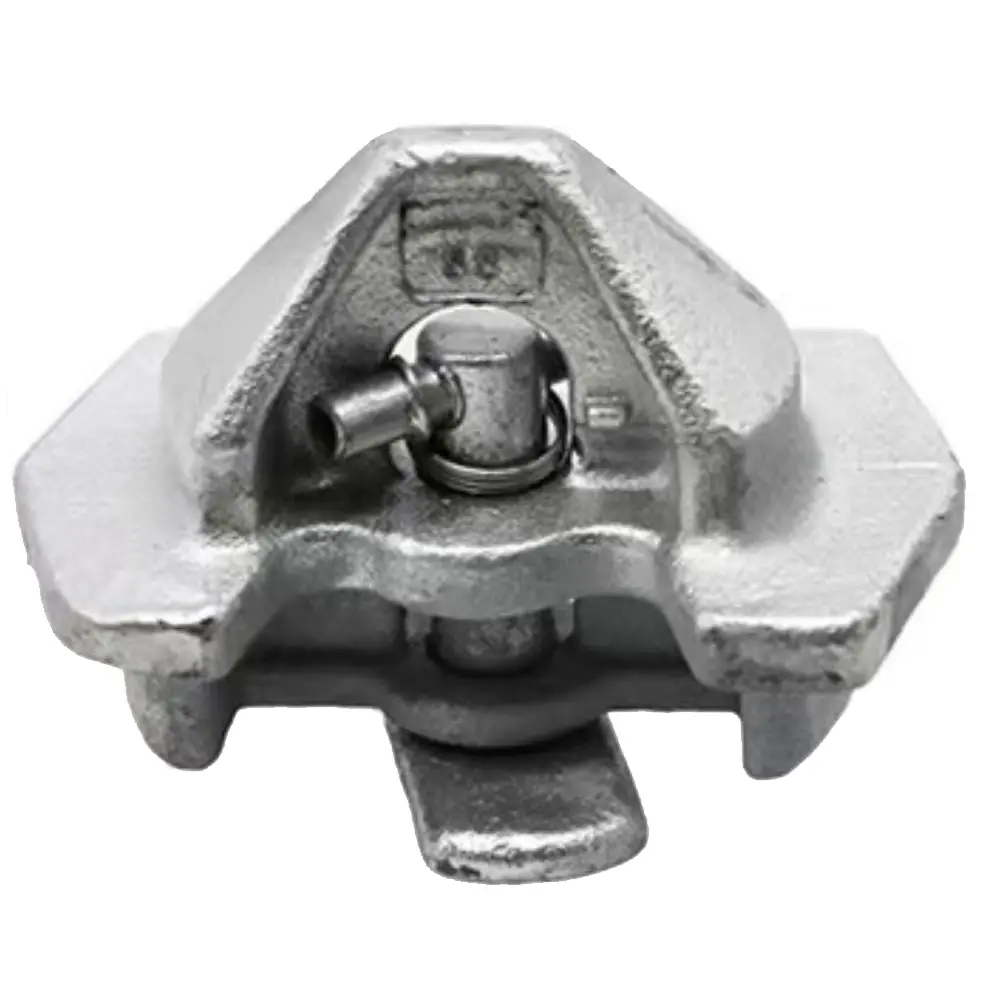
Fully automatic twist locks represent the cutting edge of container securement. They are used primarily on vessel cell guides, in automated terminals, and on high-capacity vessels. They engage and disengage without any manual intervention.
How They Work:
Before a container is lifted, workers insert fully automatic twist locks into each of its four bottom corner castings. As the crane lowers the container onto the one below it, the weight of the container itself activates the lock. The lock head is designed with angled surfaces that guide the locking mechanism, causing it to rotate automatically into the locked position—driven purely by gravity and the shape of the lock itself.
When the container is lifted, the upward force unlocks the mechanism automatically. This brilliant design eliminates the need for workers to access the locks during unloading.
Loading Procedure (Securing a Container):
*Step 1: Pre-Insert Locks.*
At the quay or in the yard, workers place fully automatic twist locks into each of the four bottom corner castings of the container to be loaded.
Step 2: Mounting Verification.
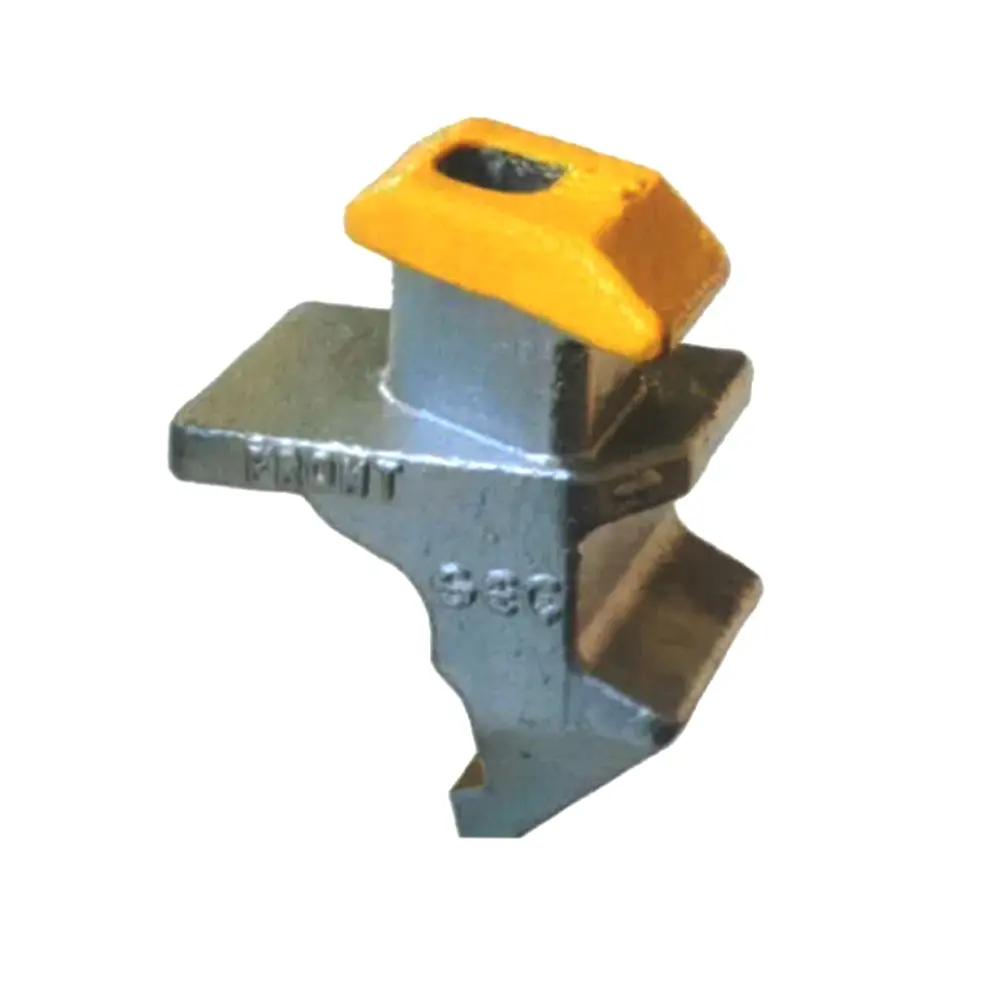
Face one of the corners at the short side of the container, tilt the fully automatic twist lock into the socket, and listen for the click that confirms correct placement. Check that all front cues or visual indicators are visible on both ends of the container. The spring mechanism ensures safe and easy locking.
Step 3: Lower the Container.
The crane lowers the container. As the lower tips of the twist locks contact the corner castings of the container below, they twist, tension a spring, and slide down into the corner casting. The weight triggers the automatic rotation, locking the container securely.
*Step 4: Verify (System-Based).*
Fully automatic locks may lack visible “LOCK” indicators. Instead, terminals rely on crane camera systems, integrated sensor packages, or secondary verification protocols. Ensure your system confirms engagement.
Unloading Procedure (Releasing a Container):
Step 1: No Manual Unlocking Required on Deck.
The magic of fully automatic locks is that they unlock automatically when the container is lifted. The upward force applied by the crane releases the mechanism. However, this does not mean no human intervention ever—see Step 3.
Step 2: Lift.
The crane lifts the container. The twist locks disengage automatically as the container rises.
Step 3: Remove Locks at Quay.
After the container is lifted off the stack and placed at the quay, workers must manually remove the fully automatic twist locks from the bottom corner castings. To dismount, face the cue at the twist lock handle and pull the spring mechanism downwards. This unlocks the lock from the socket, making it easy to grab the handle and swipe it out.
Part 5: Universal Safety Rules for All Twist Lock Operations
Regardless of lock type, these rules apply to every operation:
-
Always Use Locks in Pairs per Axle. Never secure only one corner.
-
Confirm All Four Corners. Three out of four locked is a failure. The entire stack is only as strong as its weakest link.
-
Inspect Before Every Use. A cracked housing, bent shank, or weak spring renders a twist lock unsafe.
-
Follow Terminal Rules. Many ports have strict pinning/unpinning stations. For example, trucks arriving at terminals must keep twist-locks fully secured until arriving at designated un-pinning stations. Never unlock or lock outside designated areas.
-
No Makeshift Tools. Always use the proper operating rod or handle designed for the lock type.
-
Communicate Clearly. Establish clear signals between crane operators and ground crews.
-
Maintain Equipment. Periodically grease moving parts and inspect the effectiveness of spring actions. Due to wear and tear, the cones in twist locks suffer damage; in such instances, the entire twist lock unit should be replaced.
Part 6: Common Operational Mistakes to Avoid
| Mistake | Why It’s Dangerous | Correct Practice |
|---|---|---|
| Forgetting to lock manual locks | Container can separate during transit | Use semi-auto or implement dual verification |
| Relying on sound alone for semi-auto engagement | Sound can be misleading | Visually confirm locked indicator |
| Skipping manual release for semi-auto locks | Attempting to lift while locked can damage equipment or cause sudden release | Always manually unlock before lift signal |
| Using damaged or worn twist locks | Sudden failure under load | Inspect before each use; replace immediately if damaged |
| Ignoring terminal pinning/unpinning stations | Can damage trailer, container, or yard handling equipment | Always follow designated station procedures |
Ready to Secure Your Container Operations with Reliable Twist Locks?
At Hangcheng, we manufacture and supply a complete range of container twist locks—manual, semi-automatic, and fully automatic—engineered to meet ISO 1161 standards and the most demanding port and vessel environments.
-
Explore our twist lock selection to match the right type to your operational profile.
-
Need bulk orders or custom specifications? Contact our team for volume pricing and technical consultation.
👉 Visit our Container Twist Lock page or contact our sales team today for expert guidance and a personalized quote.
Related Products